Nose Before Palate
Tasting
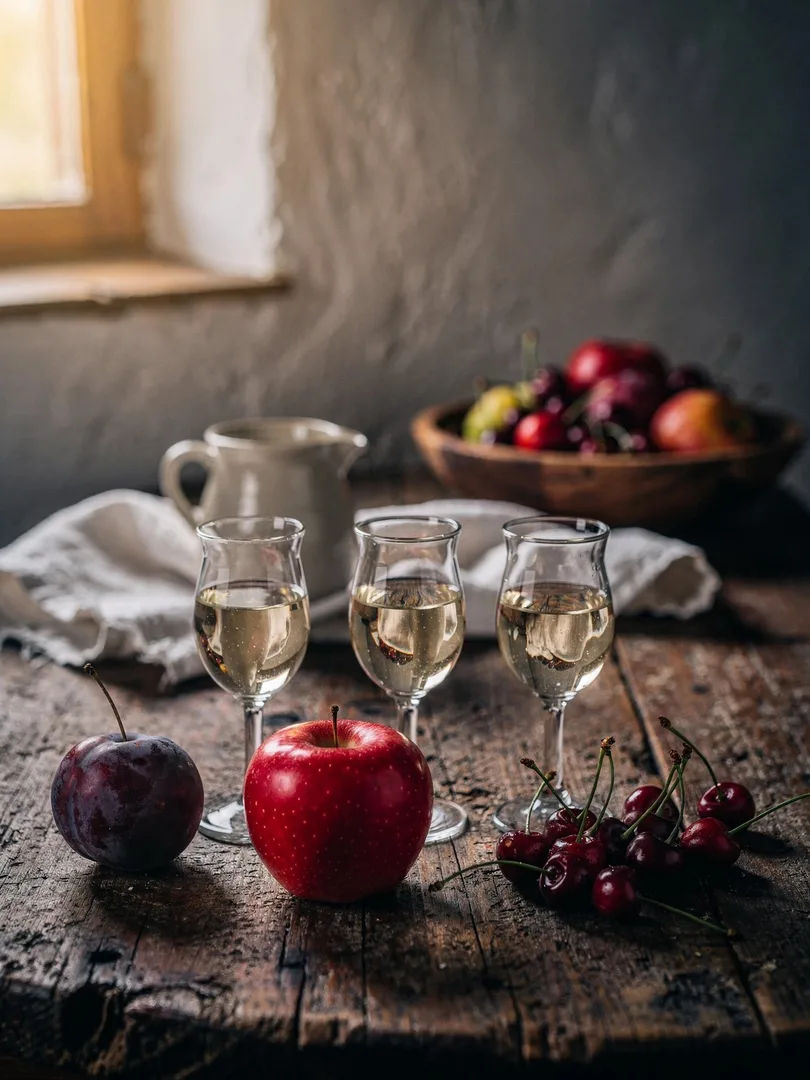
On the wooden table stand three small glasses, alongside a plum, an apple, and a few sour cherries. For pálinka, a tulip glass or nosing glass that narrows toward the top and concentrates the aromas is ideal. A wide shot glass lets them escape.
The temperature should be room temperature or just below, around 16 to 18°C (61 to 64°F). Too cold and the aroma stays closed; too warm and the alcohol becomes sharp. Smell first without holding the glass fully under your nose, since the first breaths bring mostly alcohol, with the fruit following only after.
With Szatmári Szilvapálinka, look for ripe plum, marzipan, and a light raisin note, and in aged spirits, also spice and wood. One example is the Panyolai Elixir from Panyola, a village in the Szatmár region, described by the retailer as an aged Szatmár plum pálinka.
From the Körös region come the spirits of Ágyas Pálinkás in Békés, whose plum pálinka carries the designation of origin Békési Szilvapálinka and, according to the producer, bears the "Kiváló Magyar Élelmiszer" (Excellent Hungarian Food) seal.
A first small sip reveals the texture: is the spirit soft, oily, or sharp? Then comes the question of how long the flavor lingers. A good plum brandy echoes with ripe fruit, the apple with fresh fruit, the sour cherry with citrus and a touch of almond.
A sip of water in between clears the palate, and the glass may be left standing on the table for a moment after tasting, allowing the aromas to open up.