Apples, Pears
Fruit & Raw Material
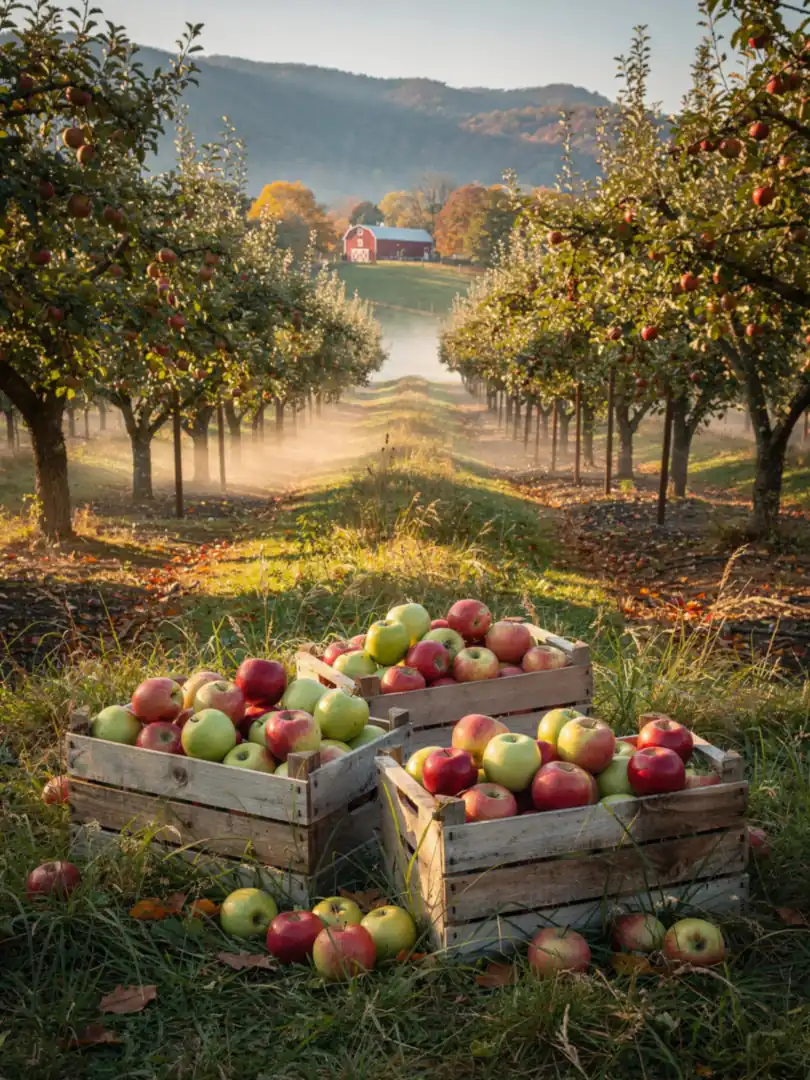
For apple brandy, what matters first is the sugar in the apple, since that's what becomes alcohol during fermentation. The riper and sweeter the fruit, the more brandy can later be drawn from the juice. According to Laird's own usage, an Apple Brandy consists of one hundred percent apples, with no added neutral spirit. For a single 750ml bottle of its Bonded brandy, the house estimates around 20 pounds of apples, or roughly nine kilos.
The origin of the fruit is surprising. For its Bonded apple brandy, Laird & Company, according to press statements, processes mainly apples from the Shenandoah Valley, a valley in the Appalachians and thus well south of New Jersey. So the name Jersey stands for the house and its history, not necessarily for the orchard behind every bottle.
Which varieties go into the press is something the houses rarely reveal. Cidermakers and distillers prize apples with acidity and tannins, since that tension carries through into the spirit. Pure eating apples supply sugar but are considered less interesting for brandy.
The West tells a different story. Clear Creek Distillery in Portland, Oregon, distills pear brandy from Bartlett pears which, according to press reports, are mashed whole, fermented, and distilled in German-style stills. The same variety is known in Europe as Williams Christ. It has little to do with the old apple tradition of the East Coast, but it shows that fruit brandy in the European style has found its own home in the United States.
California, by contrast, is the place for brandy made from grapes—that is, for brandy in the broader sense rather than fruit brandy. That line leads away from the apple and remains here just an outlook. Anyone wishing to pursue it is best off comparing it with the grape-based spirits of Cognac and Armagnac.