Must, Yeast, Frost
Mash & Fermentation
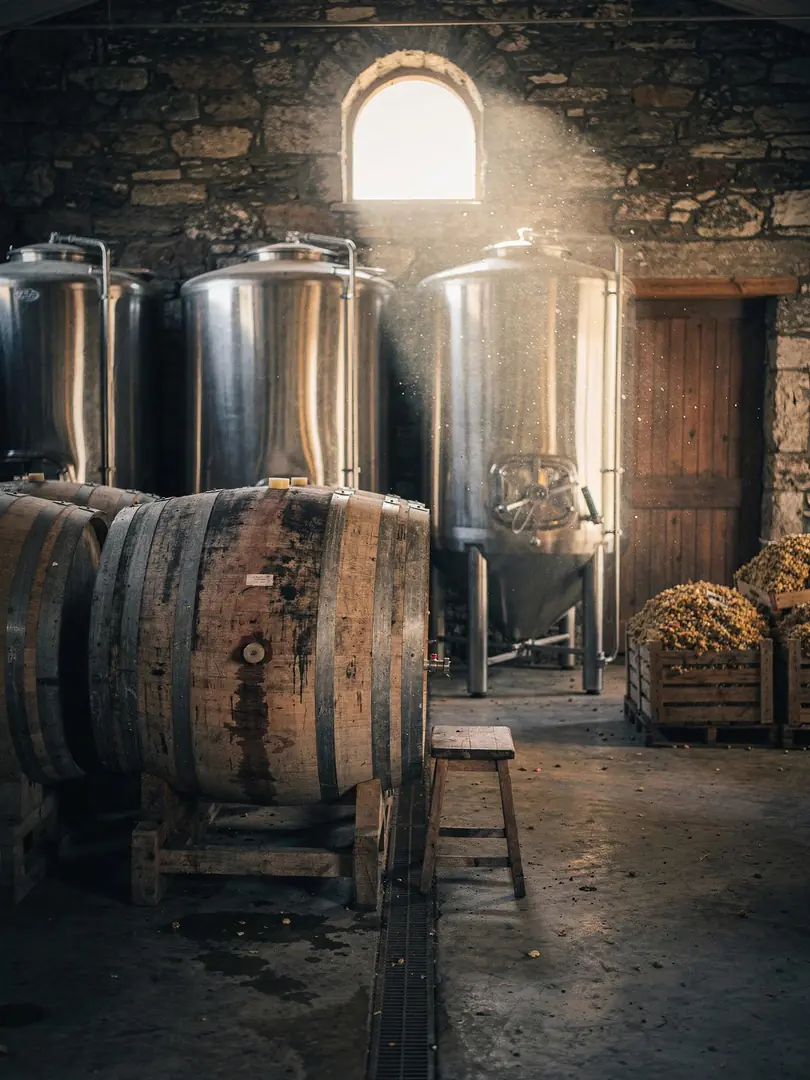
Before a single drop of brandy flows in New Jersey, there's a barrel full of hard cider. The apples are pressed, the juice ferments with yeast, and the sugar turns into alcohol. The yeast consumes the sugar and converts it into alcohol and carbon dioxide. The cooler the cellar, the slower this happens, and the more fruit aroma stays in the must. The result is a dry, usually fairly tart cider that tastes rather austere on its own. Because the brandy is made from fermented juice rather than a mash containing fruit pulp, its kinship with French cider brandy is clear. Under EU law, this type of brandy falls under the category "spirit drink made from cider."
The older way of strengthening must required no still: jacking. The barrel was set outside in winter. Since water freezes before alcohol, ice formed on top and was skimmed off, leaving a stronger must behind. This only worked in cold winters and required patience, since each round yielded little. The "jack" in the name Applejack is usually traced back to this skimming of ice.
This has nothing to do with distillation—it's freeze concentration. And it has a catch: everything that isn't water stays in the concentrate. That includes methanol, which already comes from the pectin in the apples. The method isn't suited to home attempts, and distilling without a license is illegal in Germany anyway.
George Washington also makes an appearance at this point in the story. The Laird house recounts that the future president asked for the recipe for "cyder spirits," and that an ancestor of the family, Robert Laird, served under him in the Continental Army. Both belong to the house's own lore, and should be read as such.