Jonge & Oude
Style & Regulation
Gin has its London Dry, Hasselt has its jenever, and the rules are different. Genever and Jenever are terms protected across the EU, reserved for the Netherlands, Belgium, and parts of France and Germany. Anyone wanting to use the term must reach at least 30% ABV and include a proportion of grain distillate, the moutwijn, something gin simply doesn't have.
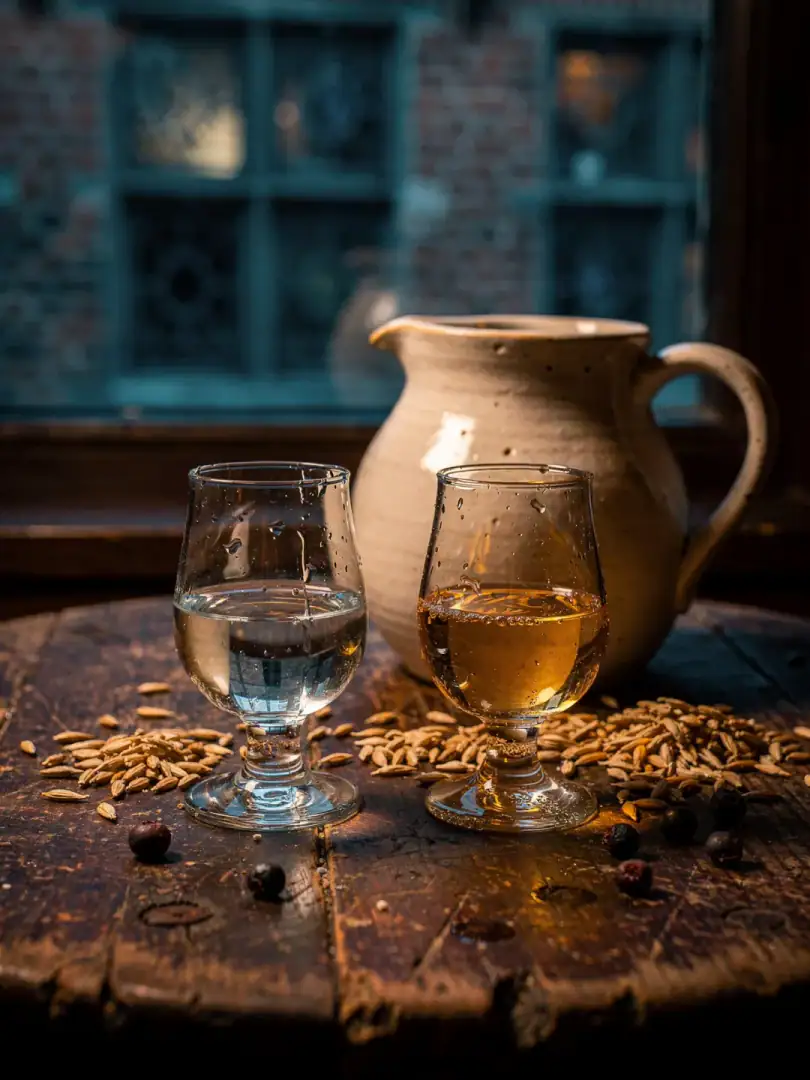
Within this category, a distinction is made between Jonge and Oude Jenever. Jonge, the young version, contains little moutwijn and tastes correspondingly more neutral, cleaner, closer to gin. Oude, the old version, carries more malt wine and often barrel aging, giving it a golden color and a heavier, rounder flavor. Both styles are still produced in Belgium today.
Hasselt has additionally secured its own, narrower regulation. Hasseltse Graanjenever has been registered as a Protected Geographical Indication nationally since 1997 and at the European level since 2007, with its own registration number at the Flemish agricultural authority VLAM. Only jenever made from grain moutwijn and aged at least six months may bear this name, regardless of where else in Belgium it might otherwise be distilled.
This sets Hasselt apart from other Belgian jenever towns such as Deinze, where the distillery Filliers has operated in East Flanders since 1880 and today ranks among the country's largest jenever producers. Filliers represents the same category, but not the same protected origin as a genuine Hasseltse Graanjenever. For travelers, this means: a genuine Hasseltse Graanjenever is always also a piece of protected origin, no matter which brand ends up on the label.