The short answer
A gin app mainly helps with two questions: which tonic and garnish suit this gin, and how did it taste to you neat or mixed? For a collection, it should organize gins by style and botanicals and track how full an opened bottle still is. The best starting ratio for any gin and tonic is one part gin to three parts tonic, over plenty of ice.
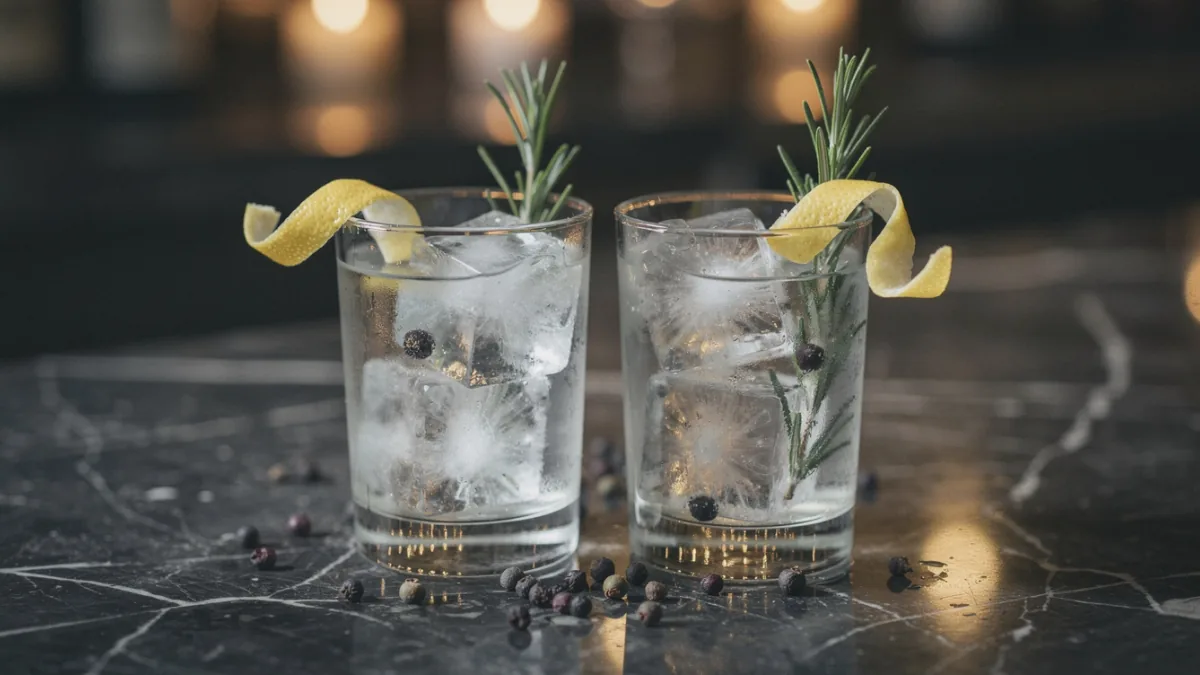
What a Gin App Should Deliver
With gin, the bottle alone is rarely the interesting part. The same gin tastes different neat, in a gin and tonic, and in a Negroni, and the real value lies in the combination that worked for you. A gin app should therefore track not just which bottles you own, but also how you drank them: with which tonic, in what ratio, with which garnish.
Many gin apps are mainly directories with thousands of entries. That's useful for looking things up, but it tells you nothing about your own taste. What matters more is whether you can save your own notes and mixes and whether the app shows them to you again when you pick up the same bottle.
The Right Tonic: What Really Matters
Most people look for a gin app because they want to know which tonic pairs well. The basic rule is simple: tonic makes up the larger share in the glass and shouldn't overpower the gin. A plain Indian tonic is the best baseline for comparison. Strongly flavored tonics, on the other hand, tend to mask the botanicals — the plant-based aromas in the gin — leaving little of the gin's character to come through.
The garnish should echo something already present in the gin. The table is a starting point, not a fixed rule. Try each combination once and note what you liked. After a few weeks, you'll have built your own list, and that's exactly where an app proves most valuable.
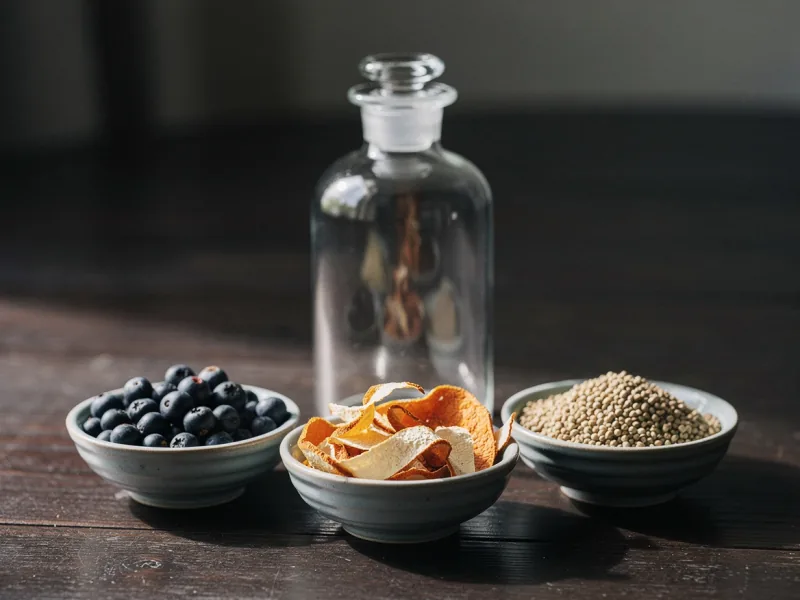
| Gin Style | Starting Tonic | Garnish |
|---|---|---|
| Classic, Juniper-Forward (London Dry) | Plain Indian Tonic | thin strip of lemon peel |
| zitrusfrisch | restrained tonic with little sweetness | lemon or orange peel |
| herbal, spicy | plain Indian tonic | a sprig of rosemary |
| fresh, green | mild tonic | a strip of cucumber |
| floral, delicate | very mild tonic with little sweetness | little or no garnish at all |
mixing ratio, glass and ice
Start with one part gin to three parts well-chilled tonic, so 40 milliliters of gin and 120 milliliters of tonic. If you can barely taste the gin, use less tonic next time. If the drink feels too strong, use more. Change only one thing at a time, otherwise you won't know what made the difference.
Fill a highball glass or a large wine glass generously with solid ice cubes. That sounds backwards, but it's true: plenty of ice dilutes less because it keeps the drink cold while barely melting. Pour in the tonic slowly and stir just once, gently from bottom to top. Any further stirring drives out carbonation, which carries a good part of the flavor.
Gin, Distilled Gin, London Gin: What's on the label
Gin is strictly regulated in the EU. Every gin must have at least 37.5 percent alcohol, and juniper must dominate the flavor. Distilled Gin is made by redistilling alcohol with juniper and other botanicals. London Gin is the strictest category: the aroma may only come from this distillation, coloring is prohibited, and it may be sweetened with no more than 0.1 grams of sugar per liter.
Important for collectors: London Gin is a production method, not an origin. A London Gin can be distilled anywhere in the world. And since gin must have at least 37.5 percent alcohol, a drink without alcohol can't be sold as gin, even if it tastes similar. A gin app that clearly separates these categories helps you compare more than any score ever could.
Gin styles at a glance
Gin bottles carry three different kinds of information: the production method, a flavor tradition, and the strength. London Dry and Distilled Gin describe how the spirit is made. Old Tom harks back to older, usually slightly sweeter gins. New Western or Contemporary Gin refers to gins where other herbs and spices join the juniper. Navy Strength simply means more alcohol, often around 57 percent.
Two names are often misleading. Sloe Gin is a sloe liqueur made on a gin base and tastes quite different. Pink Gin can be a cocktail of gin and bitters, or a pink-colored product. Genever, meanwhile, is the Dutch and Belgian ancestor of gin, with its own character and its own rules. Organizing your app by these styles makes your collection easy to read at a glance.
Tasting gin: neat first
Try a new gin neat and lightly chilled first, before mixing it into a longdrink. This way you get to know its botanicals and can mix more purposefully afterward. A small stemmed glass holds the aromas together better than a wide glass.
Note down three things: how strong the juniper is, what other notes come through, and how long the flavor lingers. Citrus, florals, pepper, herbs or spices are perfectly good keywords. Writing this way, you'll spot your pattern after ten gins and buy the eleventh more deliberately.
Organizing your gin collection and keeping track of opened bottles
For a collection, it helps to organize by style: classic and juniper-forward, citrus-fresh, floral, spicy. Add strength, origin, and the botanicals the producer lists. That way you can quickly find the right gin for whatever drink you're planning for the evening.
Opened bottles keep well as long as they're tightly sealed, stored in the dark, and upright. But the aroma slowly fades the more air there is in the bottle. If you note the fill level, you'll see at a glance which gins should be used up first.
Cost and privacy in gin apps
As with any drinks app, it's worth checking the business model before downloading. Many gin apps are funded through ads, subscriptions, or purchase recommendations attached to every entry. That's fine as long as you know about it. Two questions matter most: can you export your data, and does your collection stay private until you choose to share it?
Gin knowledge and recipes at Gustofolio
Gustofolio explains gin so that you'll mix it better and buy more purposefully afterward. The encyclopedia answers a dozen questions about gin: varieties, botanicals, tonic, storage, genever, sloe gin and pink gin. The Gin Journey takes you through 16 gin regions in 13 countries, from the genever distilleries in Schiedam to the Black Forest, with eight themed routes covering botanicals, gin and tonic and cocktails, styles, and tasting, among others.
There are also cocktail recipes with exact measurements in centiliters, from the Gin Fizz to the Basil Smash to the Negroni. Every recipe tells you how it tastes, which glass you need, and whether it's shaken or stirred.
Frequently asked questions about the gin app
These are the questions that come up most often when someone is looking for a gin app.
Which tonic goes with which gin?
Delicate, floral gins pair well with a restrained tonic that has little sweetness, while bold, juniper-forward gins go well with a plain Indian tonic. If in doubt, try two tonics side by side with the same gin.
How much tonic goes with a gin?
A good starting point is one part gin to three parts tonic, so 40 milliliters of gin and 120 milliliters of tonic. From there, adjust the ratio to your taste.
What glass do you use for gin and tonic?
A highball glass or a large wine glass, generously filled with solid ice. The amount of ice matters more than the shape.
How long does an opened bottle of gin last?
Stored tightly sealed, in the dark, and upright, gin keeps for a long time. But the aroma fades over time, especially once there's only a little left in the bottle.
Is there such a thing as alcohol-free gin?
Not under that name. Under EU law, gin must have at least 37.5 percent alcohol. Alcohol-free alternatives do exist, but they're called something else.