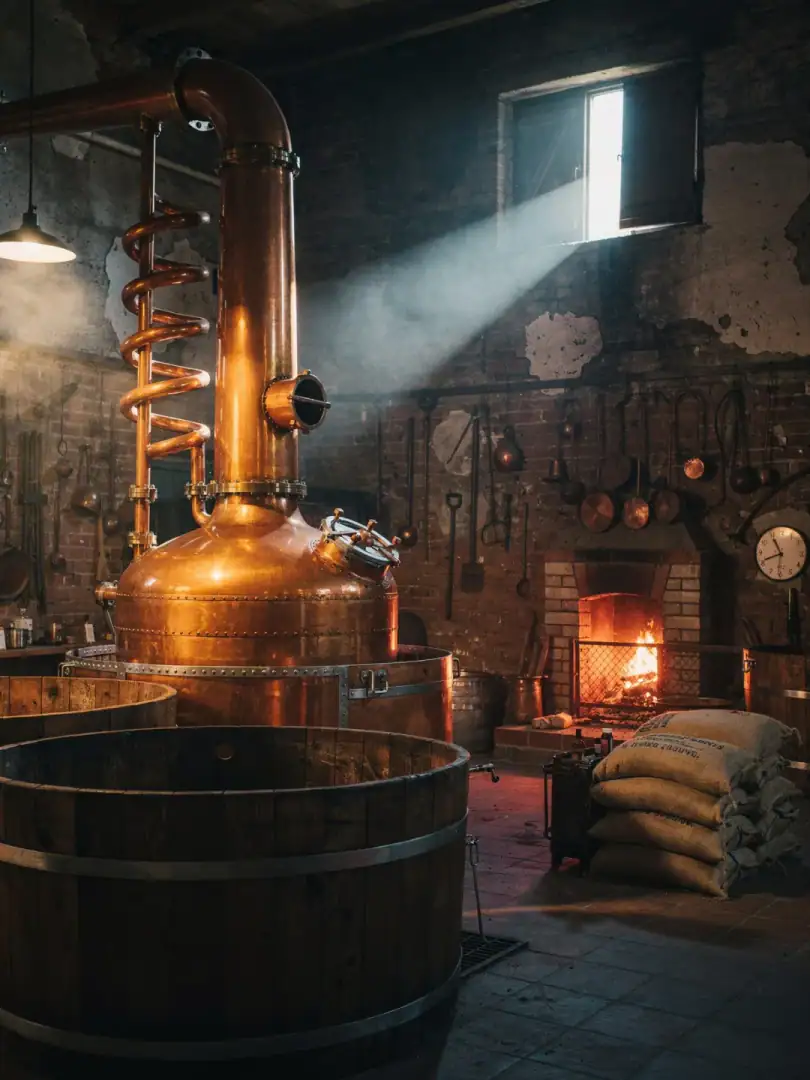
Moutwijn & Pot Still
Distilling
Every Hasseltse Jenever begins with a mash of rye and barley, first malted and then fermented. From this mash, distillers produce moutwijn, the malt wine, usually through two or three distillations in copper pot stills. This way they balance purity and character, much as in whisky production.
Only afterward is juniper added, either distilled together with the base or blended in as a separate distillate. How much moutwijn ends up in the finished bottle determines the style of the final drink. More malt wine yields a heavier, more robust jenever, while less malt wine and more neutral alcohol produces a lighter, more modern version.
The protected Hasseltse Graanjenever is also subject to a mandatory aging period: the finished spirit must rest for at least six months before it can be sold. Compared to whisky or Cognac, that sounds brief, but it's enough to smooth the sharpest edges off the young distillate. Only then does the moutwijn develop its full, bready character, which later carries the juniper as well.
The legal minimum strength for jenever across the EU is 30% ABV, lower than gin's 37.5% ABV. Hasselt's distillers traditionally used simple, direct-fired copper pot stills, examples of which the Jenever Museum still displays. The museum also raises the question of why jenever tastes different from gin: the difference doesn't start with the juniper, but with the malt wine, which in Hasselt is always distilled first.