Copper and Botanical Baskets
Distilling
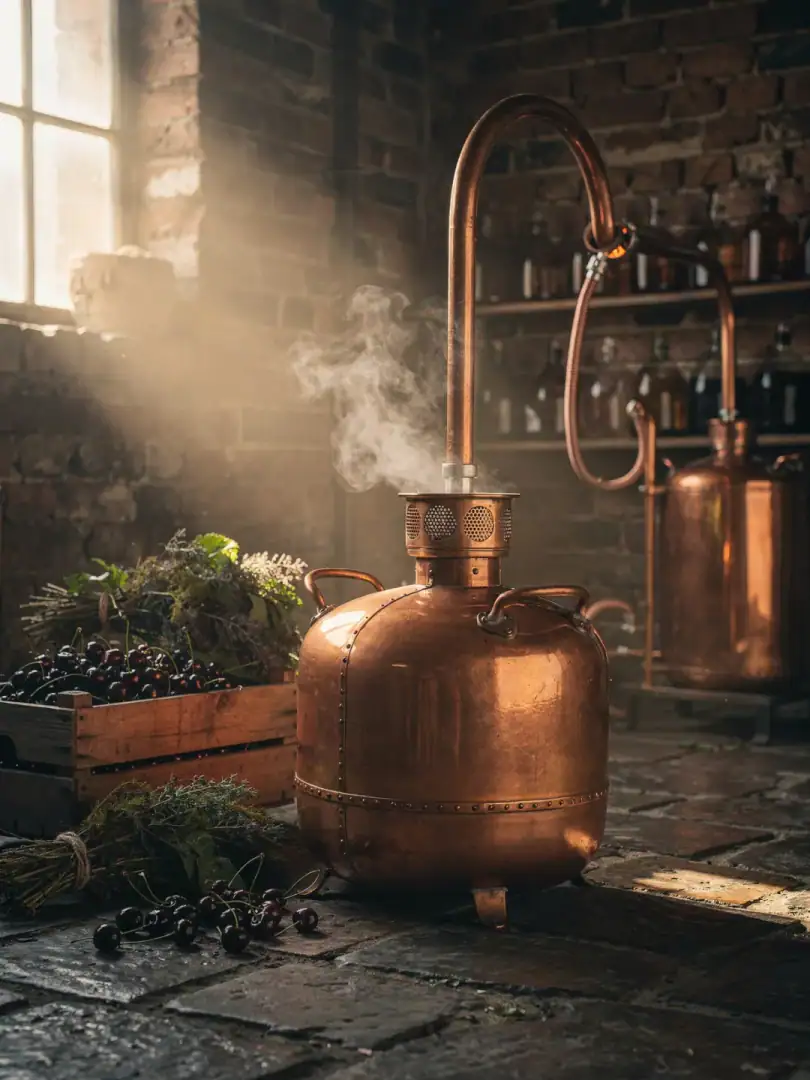
Every gin starts with a neutral spirit, usually distilled from grain. At this stage, it barely has any flavor. Only once the botanicals are added does it become gin. In smaller Black Forest distilleries, this often happens in copper pot stills—the same kind used for generations to make fruit brandies like Kirschwasser.
At Monkey 47, part of the 47 botanicals macerate in the alcohol for several hours before distillation. A second batch, including the delicate spruce shoots, is placed in a botanical basket above the still only during distillation. The rising alcohol vapor passes through the fresh plants and picks up their volatile aromas without the plants themselves being boiled.
This protects the fresh, green notes that would quickly cook away if boiled directly in the still. Afterward, the finished distillate passes over further fresh botanicals. It then rests before being brought down to bottling strength with spring water.
Whether a distillery uses the so-called one-shot method—processing the full amount of botanicals in a single distillation—or produces a stronger concentrate that's diluted later, usually remains a trade secret. For the region's traditional small distilleries, the principle is familiar either way. They've always distilled fruit brandies in small batches for personal use: copper still, patience, and a redistillation that determines the purity.
How much handwork goes into it only becomes clear when you watch: each distillation runs slowly, drop by drop. The distiller decides purely by smell and experience when the foreshots end and the usable heart of the run begins.