Resin, Berry, Forest
Tasting
A Black Forest Dry Gin rarely tastes of lemon alone. Tasting Monkey 47 neat, you first notice juniper. Behind it follows something resinous, recalling freshly cut conifer wood. Only then does a light sweetness from berries come through—something a straightforward juniper gin simply can't deliver. The number in the name Monkey 47 does double duty: 47 botanicals, and 47% ABV.
Anyone wanting to test how much the origin shapes the flavor can compare the Loßburg gin side by side with a classic, juniper-forward London Dry Gin. A milder Contemporary Gin from another region also makes a good comparison. The difference lies less in alcohol content than in the number and origin of the botanicals.
A simple glass without ice, a sip of water in between, and a bit of time are all it takes to taste properly. The first seconds show mostly the alcohol. After that, the finer notes of fruit, resin, and spice gradually come through. Swallow too quickly, and you'll miss exactly this second stage.
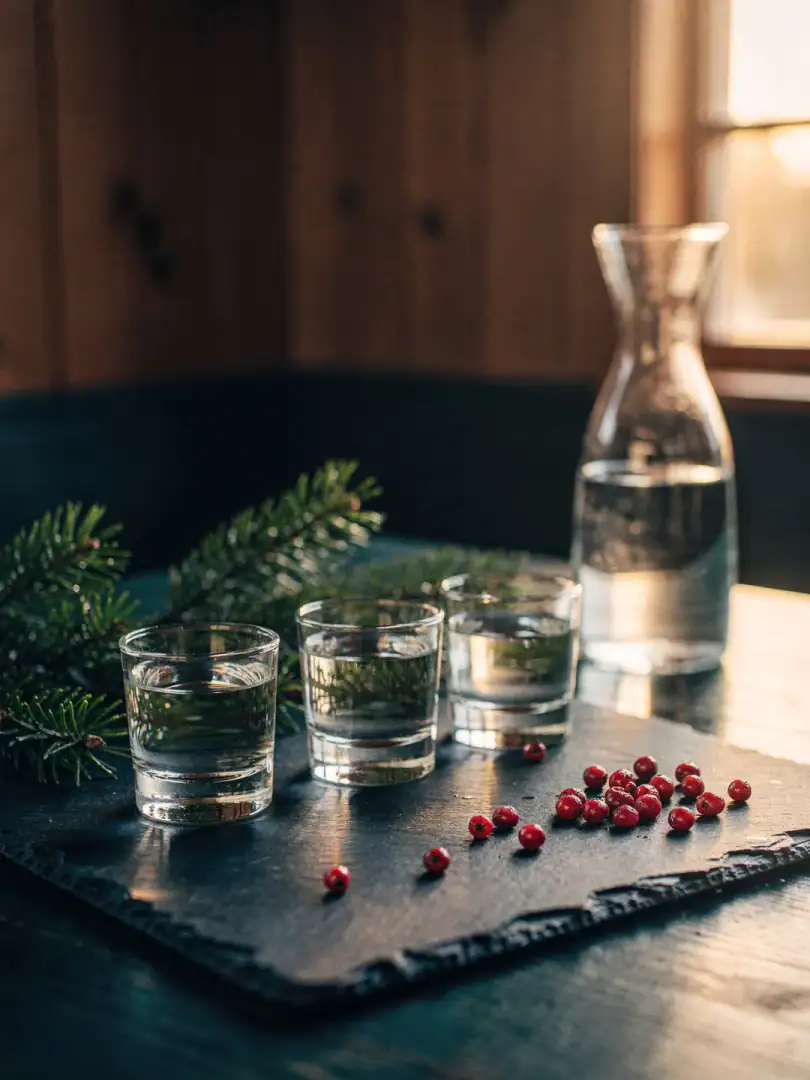
Served cool but not ice-cold, a Black Forest gin best reveals just how many individual plants actually come together in it. Drunk too cold, the quieter notes of spruce shoots or lingonberry disappear behind the pure impression of alcohol.
A second sip, taken a few minutes after the glass has had some air, often reveals more than the first. The alcohol recedes, and the forest notes come through more clearly. Comparing both moments gives a better understanding of the gin than a single, hasty sip at the bar.