The short answer
Gin is well worth tasting neat. Use a small glass and pour just a little, so the juniper and herbs can shine. Ice-cold it tastes softer, but you'll smell noticeably less.
Which glass works best?
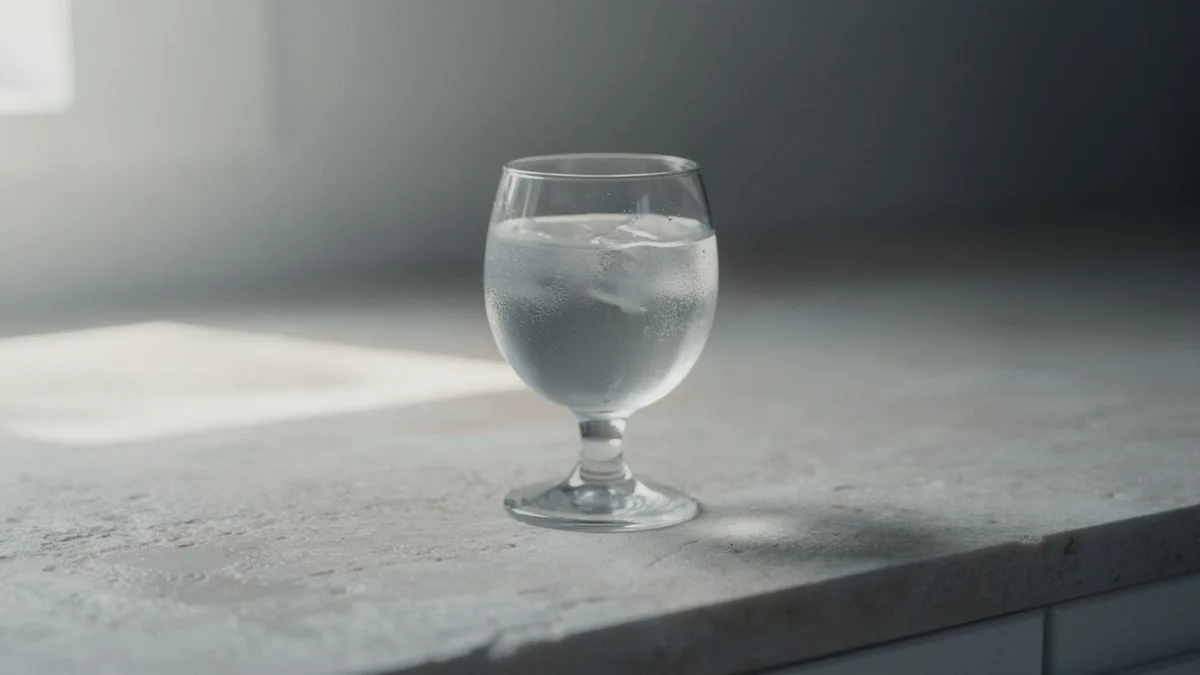
A small glass with a narrowed rim is enough; a wine glass works too. Pour just a little and smell from a slight distance at first. A tumbler filled to the brim makes comparison difficult, and you don't need a fancy specialty glass. What matters is: clean, odor-free, and room above the gin.
The tapered shape has a simple purpose. It gathers the aroma above the liquid and directs it to your nose. In a wide glass, it drifts out sideways. That's also why a small amount is enough — it's about the space above, not the fill level.
Temperature and water
Start at room temperature, not in the sun and not next to the radiator. If the alcohol stings too much, add a few drops of still water to a second pour and compare. Write down what changes. Ice both chills and dilutes at the same time — so you're changing two things at once.
Cold dulls the aroma and emphasizes the mouthfeel. Ice-cold gin feels softer and rounder but reveals little of its herbal character. That's the wrong moment to chill it if you're getting to know it. Later, for enjoying it, it can be exactly right.
What to look out for
Look for juniper first, then lemon, spice, or florals. Take a small sip and notice whether the flavor fades quickly or lingers. You don't have to guess every ingredient. If you taste lemon, that doesn't necessarily mean lemon peel was used.
The first sip should be small. Your palate adjusts to alcohol quickly, and what tastes pleasant on the second sip was often too much on the first. Between two samples, a sip of water helps more than a pause.
Neat doesn't have to be your favorite way to taste it
A gin might please you more in a tonic than on its own. That says nothing about your taste. If you're buying for cocktails, judge it in the finished drink rather than neat. For comparison, small amounts are enough — several full glasses won't get you any further.
Two gins side by side
A side-by-side comparison tells you more than any single tasting. Take two gins with clearly different descriptions — one juniper-forward, one citrusy or floral. Same amount, same glass, same temperature. The difference will stand out on its own, and you won't need any jargon for it.
Smell them alternately instead of judging each one on its own. Our noses are good at comparing and poor at categorizing. That's exactly why tasting side by side works so much better than tasting on two separate evenings.