Chalk Beneath London
Water & Climate
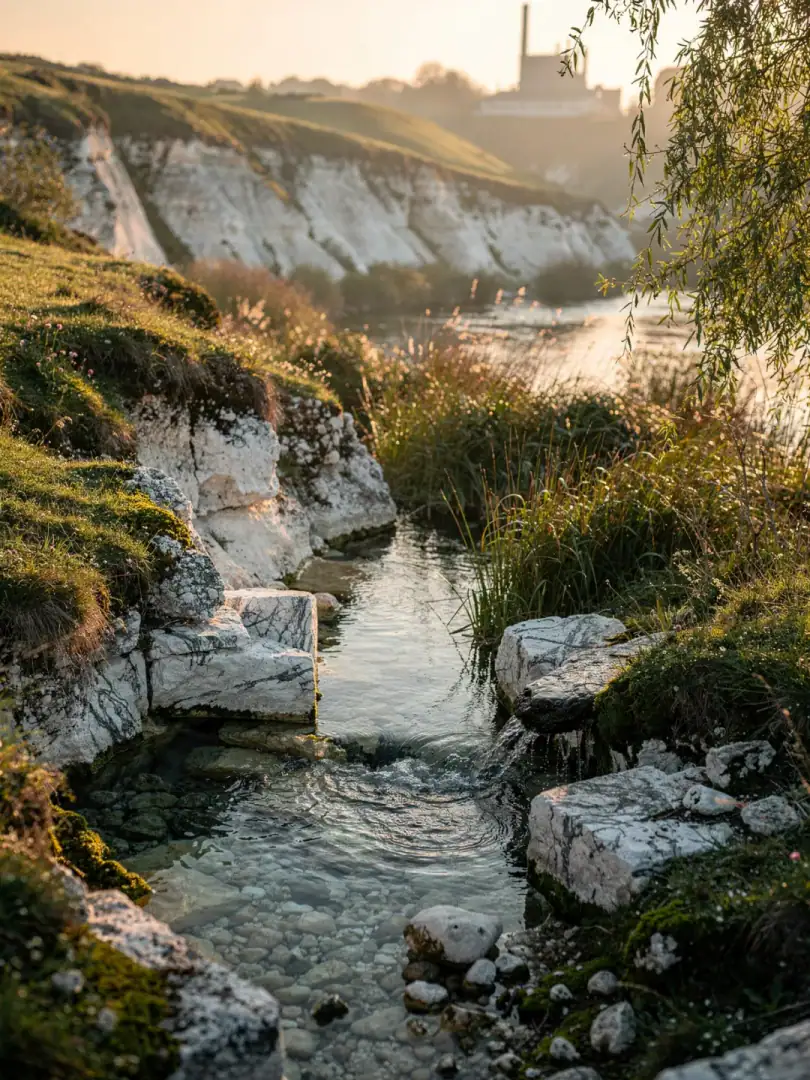
Beneath London lies a massive layer of chalk, the London Basin. Rain seeps in further north in the Chiltern Hills and to the south in the North Downs. From there, the water travels through the rock for decades. Only then does it resurface beneath the city.
Along the way, it dissolves lime from the chalk. London tap water is therefore considered hard. The calcium carbonate content across much of the city ranges between 250 and 330 milligrams per liter. Until the 19th century, part of the supply also came directly from the Thames and its tributaries.
For the distillery, what matters most is what happens after distilling. The raw spirit comes off the still at well over 80% ABV. It's then cut with water down to drinking strength, usually 37.5 to 47% ABV. Water that's too hard can cause cloudiness or make the gin feel heavier. That's why London distilleries often use softened water for this step rather than water straight from the tap.
That's why James Burrough's distillery drilled its own well at the new Lambeth site as early as 1908. The water there suited the taste of his gin better than the public supply. Water, then, was never just an ingredient for London's distillers. It was also a question of location, one they thought about carefully.
Even today, the Thames shapes the image of many of the city's distilleries. Walking along the river, you see warehouses that once moved barrels and cargo and now house cafés or studios. The water itself usually stays invisible in the gins. It's embedded in the landscape, not on the label.