The short answer
Store gin sealed, upright, and out of the light in a cupboard. An open bottle doesn't need to go in the fridge. Chilling is a question of serving temperature, not shelf life.
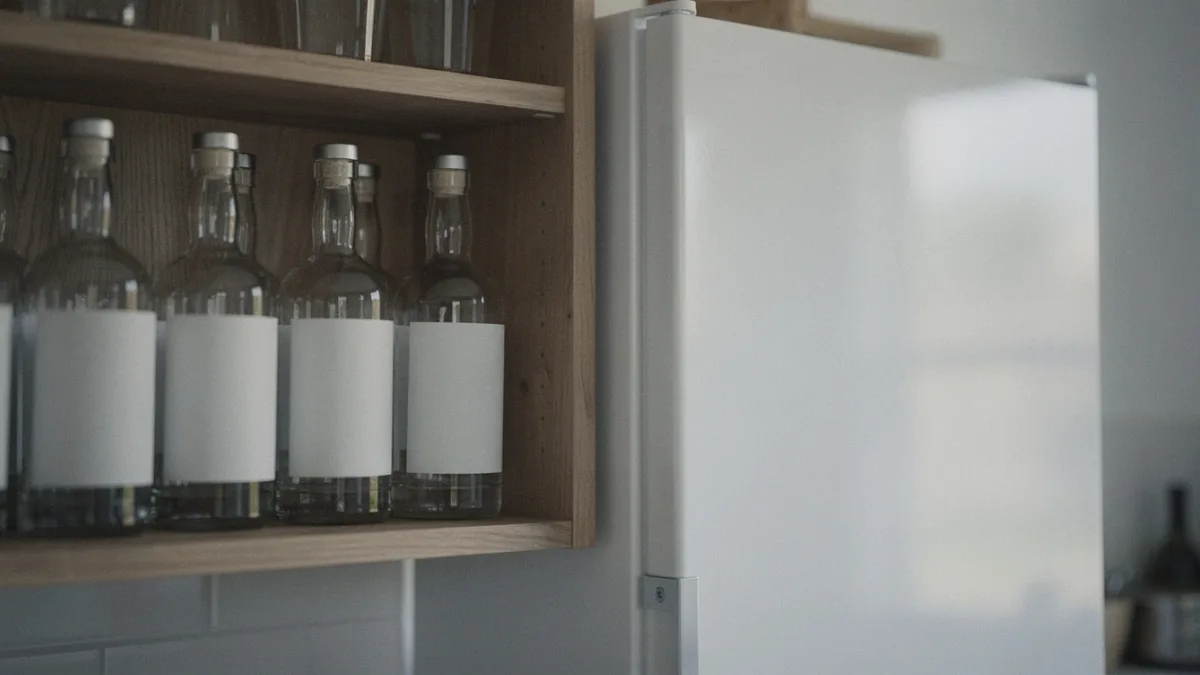
A dark cupboard is enough
Next to the stove, on a sunny windowsill, or in a hot car is the wrong spot. A cupboard with a steady temperature is plenty. Stand the bottle upright so the gin isn't constantly in contact with the cork. And screw the cap back on after measuring out your pour.
Light is often underestimated here. Clear bottles look great on the shelf but expose their contents to the sun. In gins with citrus and herbal notes, this changes the aroma faster. Closing a cupboard door costs nothing and saves you wondering why the bottle smells different a year later.
Does open gin go bad?
Gin doesn't spoil the way food does. What changes is the aroma. How quickly depends on air, warmth, the remaining amount, and the closure. A fixed rule like "six months" doesn't apply to every bottle. Write the opening date on the cap so you can keep track.
The air inside the bottle is what matters most. A nearly empty bottle holds a lot of air and little gin — that's where the aroma changes fastest. If a small amount is going to sit around for a while, decant it into a smaller container. None of this is dangerous; it's purely about aroma.
Fridge and freezer
Cold gin tastes different from room-temperature gin. That can be intentional for a particular drink, but it's not necessary for shelf life. In very cold conditions, gin can turn cloudy. The freezer isn't a universal recommendation.
The cloudiness is harmless. It happens because some botanical compounds no longer stay dissolved in the cold, and it clears again once the gin warms up. This happens more often with gins that haven't been chill-filtered. It's more a sign of gentle production than a flaw.
Liqueurs and alcohol-free varieties are different
Don't apply this to gin liqueurs, homemade infusions, or alcohol-free juniper drinks. These have less alcohol or none at all, and different ingredients. There, what the producer prints on the bottle is what counts, especially after opening. Fresh herbs or citrus peel belong in the glass, not sitting in the bottle for weeks.