Juniper for London
Region & History
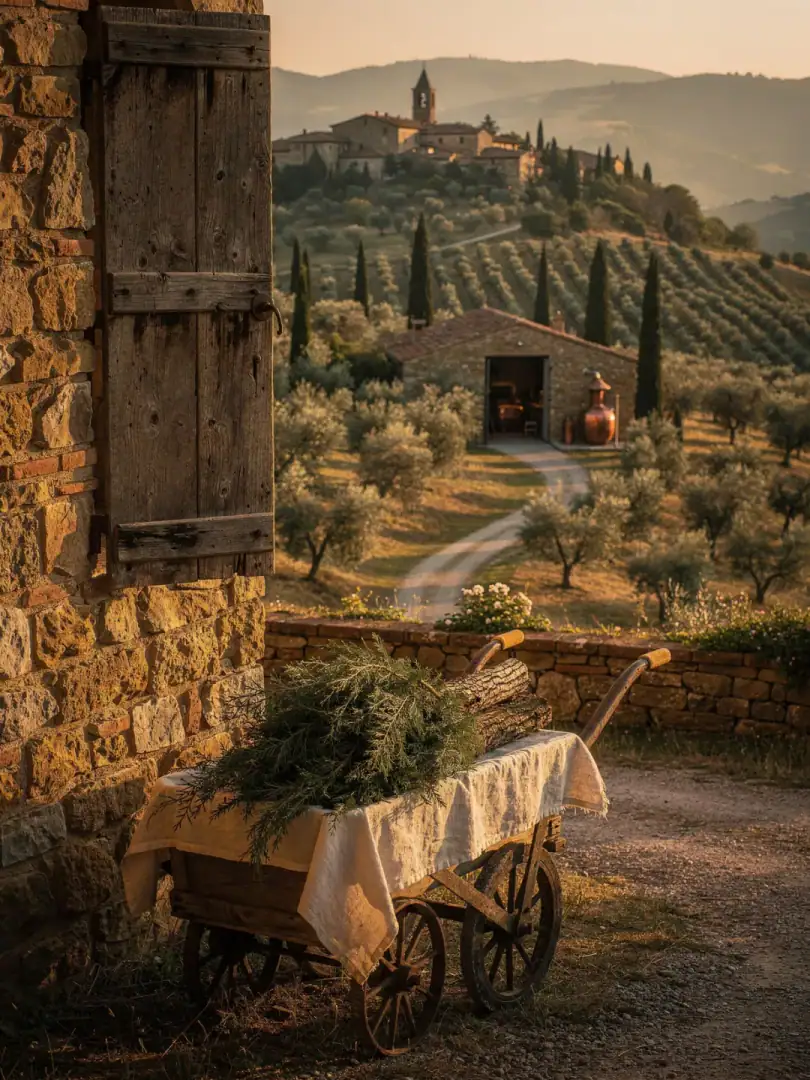
Ask most people about Tuscan spirits and they'll think of wine and grappa. Gin, meanwhile, was long not a product here but an ingredient sold off rather than distilled at home. In the Apennines, where Tuscany, Umbria, and Abruzzo meet, wild juniper grows in a quality that English distilleries have prized for decades. Portobello Road Gin and Berry Bros & Rudd's No. 3 London Dry Gin still source Tuscan juniper today, hand-harvested using an old method where branches are beaten over a cloth rather than picking the berries one by one.
It was only in the past decade that families in the region began turning this raw material into a product of their own. In 2015, the Sabatini family founded the company Teccognano S.r.l. in Teccognano, a hamlet near Cortona in the province of Arezzo, bringing English gin-maker Charles Maxwell of Thames Distillers to the table to help develop the botanical recipe.
Two years later, Patrick Hoffer, an Englishman who had moved to Florence, set out with his friend Patrizio Pandolfi on the latter's family estate, Podere Castellare, in Pelago in the Tuscan hills. The idea became Peter in Florence, named after Hoffer's father. Both operations grow some of their botanicals themselves or gather them on their own land rather than buying them in.
Florence itself has another, older connection to gin: the legend of the Negroni, said to have been invented at Caffè Casoni in 1919. Whether the story of Count Camillo Negroni holds up is disputed among bar historians, but the name stuck to the city regardless.
Today the scene is small but visible: two distilleries with their own cultivation, plus bars in Florence that keep the Negroni origin story alive for tourists. Wine remains the region's big business, gin a side pursuit built on provenance rather than volume.