Herring and Bitterballen
Gin & Food
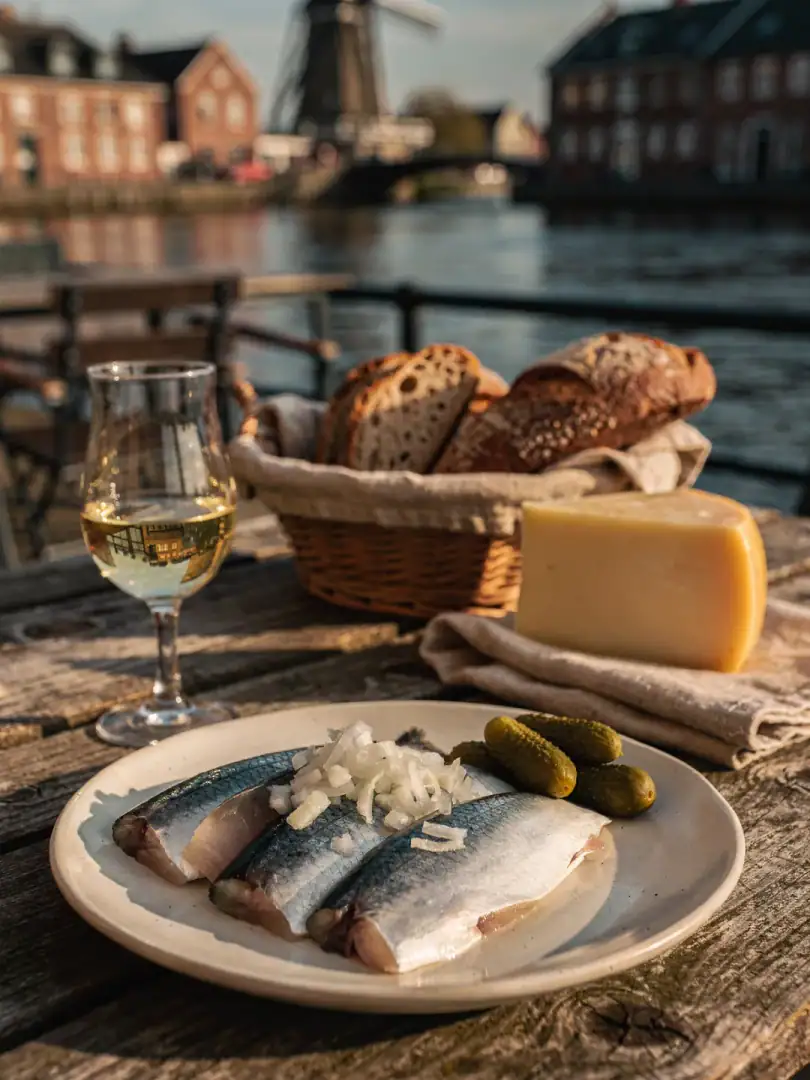
In the Netherlands, Genever classically goes with herring. Hollandse Nieuwe, young, mild Matjes herring, is usually eaten raw with a bit of onion, straight from the fish stand or in a café. The fatty, salty fish notes meet the round grain flavor of a Jonge Genever. It gently balances the sharpness of the herring without masking it.
Bitterballen are also part of the classic Borrel, the Dutch ritual of snacks and drinks in the late afternoon or early evening. These are small, deep-fried ragout balls with a crispy coating. An Oude Genever often pairs better with these greasy, hearty bites. Its stronger, maltier note stands up to the intense flavor of the filling.
Erwtensoep, a thick pea soup with smoked sausage and bacon, is another classic of the cold season in Holland. Its heartiness calls for a Genever that won't get lost. A Korenwijn, as offered by distilleries in Schiedam, with its barrel and caramel notes, is better suited as a finish after the meal rather than as an accompaniment during it.
Local cheese, such as young Gouda, shows a different side. Its mild creaminess allows the grain notes of a Jonge Genever to come through more clearly. Aged, more pungent cheese, on the other hand, pairs better with an Oude Genever. In every case, Genever is understood as a flavor companion, not a drink meant to be consumed in quantity for its own sake.
Anyone eating in Schiedam will often find Genever already on the menu at small cafés along the Lange Haven, right alongside beer and coffee. Distilleries like De Kuyper and Nolet Distillery deliver more than just the bottle. They also deliver a piece of the history that comes with every glass served at the table.