The short answer
Sloe gin is a liqueur made from sloes, steeped in gin. It tastes of dark fruit, is sweetened, and usually retains a tart edge. It is not simply a dry gin with a different color.
What sloes do to gin
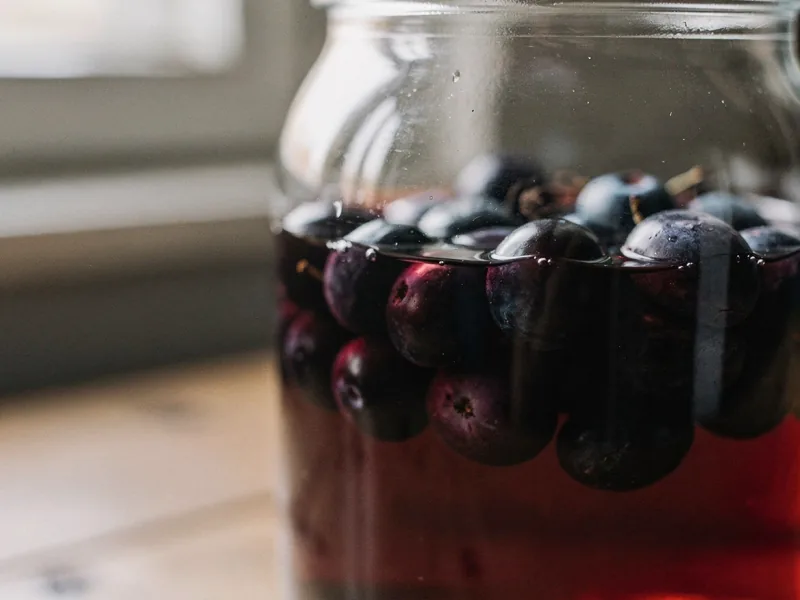
Sloes sit in the alcohol for a while. In doing so, they release color and fruit aromas. Afterward, the producer sweetens the liqueur. EU regulations require a minimum of 25% ABV for this category, meaning at least 25 percent alcohol by volume in the finished drink. However, how sweet, how fruity, and how strong each individual bottle turns out remains open. A dark red color reveals neither the sugar content nor the quality.
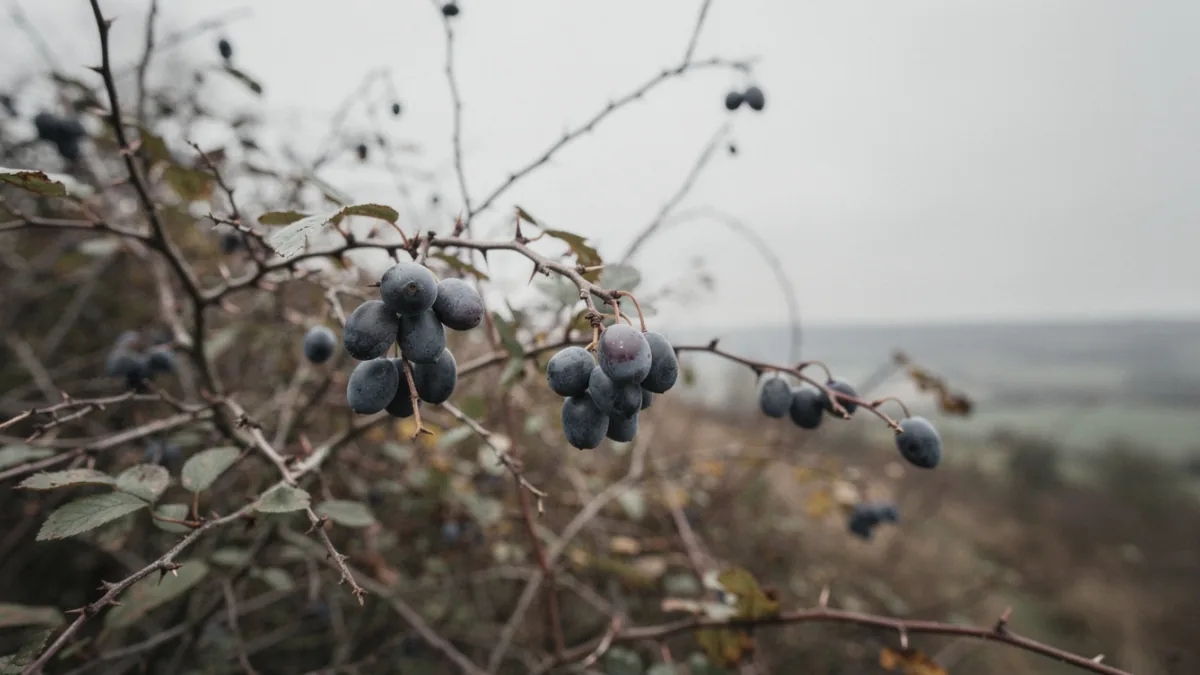
Sloes grow on the blackthorn, a shrub covered in thorns. The fruits are small and dark blue. Hardly anyone eats them raw, because they pucker the mouth strongly. You may know this furry sensation from an unripe banana. Traditionally, sloes were only picked after the first frost, since cold makes them softer. That tartness remains in the finished liqueur. It's the counterweight to the sweetness, and the reason sloe gin doesn't taste like syrup.
How sloe gin tastes
In the glass, sloe gin often recalls dark berries and stone fruit, such as plum or cherry. Along with that comes a slightly tart note, like fruit skin. The juniper recedes into the background, though it rarely disappears entirely. Many people find a classic Gin and Tonic too dry. The fruitier direction of sloe gin suits them better. That doesn't make it a mild or low-alcohol drink, though. Sweetness and fruit simply cushion the alcohol better than a dry gin does.
A simple drink to start with
Fill a glass with ice. Add 30 ml sloe gin and 90 ml chilled soda water. Stir briefly, and you're done. Soda brings only carbonation and no sugar. That way you can taste the fruit of the liqueur clearly, without a soda adding extra sweetness on top. After that, you can experiment: a little fresh lemon juice sharpens the drink, while a dry tonic adds bitterness. Change only one ingredient at a time. Otherwise, you won't know afterward what made the difference. This isn't a fixed classic recipe, but rather an approach for tasting your way there.
Be careful when substituting in recipes
Sloe gin is not a neutral substitute for dry gin. It brings sweetness and less alcohol. In a sour, you'll often need less simple syrup as a result. In a Martini, it shifts the entire character of the drink. Treat such mixes as their own variations. Once you get one right, write down the measurements, or you won't be able to recreate it next time.
Expect roughly half the alcohol strength of a dry gin. A cocktail designed for 40 percent changes in two ways because of this. The effect is weaker—that's immediately obvious. Less obvious is the second consequence: alcohol carries body. Without it, the same cocktail feels thinner and, at the same time, sweeter. If you want to balance that out, use less syrup and a bit more acidity.
When sloe gin is the better choice
If classic gin drinks feel too dry for you, this is almost inevitably where you'll end up. Fruit and sweetness come into play while the juniper character remains recognizable. It also helps with guests. Some people say they don't like gin, and what they really mean is the dry tartness. That's exactly what sloe gin takes away.
In fall and winter, this liqueur really shows its strength. Dark fruit and the tart note suit cool evenings. A zippy summer drink feels too thin on such days. Hot water and a slice of lemon turn it into a warm drink in two minutes. No one at the table will recognize it as a liqueur. Cold and served over plenty of ice, the soda version remains the choice for warm days.