Copper & Kelp
Region & History
On Islay, the smell of peat smoke mingles with sea spray. Since the early 2010s, Bruichladdich Distillery on the shores of Loch Indaal has produced a gin that turns the island itself into an ingredient. The Botanist carries 22 wild-growing botanicals in its name. Two retired Islay botanists gather them by hand.
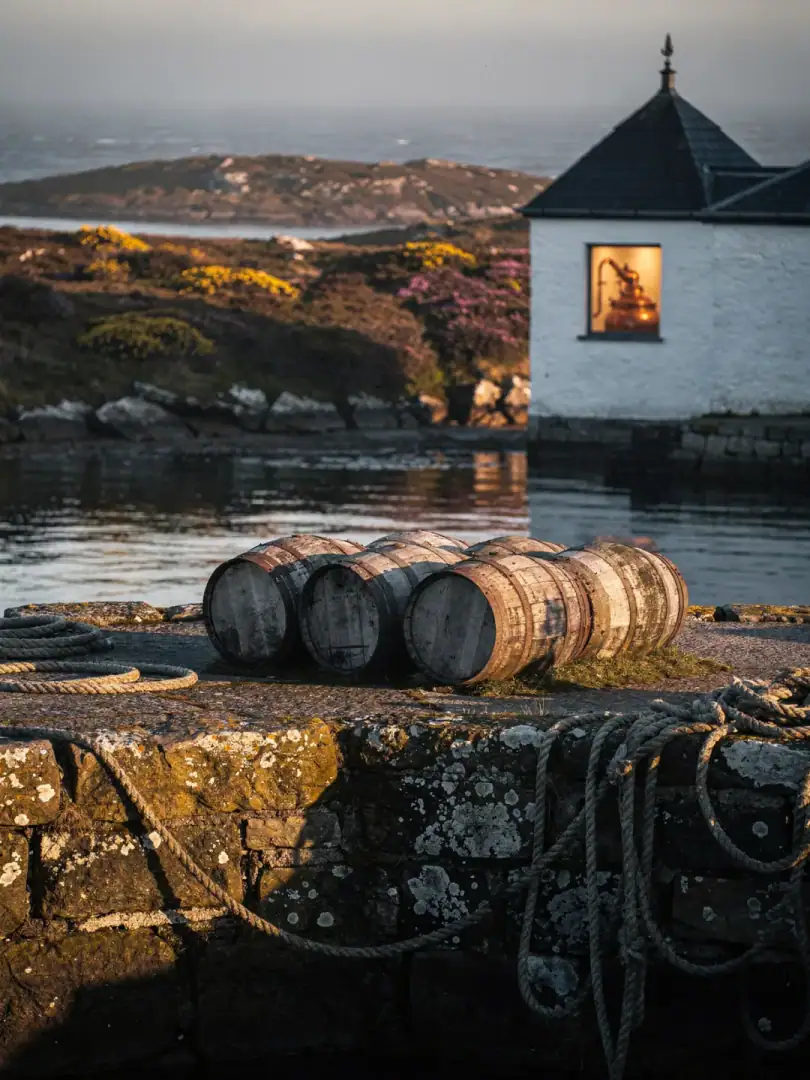
Its still is a copper rarity: a Lomond still with a capacity of around 11,600 litres, rescued from the closed Inverleven Distillery. Thanks to its bulky shape, it's nicknamed 'Ugly Betty.' It stands beside the whisky distillery's casks, which has sent smoke curling from its chimney again since 2001.
Further to the northwest lies the Isle of Harris, right in the heart of the Outer Hebrides. A distillery opened there in 2015 with an unusual plan: gin would keep the cash flowing while its first whisky quietly matured. Isle of Harris Gin has been rolling off the line since December of that same year. Sugar kelp from the surrounding sea forms the heart of the recipe.
To the east, in Speyside, the heartland of whisky, stands Balmenach Distillery. Since 2009, it has produced Caorunn, named after the Gaelic word for rowan berry. The distillery uses a Copper Berry Chamber dating back to the 1920s, originally built to extract fragrance oils for the perfume industry.
Scotland's gin story long lived in whisky's shadow. It took the craft distilling wave of the 2010s to push the number of distilleries in the country past 200. A good third of these now also produce gin, often as a second income stream alongside maturing casks.
Today, gin is quick revenue for many Highland and island distilleries. Whisky needs years in wood, while gin sells immediately. It also serves as a calling card for whatever grows in the soil and sea of each particular region.