Rowan, Peat, Kelp
Botanicals
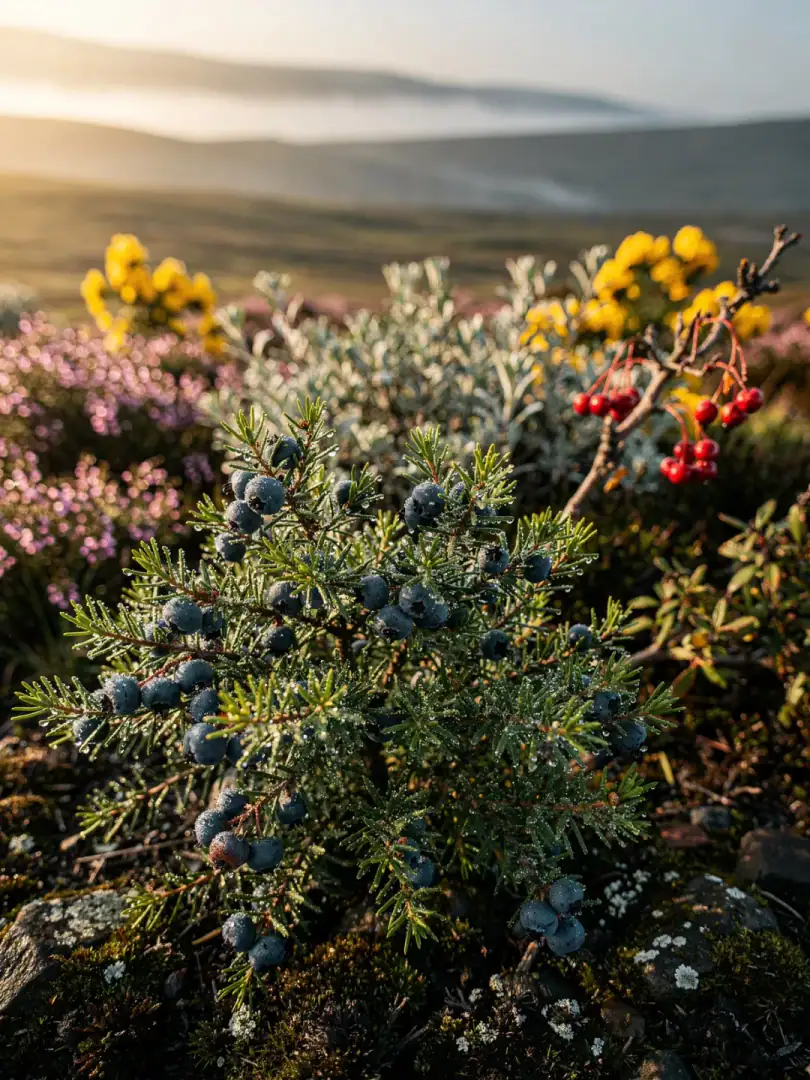
Juniper grows wild and low here, hugging the peat moors of the Highlands and islands, where wind and rain barely let any other plant grow tall. The species, botanically Juniperus communis, is native across the whole country, from the Cairngorms to the Hebrides. It supplies the resinous, needle-like base note every gin needs, but in this region it's merely the opening act for everything that follows.
Alongside nine classic gin ingredients, The Botanist adds 22 wild Islay plants, including heather, bog myrtle, gorse flower, wood sage, and meadowsweet. Each brings its own note to the glass: heather is honeyed and floral, bog myrtle resinous and spicy, gorse mild and nutty, wood sage bitter and green, meadowsweet almond-sweet. The foragers know every plant and every location intimately, since a gin with 22 wild ingredients leaves no room for mistaken identity.
On the Isle of Harris, the most striking ingredient isn't a herb at all, but sugar kelp, botanically Saccharina latissima. Diver Lewis Mackenzie free-dives to harvest it from the sea, working within a narrow two-hour window around the spring tides. He selects each plant individually and leaves enough behind for the kelp to regrow within eight weeks. The kelp lends the gin a slightly salty, almost savoury note found in no other gin.
At Caorunn, five Celtic botanicals are sourced from around Balmenach: rowan berry, dandelion, bog myrtle, heather, and Coul Blush apple. The rowan berry gives a tart, fruity bite and lends the gin its Gaelic name. The dandelion brings an earthy, green note, while the apple adds a rounded sweetness that makes the gin milder than pure juniper-forward styles.
Three landscapes, three recipes: peat moor, open sea, and an orchard at the edge of a whisky glen. The juniper stays the same throughout. But whatever grows around it tells you exactly where in Scotland you're standing.
Loosely decomposed plant matter from heather and moss, acidic and nutrient-poor.
The root: Juniper and heather anchor their fine roots here, tolerating the acidity.