Stills, Steam, Choice
Distilling
All gin begins with pure alcohol, usually distilled from grain. At Cameronbridge, there are no small copper pot stills for this. Instead, tall, continuously running columns operate. From fermented grain mash they extract an almost flavor-neutral alcohol, well above 90 percent alcohol by volume. This base spirit later carries the juniper of Gordon's and Tanqueray, just as it does the base alcohol for Smirnoff vodka.
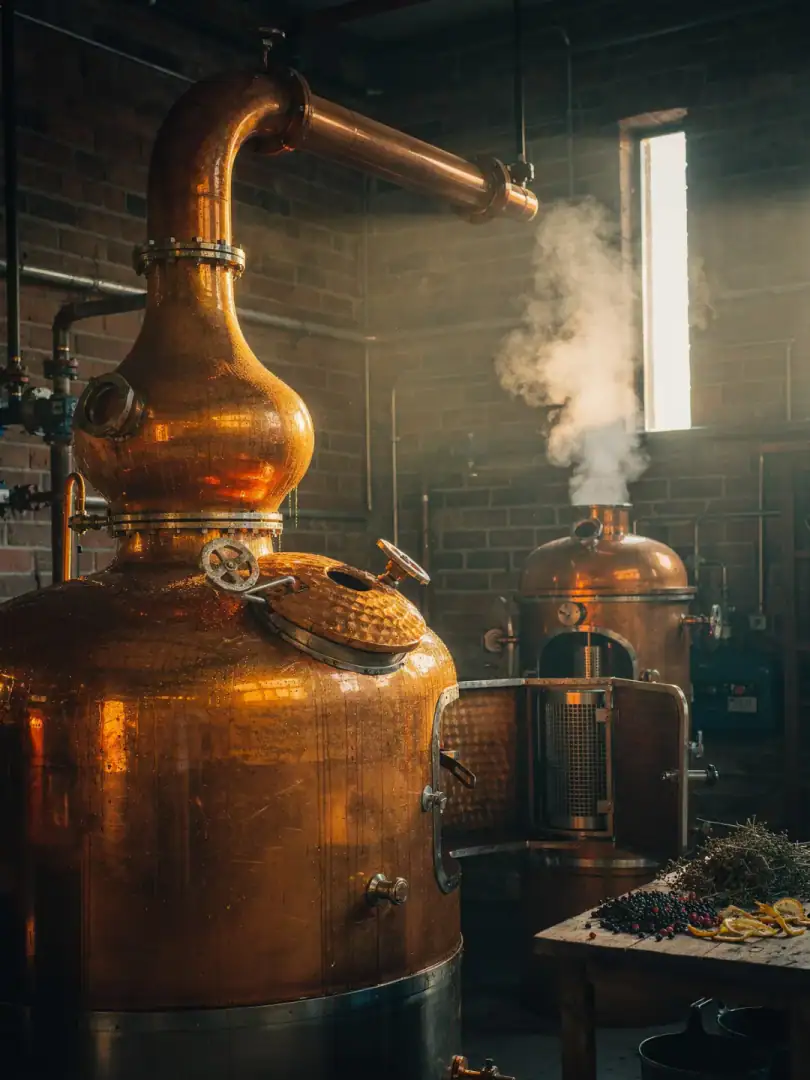
In Girvan, the path then splits into two techniques. In the old 1860 pot still, the botanicals, including juniper, coriander, and angelica root, sit directly in the alcohol. They macerate there, drawing out their oils over hours before heating begins. In the 1948 Carterhead still, other botanicals hang in a vapor basket above the liquid. Only the rising alcohol vapor brushes past them. That's precisely what draws out the lighter, floral notes without cooking them off.
Edinburgh Gin distills on a far smaller scale. The earlier stills on Rutland Place, named Flora and Caledonia, each held only 150 liters, a fraction of what runs through a single batch at Girvan or Cameronbridge. Here, it stays with direct maceration in small batches, watched over by hand.
How strongly the spirit is ultimately distilled also differs. Some distilleries use the so-called one-shot method, distilling directly to the strength that will later be bottled as finished gin. Others produce a highly concentrated distillate. This is only diluted with plenty of water and alcohol shortly before bottling.
Whether it's a giant column or hand-operated 150-liter stills, the same metal stands at the end everywhere: copper, which draws the sharpest sulfur notes out of the vapor.