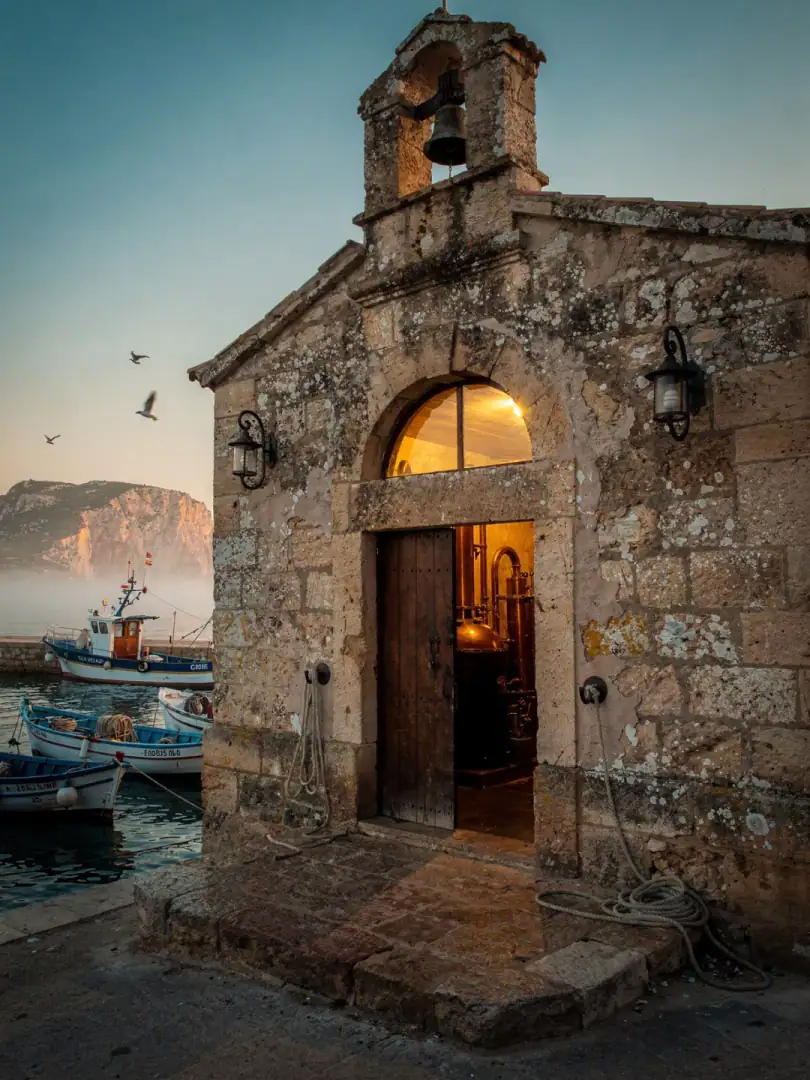
A Chapel Becomes a Distillery
Region & History
Vilanova i la Geltrú sits on the Costa Garraf, half an hour south of Barcelona, and has lived off fishing for centuries. In 2007, brothers Marc and Manuel Giró bought an 18th-century chapel there and converted it into the Destil·leries de Catalunya distillery. Ever since, it has produced Gin Mare, a gin that smells of olives rather than citrus peel.
Both men came from Catalonia's spirits industry and watched a new drinking culture take shape in Barcelona: the gintónica. Bars no longer served gin and tonic in a quick highball glass but as a celebrated ritual, garnished with herbs and poured into large goblets. What they felt was missing was a gin that tasted like Catalonia, not like London.
So they turned back to what grows in the region: the Arbequina olive from Les Garrigues near Lleida, along with rosemary and thyme, the kind that grow on the dry slopes around the Mediterranean. Not a craft gin modeled on the British style, but an answer to the question of what a gin from this coastal landscape could be.
The recipe went deeper than a list of ingredients. In the old chapel, each herb is still macerated and distilled separately today, before the nine distillates are brought together. The site itself remained a workshop: the pews gone, copper stills in, but the stone walls and the tall window above the altar area still stand.
The success struck a nerve that reached far beyond Vilanova i la Geltrú. In those same years, Spain became the country with the highest per-capita gin consumption in the world, and Gin Mare rose to become the best-known flagship of that wave, exported to dozens of countries. Yet the distillery in the chapel remained the only production site, no branch plants, no change of location.
Today, Vilanova i la Geltrú stands for its own branch of gin history: not juniper and citrus as in the north, but juniper and olive grove, distilled in a church that found a second calling.