Olive Instead of Citrus
Botanicals
Juniper provides the backbone of every gin, the resinous, woody note that turns a spirit into gin in the first place. In Catalonia, it grows wild in the garriga, the low, sharply aromatic scrubland that covers the dry limestone slopes around the Mediterranean. What this region adds on top is something else entirely: the olive.
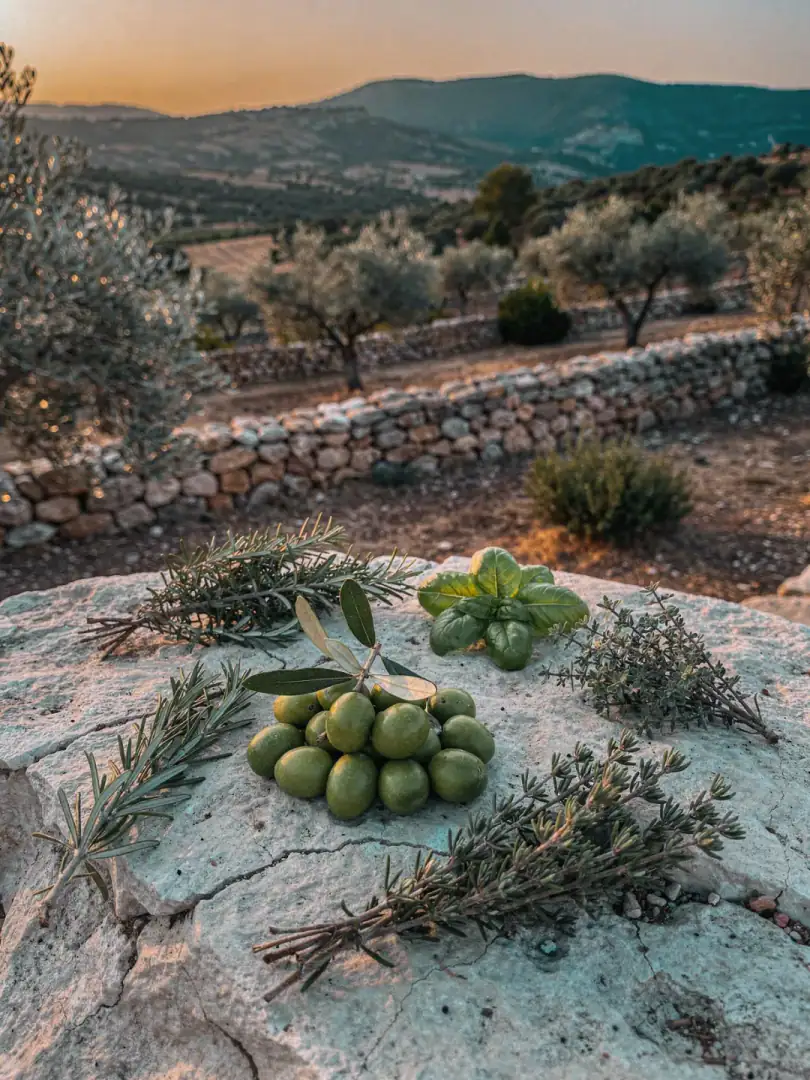
For Gin Mare, the olives come from Les Garrigues, a hilly inland landscape near Lleida named after this very scrubland. The variety grown there is Arbequina, small-fruited and mild, usually pressed mainly for olive oil. For the gin, around 15 kilograms of olives are processed per batch, giving the distillate a salty, rounded, almost bread-like note that in the glass recalls a brine bath rather than fruit.
Then come rosemary and thyme, called romaní and farigola in Catalan, two herbs that grow on the same dry soils as the juniper itself. Rosemary contributes a resinous, almost pine-needle-like note, while thyme adds a spicy sharpness that cuts through the olive's oily character. Basil rounds things off, laying a green, slightly sweet layer over the two sharper herbs.
Cardamom, coriander, and two kinds of peel, orange and lemon, keep the balance with the classic juniper spirit intact. Without them, the gin would taste too much of an olive grove and too little of gin. With them, the Mediterranean character remains recognizable, without juniper and citrus disappearing altogether.
What matters is that each herb is treated separately: citrus peels steep in alcohol for around 40 days, while olive, rosemary, thyme, and basil macerate for only a few hours before being distilled individually. Only afterward are the nine distillates brought together. The result is a gin that doesn't taste like a list of ingredients, but like the landscape it comes from: garriga, olive grove, and sea, all in one glass.
A thin, stony layer of humus over the limestone bedrock of Les Garrigues, where Arbequina olive trees and wild juniper take root.
The root: The fine roots stay close to the surface, ready to absorb every rainfall immediately.