Salty Instead of Citrusy
Tasting
Anyone tasting a gin from Vilanova i la Geltrú for the first time often expects the sharp citrus note of classic gins. Instead, they find something rounder, almost salty. That comes from the Arbequina olive. It gives the distillate a slightly oily undertone reminiscent of brine, unusual for the category but characteristic of this region.
Underneath lies rosemary with its resinous edge, thyme with a spicy earthiness, and basil with a green sweetness that ties everything together. Juniper remains perceptible but deliberately takes a back seat. That's a clear signal this gin isn't aiming for juniper-forward sharpness, but for balance among Mediterranean herbs.
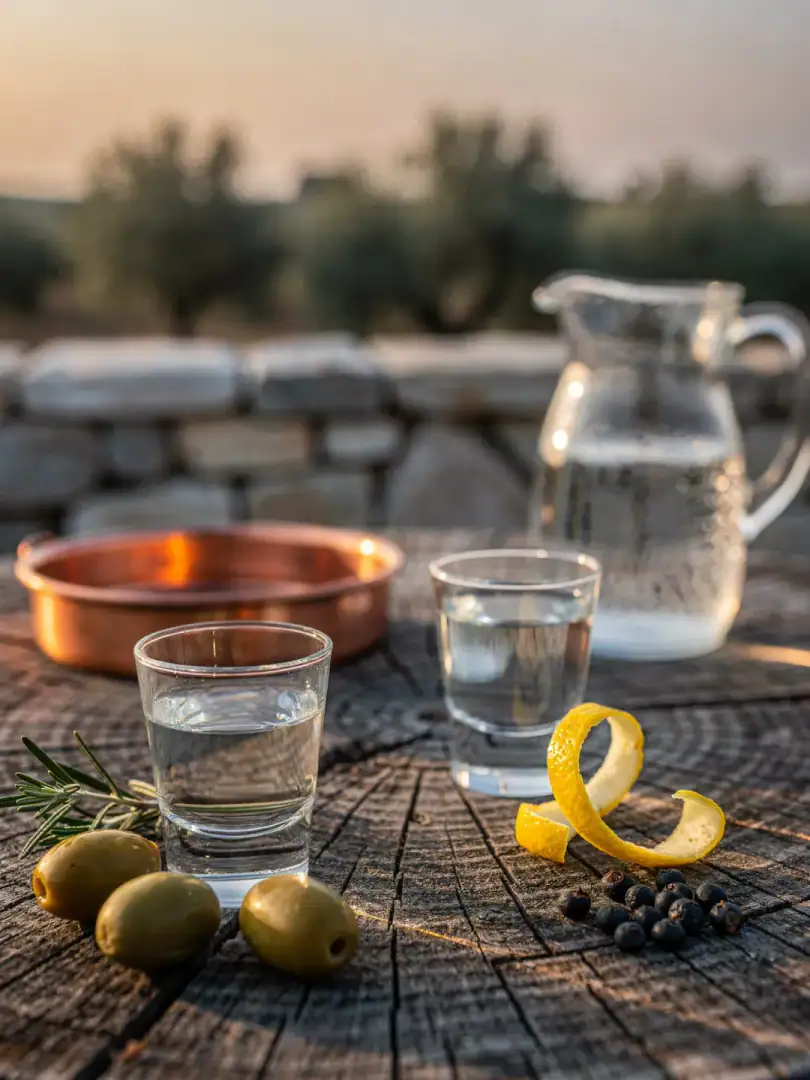
To pick apart the individual aromas, it's best to taste the gin neat at room temperature. Take small sips, with water to rinse the palate between tastes. This way, the olive comes through first, followed by rosemary and thyme, with juniper appearing last in the finish.
Gin Mare from Vilanova i la Geltrú is the best-known representative of this style, and the origin of the whole category. Alongside it, a second Catalan gin has established itself in Barcelona: Ginraw. It, too, leans on Mediterranean, herb-forward aromas, though with a different recipe and its own, cooler herbal profile.
Both examples show the direction Catalan gin has taken. Away from a pure juniper distillate, toward a drink that mirrors the region's landscape directly in the glass: olive groves, dry herb-covered slopes, coastal wind. Taste both side by side, and you'll notice the difference between brine and herb garden within a single category.