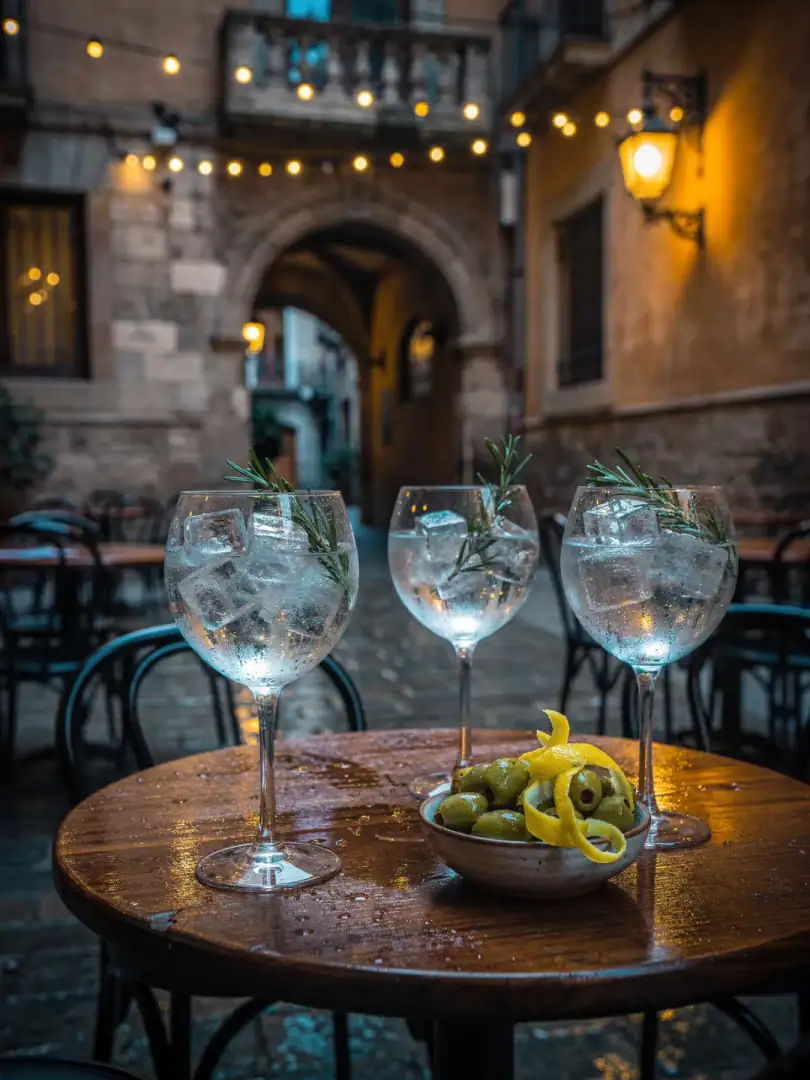
Copa de balón
Drinking Culture
Order a gin and tonic in Barcelona and it's rarely served in a plain highball glass. It comes in the copa de balón, a bulbous, wide-bodied goblet glass. It originally comes from the Basque Country but caught on across all of Spain in the 2000s. Its rounded shape captures the aromas and lets them rise concentrated through the narrower opening at the top.
The starting point was, of all places, fine dining. Chefs and bartenders in Catalonia and the Basque Country started treating the after-work gin and tonic differently. No longer a quick nightcap, but a small ritual of its own, the so-called gintónica. Herb sprigs, spices, and thin citrus slices became the garnish, matched to the particular botanicals in the glass.
Within a few years, this style of preparation conquered Barcelona's bars, from small corner joints to dedicated gin temples, as the city's gin-focused venues are now called. Shelves lined with gin bottles and an array of tonic varieties have since become a familiar sight in many bars. There, the choice of tonic is taken just as seriously as the choice of gin.
For a gin like the one from Vilanova i la Geltrú, the copa is especially well suited. Its wide opening leaves room for a rosemary sprig or an olive as garnish. Herbs and fruit don't crowd each other out. It's usually served with plenty of ice, which cools the gin slowly without watering it down too quickly.
This culture has long since spread far beyond Barcelona, though its roots are clearly here. A Catalan and Basque dining scene turned a simple highball into a drink with its own etiquette. That includes a matching glass, a matching garnish, and a matching gin.