Wine Instead of Grain
Distilling
Most gins start with pure grain-based neutral spirit. Gin de Mahón does not: it's made from wine alcohol, a distillate of fermented grape must, as was common in wine-growing Mediterranean regions long before anyone thought of gin.
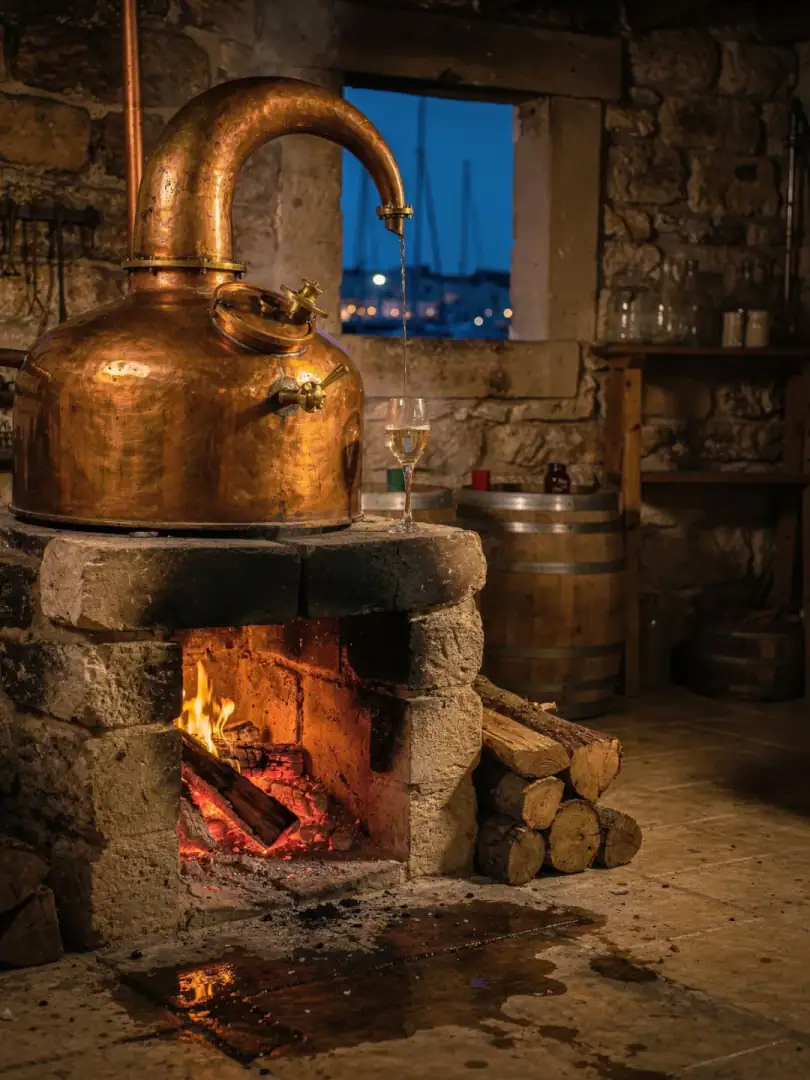
At the Xoriguer distillery in the port of Mahón, distillation takes place in copper stills, called alambiques, over direct wood fire rather than steam or electricity as in most modern distilleries. The juniper berries macerate in alcohol beforehand, then are heated together with it so their essential oils dissolve into the vapor.
During distillation, the master distiller separates the run into heads, hearts, and tails. Only the heart, the true core of the distillate, goes into the bottle; the heads and tails, which contain unwanted compounds, are discarded.
The raw spirit that emerges is well above drinking strength. Only dilution with the island's groundwater brings it down to the required strength, a minimum of 38% ABV, as set out by the designation of origin.
The process stays deliberately simple, with no vacuum distillation, no Carterhead still that would otherwise extract aromas more gently. On Menorca, old-fashioned craftsmanship counts for more than the latest equipment.
Such a one-shot method demands patience: every batch runs the full course from mash to finished spirit, rather than being diluted from a high-proof concentrate. This detour through wine rather than grain is exactly what makes Gin de Mahón an outlier among European gins.