The short answer
Botanicals are the plant-based ingredients that give a gin its flavor. Juniper is always included. Beyond that, citrus peel, coriander seed and roots are frequently used.
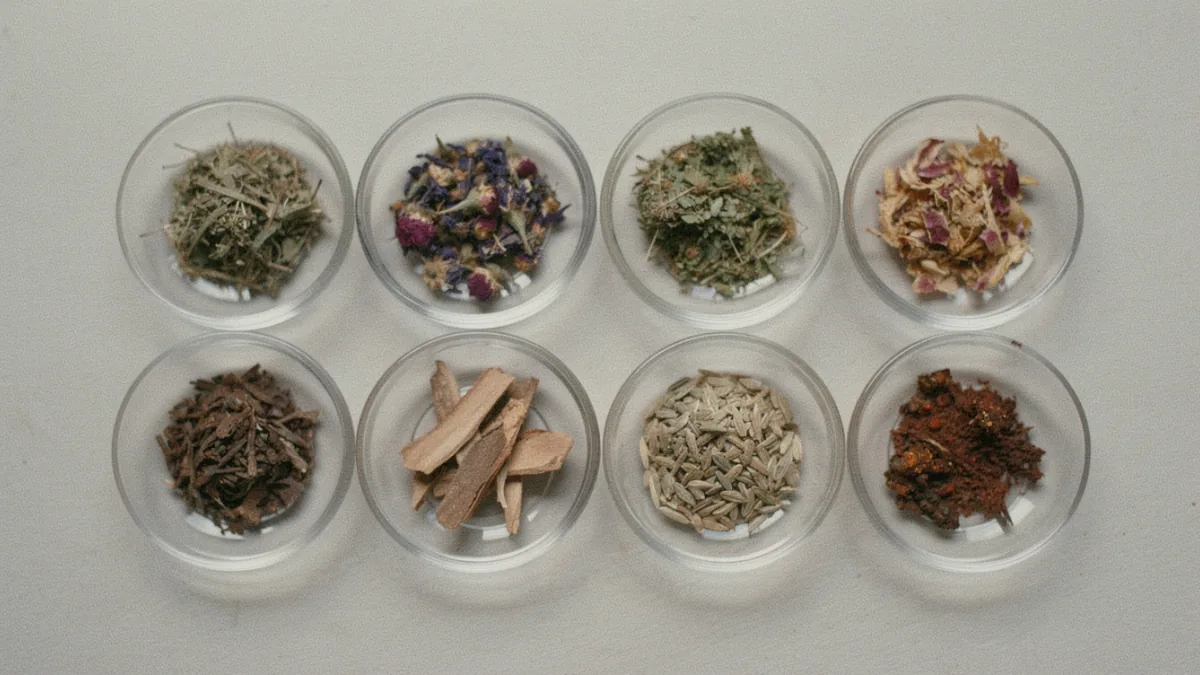
More ingredients aren't automatically better
Botanicals is the technical term for plant-based flavor sources. The word sounds scientific and simply means anything plant-based that goes into the gin. That includes seeds, peels, roots, flowers and spices. Juniper is a given, everything else is the distillery's signature.
A few building blocks show up in a great many gins. Coriander seed often brings a citrusy, spicy note. Angelica root gives structure and binds the other flavors together. Citrus peel provides freshness. What varies most is the ratio of these ingredients to one another.
Processing has a say too. The same ingredient behaves differently depending on how long and how intensely it's involved. An ingredient list therefore only shows what was used, not how strongly it comes through.
That's exactly why the number of botanicals isn't a mark of quality. Twenty botanicals can mask each other until only a vague aroma remains. Five that are well balanced together often make for the clearer drink.
Many producers print their botanicals large on the bottle. It's nice to read, but it says nothing about the amounts. An ingredient can be listed and still barely show up in the glass.
In practice, this means for shopping: the number of botanicals isn't a useful decision-making tool. The style description on the back is more helpful. It tells you whether a bottle turns out juniper-forward, citrusy, spicy or floral — and that's something you can actually work with.
What you smell isn't the ingredient list
If you smell lemon in the glass, that alone doesn't tell you which ingredient is responsible. If you're interested in the actual ingredients, only the producer's information will help.
Some impressions only emerge from the interplay of ingredients. A note you perceive as grapefruit can come from the ratio of several ingredients. Not a single actual grapefruit needs to have been involved.
This isn't deception — it's simply how smell normally works. Our sense of smell matches patterns rather than identifying individual substances. It works more like someone recognizing a song than someone naming individual notes.
For your own experiment, smell the gin first without any garnish. Then compare it in a simple drink with a neutral tonic. Only at the end should you add a lemon peel or other suitable garnish. That way you'll notice what the garnish contributes and what was already there before.
For an experiment like this, focus on just one gin. Trying to break down two at once sounds thorough but usually ends in confusion. By the second glass, your nose isn't as sharp as it was for the first anyway.
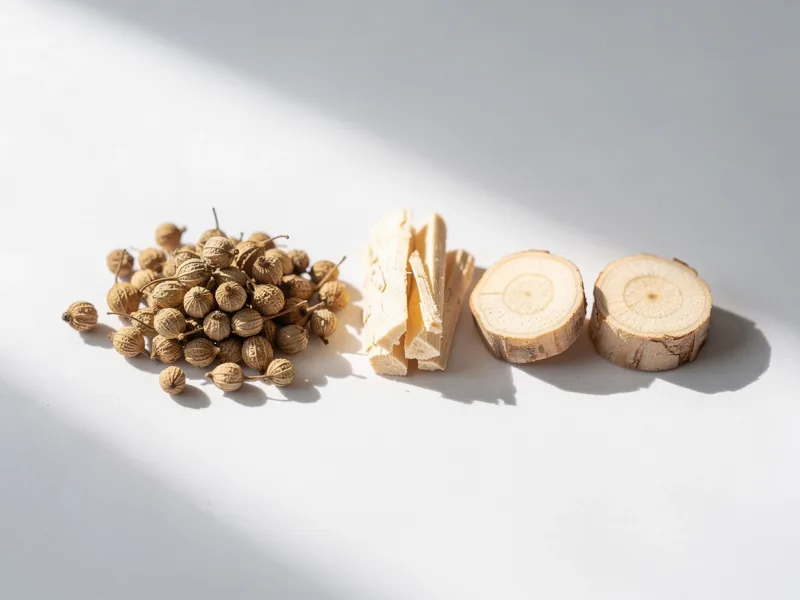
Recognizing botanicals in the finished drink
Three steps in sequence show you which impression comes from the gin itself and which only arises from mixer and garnish. The same note can have several causes, so this is a search aid, not proof. Write a short note after each step, otherwise the three impressions will blur together.
| Comparison | Pay attention to |
|---|---|
| Gin first without garnish | What impressions does the base itself give? |
| Same gin with a neutral tonic | Which flavors stand out in the mix? |
| Only then add a garnish | Does it move the drink in the desired direction? |