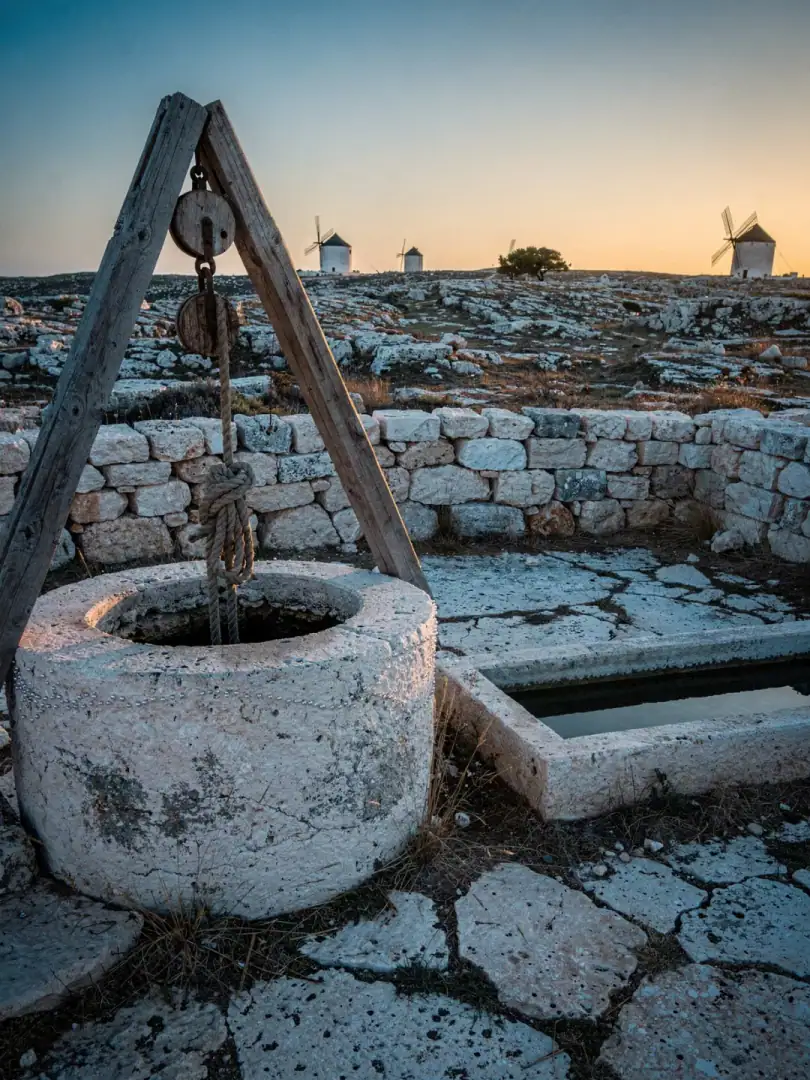
Wells Instead of Rivers
Water & Climate
Menorca has no significant river. The island's water comes from underground. Rain seeps through the porous limestone and collects in underground aquifers, which have fed the island's wells for centuries.
The most important aquifer, the Aqüífer de Migjorn, lies beneath the flat limestone plateau in the south. It remains a key source of drinking water for Menorca to this day.
Every distillery needs exactly this groundwater when reducing the finished gin from cask strength to bottling strength. Water that's too hard or mineral-rich would mask the juniper; water too soft would let the alcohol taste harsh. On Menorca, the limestone gives the water a light but noticeable hardness.
Even in British times, the island's drinking water was a matter of politics. Ships anchored in the port of Mahón had to fill their barrels from the same wells that still supply parts of the old town today.
The climate is dry and windy: hot, nearly rainless summers, mild but stormy winters. The Tramuntana can blow for days, drying out soil and plants alike, which makes the water rising from below all the more essential.
For the distillery at the port of Mahón, this means water is no side note. It's a raw material as local as the juniper itself, even if it remains invisible in the glass. The Xoriguer distillery still uses this very water today to bring its gin down to bottling strength.