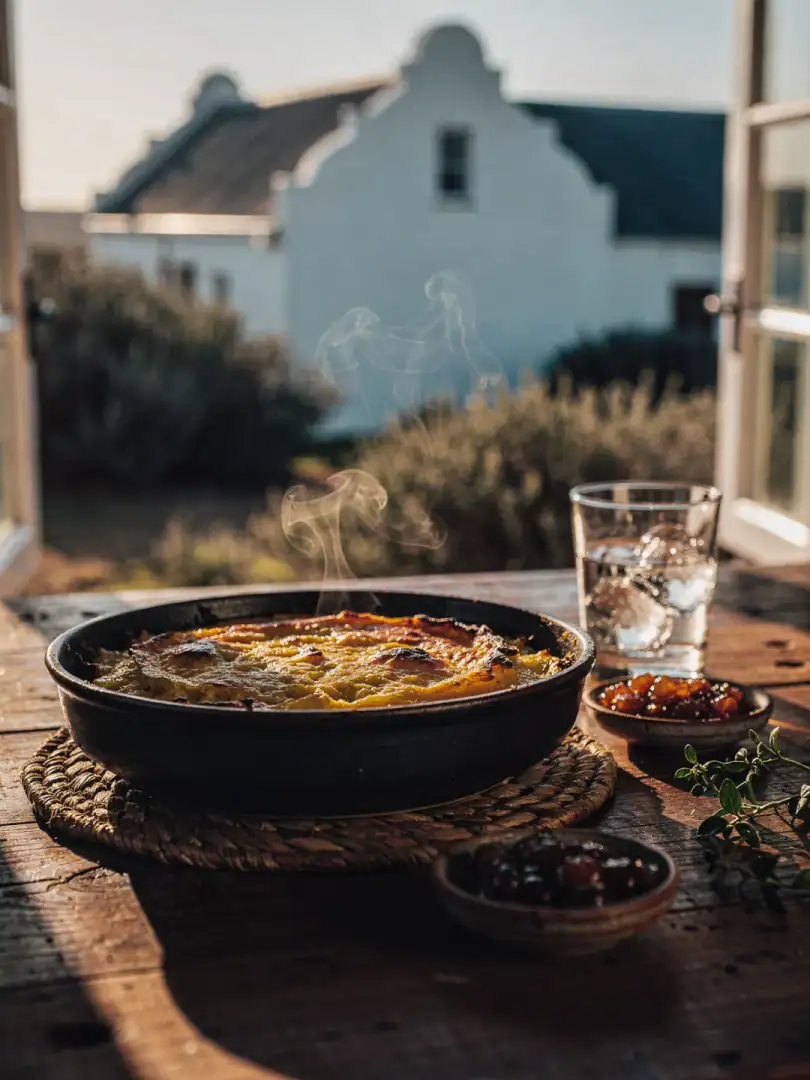
Bobotie Meets Fynbos Gin
Gin & Food
Bobotie is one of the best-known dishes of Cape Malay cuisine, a baked casserole of spiced ground meat topped with an egg layer. It gets its sweetness from raisins and apricots, its spice from curry and bay leaf. This combination of sweet and spicy pairs well with a gin whose honeybush note likewise brings a mild sweetness, without overwhelming the gin.
Snoek, an elongated fish from the cold waters off the coast, is traditionally served smoked or grilled, often with apricot chutney. Its bold, slightly oily flavor calls for a gin with clear citrus or herbal sharpness. Hope Distillery offers exactly that with its Contemporary varieties, rather than a very sweet fynbos gin.
Cape Malay cuisine itself traces back to immigrants and enslaved people from Southeast Asia who arrived at the Cape centuries ago. They combined their spice traditions with local ingredients. Turmeric, cumin, and cinnamon shape many dishes, and this very world of spices meets the herbal, sometimes savory botanicals found in some of the region's gins.
Buchu itself reminds some people of fresh kitchen herbs. That's why a gin with a pronounced buchu note pairs well with fresh, light fish or a salad with citrus fruits. The minty coolness in the glass balances out the spice of many Cape Malay dishes without overpowering them.
Anyone with a glass of gin next to a plate of bobotie or snoek is tasting two sides of the same landscape: spices that arrived across the Indian Ocean, and botanicals growing just a few kilometers away in the fynbos. Together, they produce a flavor that exists nowhere else outside the Cape West.