The short answer
Gin can be mixed herby, fresh, fruity, or herbal. First decide on a direction. The Negroni brings bitterness, the Dry Martini brings clarity, the Gin Fizz brings citrus, and the Basil Smash brings herbs.
Four recipes, four different roles
In the Negroni, gin stands alongside red vermouth and a bitter aperitif. Vermouth is wine infused with herbs and brings sweetness and spice along with it. The Dry Martini uses very little dry vermouth, so the gin's aromas stay front and center. A Gin Fizz combines lemon, sugar, and soda water. The Basil Smash adds fresh basil into the mix. All four share the same base spirit. That doesn't mean they taste anything alike.
A single question sorts these four drinks: how much of the gin should remain noticeable? In the Martini, almost all of it. The Negroni pits two robust partners against it. In the Fizz, acidity and carbonation carry it. Tonic dilutes it the most. If you want to get to know your bottle, start at the top and work your way down. The Martini shows you what your bottle can do. With a Gin and Tonic, you mainly learn something about your tonic.
Which bottle is enough to start with?
A clearly juniper-forward gin with a straightforward description fits into almost any recipe. Highly perfumed or strongly flavored styles, on the other hand, tend to push themselves forward and can overwhelm a drink. So try such a bottle first in a small amount. You won't need a second bottle for every cocktail by any means. Fresh citrus fruit, the right vermouth, and a carefully measured syrup often change the glass more than the next label does. An example makes this tangible. A juniper-forward gin remains recognizable in a Negroni alongside vermouth and bitters. A strongly floral-scented bottle pulls the same recipe in a different direction. That's not worse—it's simply a decision the label makes for you without saying so.

What you really need
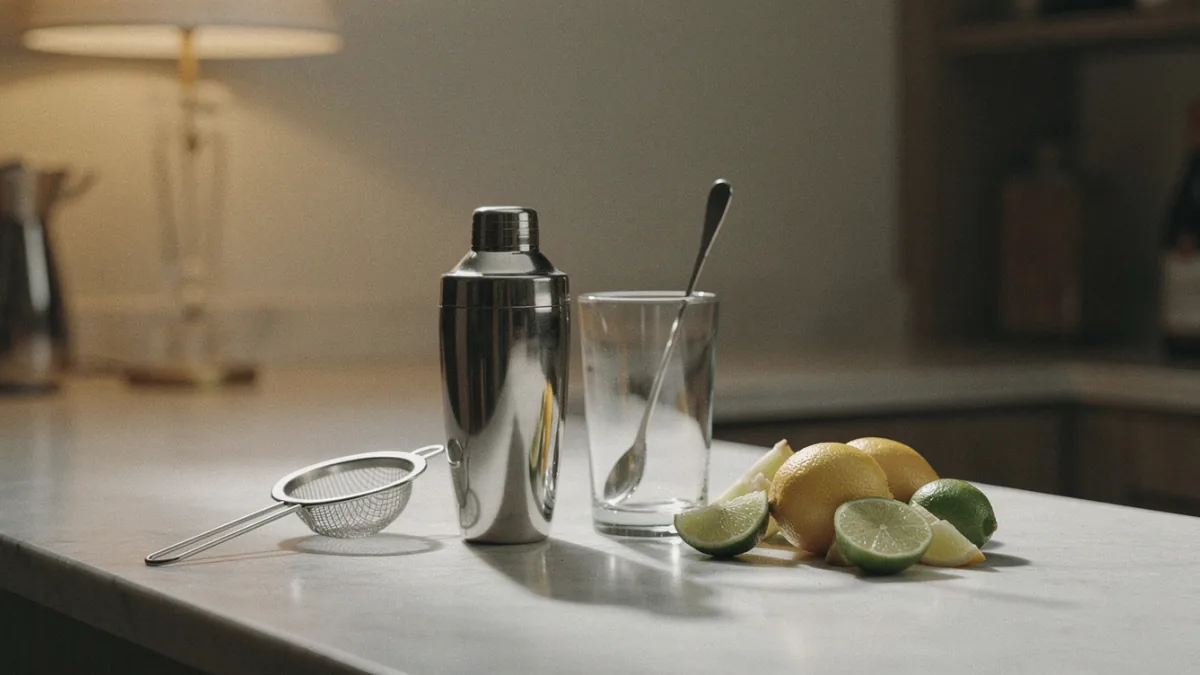
A measuring cup, clean glasses, and plenty of ice form the foundation. Bartenders call the small double-sided metal measure a jigger. Sours additionally require a shaker and a strainer. Stirred drinks like the Martini only need a mixing vessel and a long spoon. Anything with carbonation goes into the glass only after shaking, or it will foam over.
The measuring cup is the most underrated tool here. Poured by feel, two attempts can easily differ by twenty percent. At that point, you're no longer comparing recipes, but comparing chance results. For about ten dollars, much of the frustration of remixing disappears. The second aid costs nothing at all: write down the amounts you actually used.
Adjust the garnish last
Stick to the recipe's garnish on your first attempt, or leave it off entirely. A lemon zest releases different aromas than cucumber or rosemary. Zest refers to the thinly cut outer peel without the white pith underneath. Just express it lightly over the finished drink. A whole bunch of herbs in the glass masks exactly the balance you're trying to judge. It won't rescue an overly sweet or overly bitter mix anyway.
The peel releases its oil the moment you bend it over the glass. In good light, you can see a fine mist as this happens. That's the whole point of this garnish. Dropping it into the glass afterward is mere decoration. Simply tossing it in without expressing it skips the effect entirely.