Fynbos Boom Since 2014
Region & History
For three years, Lorna Scott experimented with around 150 wild plants from the fynbos. In 2011, in Stilbaai along the Garden Route, she bottled the first gin from her distillery, Inverroche. It came out of the still amber-colored, since some botanicals release color into the alcohol. It was the very first gin ever built around fynbos plants.
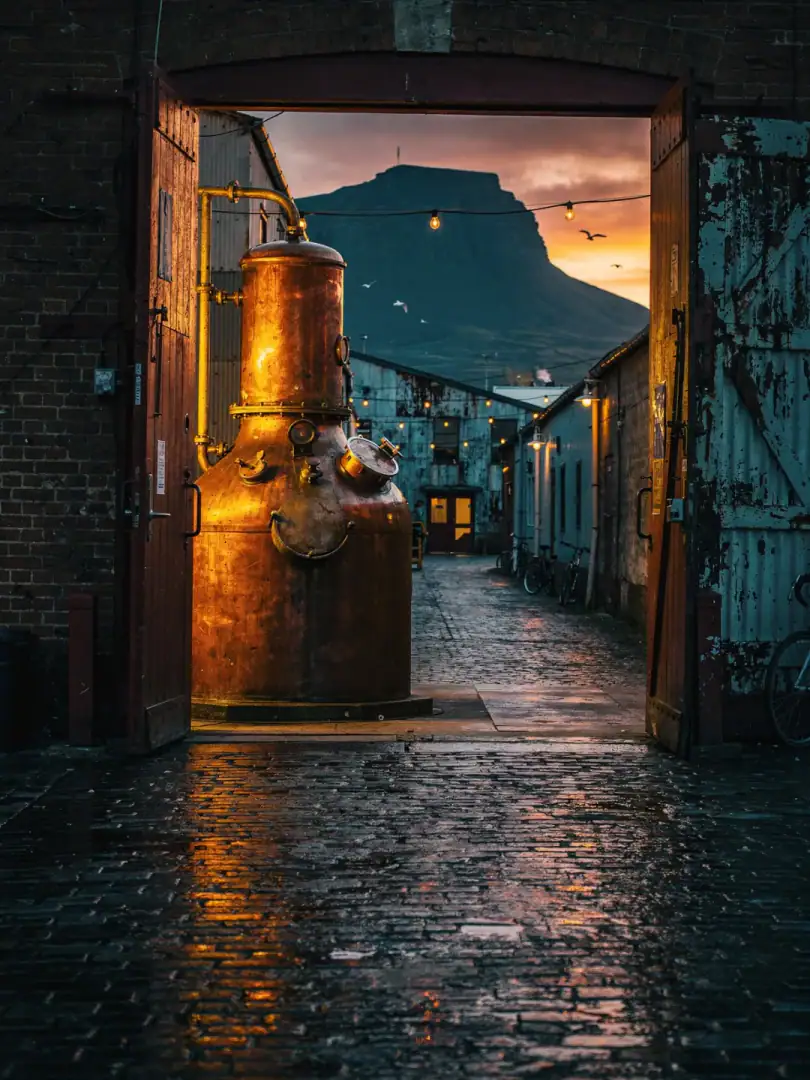
Around the same time, Lucy Beard and Leigh Lisk, a married pair of lawyers, moved back to Cape Town from London. In 2013, they began planning. By 2014, their distillery was up and running in an old warehouse in Salt River, right next to the trendy Woodstock neighborhood. Hope Distillery became the city's first licensed craft distillery. Its two stills still carry serial numbers 001 and 002 to this day.
The reason behind this surge lay in the law. South Africa's alcohol regulations loosened in 2014. Small distilleries suddenly no longer needed heavy wholesale infrastructure behind them. The number of distilleries in the country grew from around 19 to more than 30 the following year. Gin sales rose by more than 150 percent between 2014 and 2018.
More names emerged from this wave. In 2015, Musgrave launched the country's first pink gin. It struck a chord that still resonates today. South Africa now counts more than 200 gin brands, many of them clustered around Cape Town and Stellenbosch, where wineries and distilleries share the same landscape.
Walk through Woodstock today and in some corners you'll catch the smell of diesel drifting up from the harbor. A few steps further, the scent of juniper wafts out from an open distillery door. What began as a basement project by two lawyers has become a fixed stop for visitors to the city. Lorna Scott's kitchen experiment has grown into a brand now sold internationally.