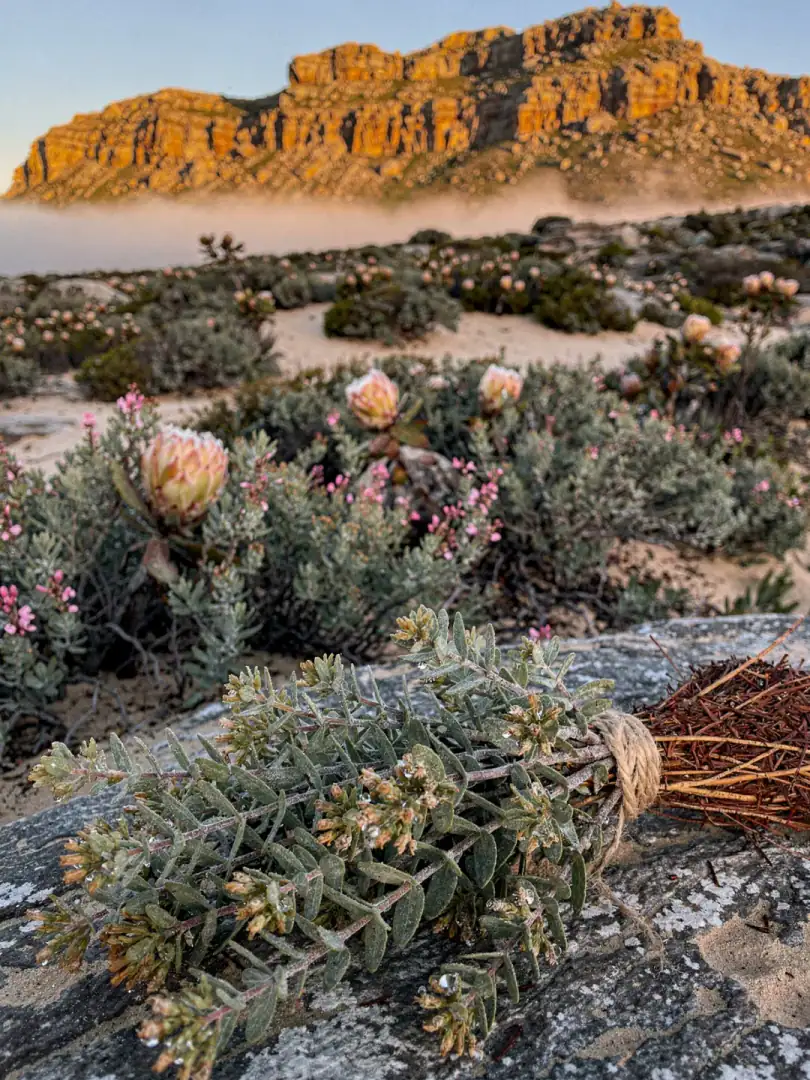
Fynbos Instead of Juniper
Botanicals
Juniper doesn't grow wild at the Cape; every distillery sources it dried from abroad, mostly Eastern Europe. Its resinous base note remains the foundation, but on the Cape West something else joins in that exists nowhere else: fynbos, a shrubland with more than 9,000 plant species packed into an area smaller than Portugal.
Buchu is the best-known fynbos herb found in gin bottles from this region. Its leaves smell of blackcurrant with a minty, almost medicinal sharpness; the San and Khoi people used it as a healing herb long before the first distilleries existed. In gin, buchu lends a cool, slightly bitter edge that pushes citrus into the background.
Honeybush, botanically related to red bush rooibos, brings the opposite: a sweet, honey-like note with floral hints, almost like chamomile with caramel. Rooibos itself adds tannin and a dry, woody tone that gives a gin depth without making it heavier. Both plants grow only in this corner of South Africa.
Inverroche distills its three gin expressions according to the flowering season of the respective fynbos species, with each variety highlighting a different time of year in the bush. Other distilleries also reach for African ginger or grains of paradise, a peppery, woody fruit from West Africa that has long since found its way to the Cape via trade routes.
These botanicals grow in poor, sandy soil that otherwise offers little. That's exactly what forces the plants to concentrate their essential oils heavily, so insects can find them at all. What's a hardship for the soil becomes an advantage in the still: an intense aroma from very little leaf mass.
Nutrient-poor, acidic sand, mixed with fine quartz grit from weathered sandstone.
The root: Buchu roots here spread flat and wide to soak up every raindrop immediately.