Cooking with Gin
Cooking with Gin
How do you cook with gin, in a brine, sauce, gravlax, and sorbet? Gin brings juniper and citrus aromas straight into the dish, far beyond the glass.
Gin in Brines for Meat and Fish
A brine is a seasoned liquid in which meat or fish sits before cooking. Gin brings juniper, citrus, and herbal notes directly into the tissue here, without contributing as much sweetness as wine would. A brine with gin, juniper berries, and a bit of orange peel suits game birds or venison especially well.
Since gin is fairly high-proof, at least 37.5 percent alcohol under EU law, a small splash usually suffices, diluted with oil, herbs, and a bit of liquid. Too much undiluted gin can otherwise dry out the meat, since the alcohol draws moisture out of the tissue.
A gin brine also works well with fish, a whole trout, for example, if kept brief: even half an hour is enough for the juniper and citrus aromas to come through without the fish turning mushy from the brine. Fish generally shouldn't sit in a gin brine as long as meat.
Deglazing Sauces with Gin
Deglazing means pouring liquid into a hot pan to lift the browned bits from the bottom. Gin works well for this, since its botanicals release additional aromas when heated, which meld with cream, butter, or stock into a well-rounded sauce. A juniper-forward gin suits game or poultry sauces especially well.
It's important to actually let the alcohol cook off until only the aroma remains, or the sharpness of the raw alcohol will dominate the sauce. A splash of gin added at the end, just before serving and without further heating, on the other hand, gives the sauce a fresher, more pronounced citrus accent.
Gin also works well in vegetarian sauces: a mushroom sauce with a bit of gin and cream picks up an unexpected depth from the juniper and herbal notes, reminiscent of forest aromas. Here too, it's important to cook off the alcohol completely so only the aroma remains.
Gravlax: Salmon Cured in Gin
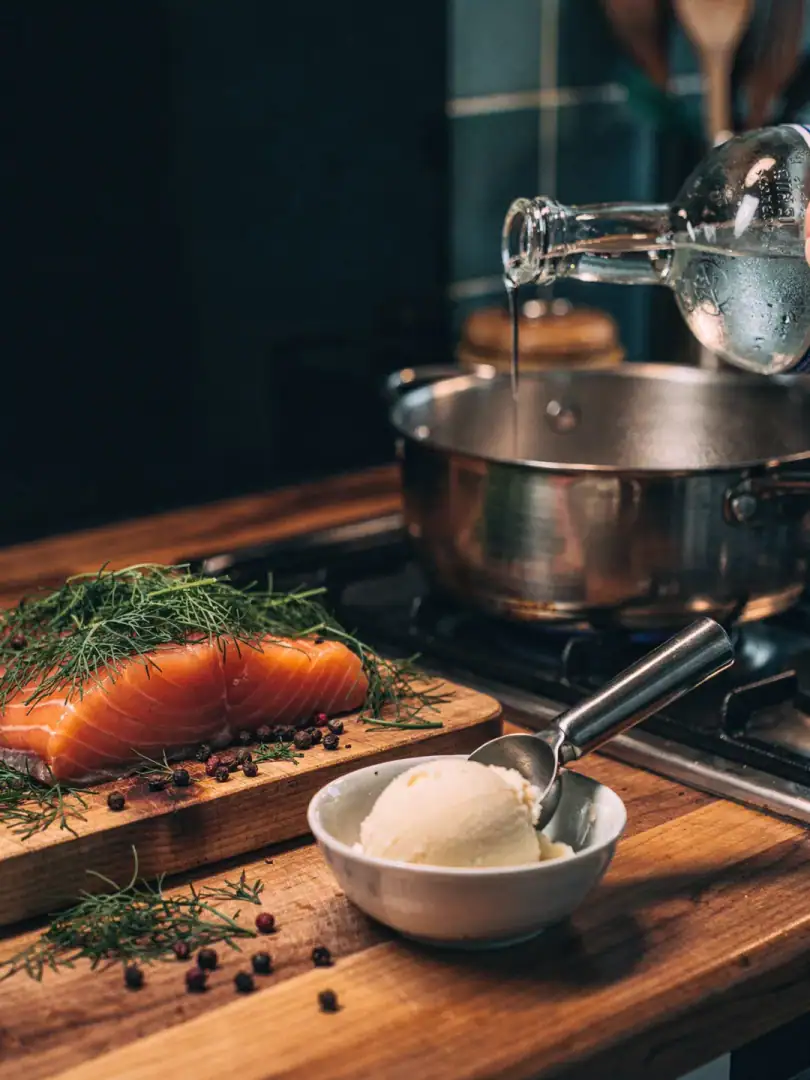
Gravlax is salmon that cures for several days in the refrigerator in a mixture of salt, sugar, and spices, rather than being cooked. A splash of gin in this mixture brings juniper and citrus notes into the fish, complementing the classic dill aroma rather than pushing it aside.
The alcohol in the gin also gives the curing process a slight boost, since it draws moisture out of the fish and firms up the texture. A balanced amount matters here: too much gin makes the fish taste bitter or overly alcoholic, while a small splash is enough for a clear but not overpowering accent.
If you make gravlax often, it's worth experimenting with different gins: a citrus-forward gin brings a brighter, fresher note, while a herb-forward gin with plenty of dill or fennel character reinforces the dish's classic, spiced direction instead. Both versions can be prepared side by side and compared directly.
Sorbet with Gin: Frozen Freshness
A sorbet is a frozen fruit ice made without cream, usually from fruit juice, sugar, and water. A splash of gin even helps technically prevent the sorbet from freezing too hard, since alcohol lowers the freezing point, while also bringing juniper and citrus aromas that suit citrus or berry sorbet especially well.
Such a sorbet is often served as a palate cleanser between courses. Too much gin, though, makes the sorbet too soft to scoop, so as a rule of thumb, keep it to a small proportion of the total liquid, so texture and flavor stay in balance.
A gin sorbet works just as well as a palate cleanser as it does a light finish to a menu, when a heavy dessert afterward just wouldn't fit. Citrus or juniper sorbet with a splash of gin feels refreshing without adding extra weight, ideal after a rich or meat-heavy main course.