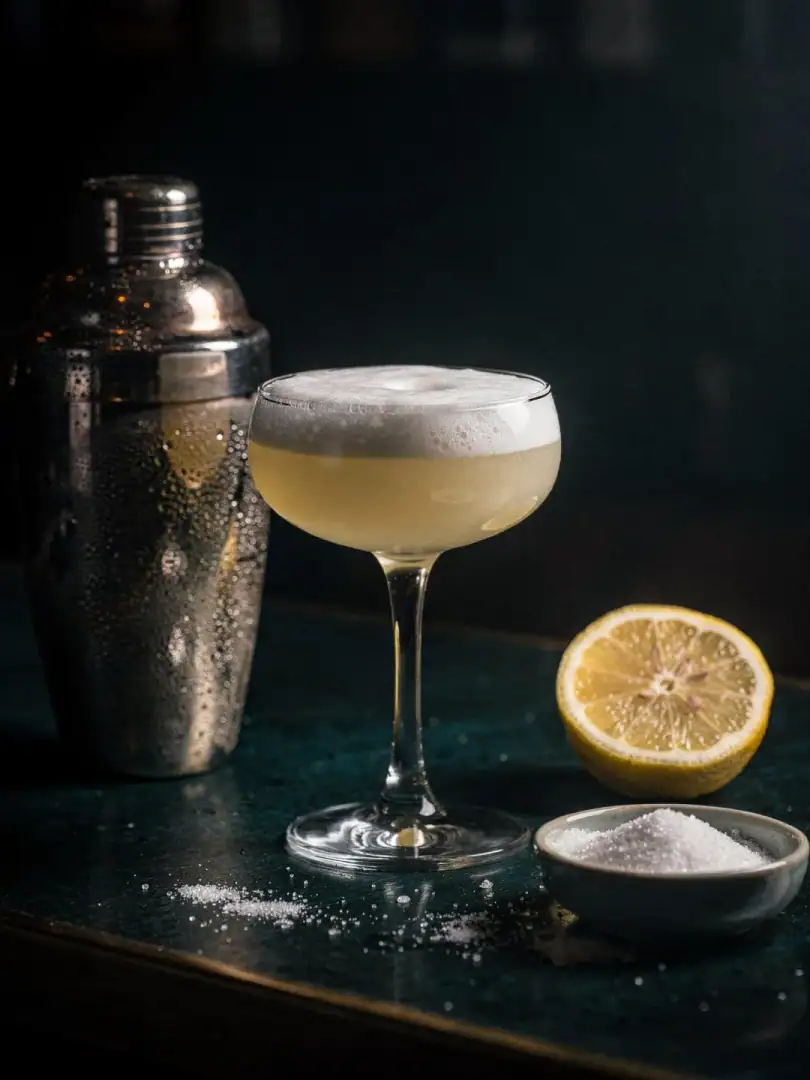
Acidity, foam, egg white
Gin Sour and Fizz
Sour and Fizz form two closely related groups of gin cocktails built on the same basic principle: spirit, citrus acidity, and a touch of sweetness in balance. Egg white turns many of these drinks into a silky, foamy beverage that feels very different from a clear cocktail.
What is the basic structure of a Sour?
At its core, a Sour always consists of three building blocks: a spirit as the base, fresh citrus juice for acidity, and a sweetener to soften that acidity. In a Gin Sour, gin serves as the base, lemon juice usually provides the acidity, and a syrup or a bit of sugar balances things out with sweetness. All the ingredients are shaken vigorously so the acidity and sweetness blend evenly.
This simple formula can be applied to many spirits, but with gin, the juniper and herbal notes from the botanicals add an extra aromatic layer that pure citrus acidity alone can't provide. It's exactly this interplay of botanical depth and clean acidity that makes the Gin Sour a distinctive cocktail style in its own right.
What sets a Fizz apart from a Sour?
A Fizz follows the same basic logic as a Sour, but gets topped up with soda water at the end, making the drink fizzier and longer. While a Sour is usually served compact in a smaller glass, a Fizz typically ends up in a taller glass, coming across as lighter and more refreshing than its still relative.
This carbonation also changes the drinking experience: the bubbles carry aromas to the nose faster and create a tingling sensation in the mouth that a still Sour simply doesn't offer. So anyone wanting to enjoy a Sour longer and lighter should reach for the Fizz variant with a splash of soda water on top.
What role does egg white play in the glass?
Egg white is added to many Sours and Fizzes to provide texture rather than flavor: when shaken, it creates a fine, stable foam that makes the drink silky and smooth while noticeably rounding out the acidity. For this foam to form properly, the drink is often shaken vigorously first without ice, then shaken a second time with ice, so that foam formation and chilling can each develop optimally on their own.
For anyone who prefers to skip raw egg white, there are now pasteurized or plant-based alternatives available that can produce a similar foam. This technique is especially demanding with very foamy classics known for their long, intense shaking time, where all that effort becomes directly noticeable in the texture of the finished drink.
What should beginners keep in mind?
Anyone mixing a Gin Sour or Fizz for the first time should use freshly squeezed citrus juice. Bottled juice often tastes flatter, and it's almost always missing the fine acidity that fresh juice provides. Just as important is vigorous, cold shaking. Only then do acidity, sweetness, and any egg white properly bind together, rather than sitting loosely side by side in the glass.
A syrup that's too sweet can quickly mask the acidity, so it's worth adjusting the sweetness gradually and dosing it cautiously. With these few basic rules, the whole range of this cocktail family becomes easy to master with manageable effort. The right glass helps too: a narrower glass keeps the foam stable longer than a very wide, shallow one, where it collapses more quickly. Paying attention to these details quickly reveals how much difference small adjustments in ingredients, technique, and glassware can make in the final Gin Sour or Fizz. Anyone who mixes Sours or Fizzes regularly develops a feel over time for how much sweetness, acidity, and foam suits their own taste, without needing to measure everything precisely each time. And it's exactly that feel that ultimately makes the difference between a solid Gin Sour and a truly outstanding one.