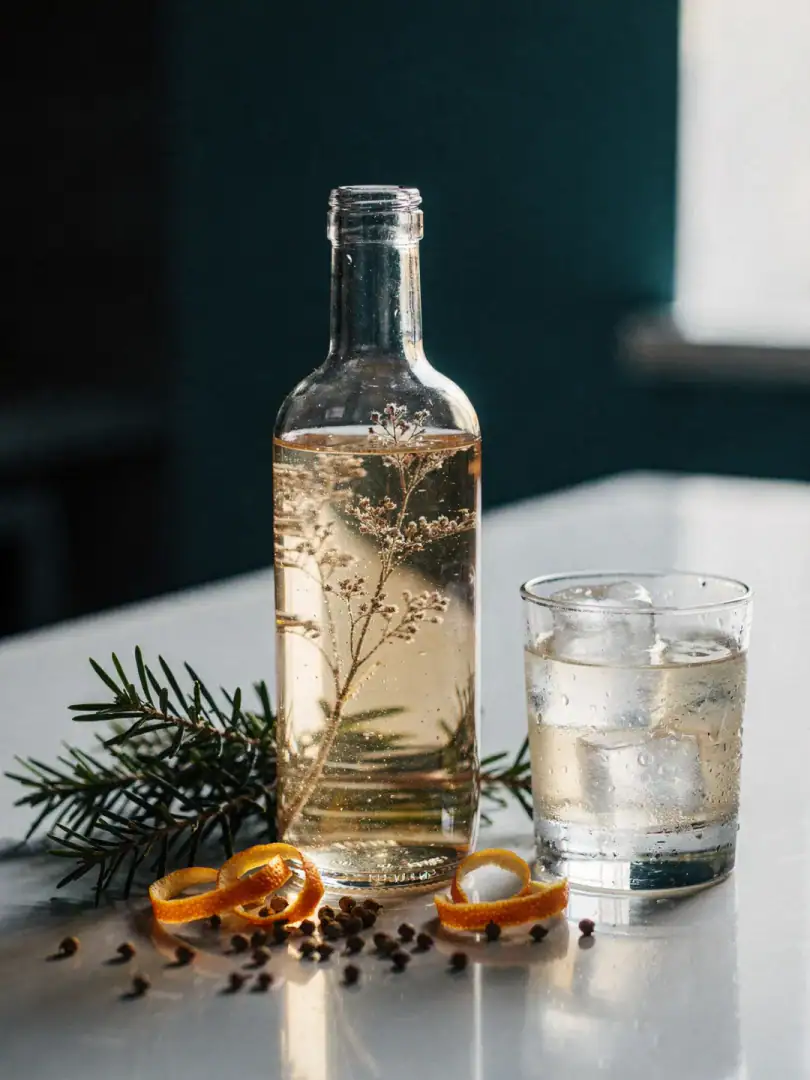
Without alcohol
Alcohol-free alternatives
Alongside classic gin, there's now a growing selection of alcohol-free alternatives. They recreate the botanical flavor world of gin without the alcohol, aimed at anyone who wants to skip alcohol but not the taste and ritual surrounding a Gin and Tonic.
How are alcohol-free gin alternatives made?
Alcohol-free alternatives to gin usually work with the same botanicals as classic gin: juniper, coriander, citrus peels, and various other herbs or spices. Instead of distilling or steeping them in alcohol, these ingredients are often distilled using steam or under reduced pressure. This process extracts only the essential oils and aroma compounds, without producing any drinking alcohol.
Other producers rely on infusions or extracts. These are then combined with water, a bit of acidity, and sometimes a touch of sweetness to create a ready-to-drink product. Legally, these products don't fall under spirits regulations, since they lack the required minimum alcohol content. Producers therefore usually market them as alcohol-free distillates or alcohol-free gin substitutes. Some products even combine several methods, for instance steam-distilling the more robust botanicals while simply infusing the more delicate citrus and floral notes, aiming for as well-rounded a result as possible. As a result, products on the market can differ quite noticeably in flavor, intensity, and price, even though they're all sold under the same general label.
What can alcohol-free alternatives achieve, and what can't they?
In a simple Gin and Tonic, good alcohol-free alternatives can recreate the botanical flavor world of real gin surprisingly closely. Tonic water and ice already shape a large part of the drinking experience anyway. For a quick, refreshing alcohol-free long drink, they're a practical choice, especially on nights when you're skipping alcohol.
Things get trickier with cocktails like the Martini or Negroni. These drinks rely on the strength, body, and solvent power that alcohol has on certain flavor compounds. Without alcohol, the familiar mouthfeel and lingering finish are often missing. Alcohol-free alternatives tend to work there more as a standalone reinterpretation than as an exact substitute.
Who are alcohol-free alternatives worth it for?
Alcohol-free alternatives are aimed mainly at people who avoid alcohol entirely or temporarily for health, religious, or personal reasons, but still want to take part in the shared ritual of drinking. For driving, pregnancy, or alcohol-free months, they also offer a flavorful bridge that plain water or soda often can't provide.
Anyone who values botanical complexity should look specifically for products with clearly listed botanicals and compare labels, rather than reaching blindly for the first bottle available. This makes it possible to find a suitable alcohol-free option for almost any occasion, without having to give up a well-rounded, aromatic drink. Bars and restaurants are increasingly turning to alcohol-free alternatives too, since they let them offer guests who don't want alcohol a proper drink instead of just pointing them toward water or juice. For home use, it's worth comparing several brands, since the intensity and sweetness of the botanicals can vary noticeably from one producer to another. Anyone trying an alcohol-free alternative for the first time should taste it neat or with just a splash of water before mixing it with tonic water, to get to know the actual botanical flavors without any other influences. That makes it much easier later on to decide which product best suits your own taste and the occasion at hand. In the end, the choice remains a very personal matter, where labels and marketing claims matter less than your own repeated comparisons in the glass. Anyone who compares patiently will usually find an alternative that suits their occasion and taste fairly quickly, without having to sacrifice aroma or ritual.