History and Style
Negroni
Equal parts gin, red bitter liqueur and sweet vermouth: the Negroni is one of the bitterest and, at the same time, most beloved gin cocktails in the world. Its origin story is often told as legend, even though the facts behind it can no longer be reliably confirmed.
How does the legend tell its origin?
According to the most well-known story, around 1919 an Italian nobleman named Count Camillo Negroni was sitting in a bar in Florence. There, he usually drank an Americano, a mixture of red bitter liqueur, sweet vermouth and soda water. On this particular day, however, he asked the bartender for something stronger and had the soda water replaced with a splash of gin.
The stronger drink is said to have quickly caught the attention of other guests at the bar. According to legend, it spread first through Florence and then far beyond the city, until it became known as a cocktail in its own right under the name Negroni. As the story goes, the bartender even gave the new drink its own orange twist instead of the lemon slice typically used for the Americano, so guests could tell the two drinks apart at a glance. This small detail is still preserved in many bars today, regardless of how the origin story actually unfolded.
How well documented is this story?
As lovely as this story sounds, it can't be fully verified. Reliable sources confirming a real Count Camillo Negroni in exactly this bar scene are largely missing, and historians frequently point out this gap.
The Negroni family's own tradition even names a different person as the drink's creator. Among bartenders, the Florence story is still considered the most common version, but it is explicitly told as legend rather than presented as established historical fact. For guests at a bar, this uncertainty changes little about the taste of the drink, but it's a good example of how quickly a charming anecdote can turn into a seemingly established cocktail history. Anyone retelling the story would do well to clearly label it as legend rather than presenting it as verified fact. This same mix of a beautiful story and shaky sourcing shows up with many other classic cocktails too, making their history both entertaining and a little unreliable to dig into. In the end, none of this matters for enjoying the drink itself, since the taste and bitterness of the Negroni remain the same no matter which version of the founding story you find more likely. Still, the legend remains a great conversation starter for the Negroni, even before the first sip is taken.
What defines the Negroni's style?
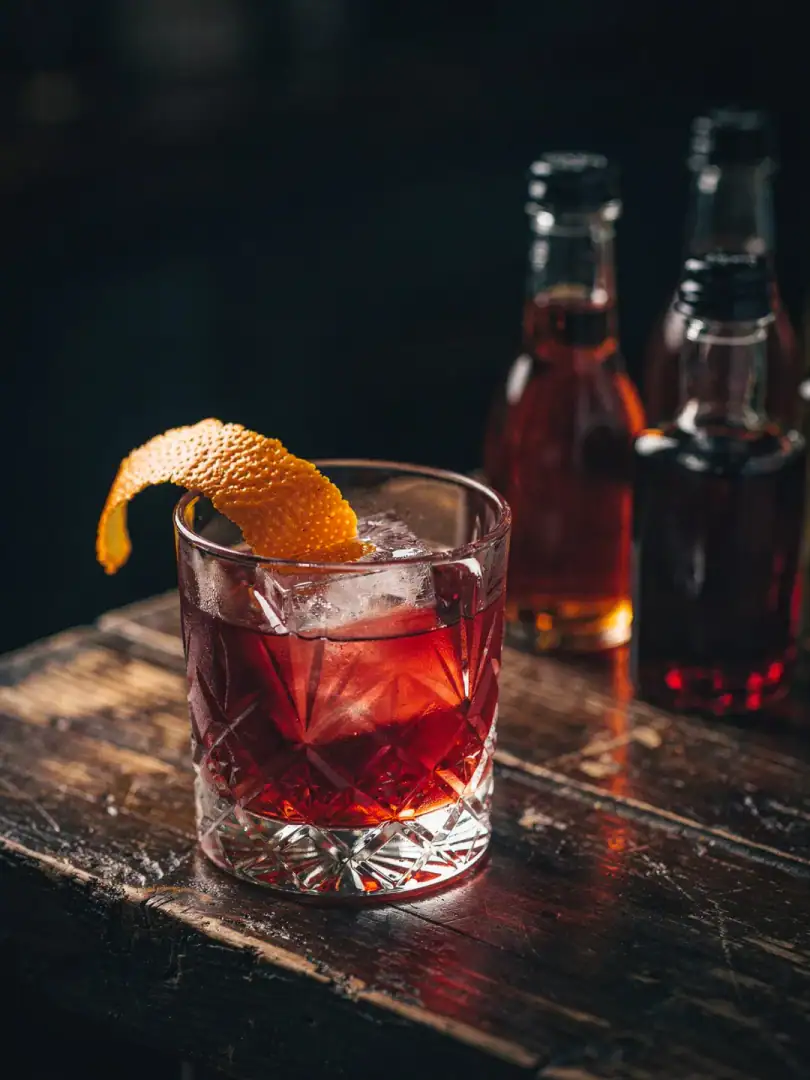
The Negroni relies on equal parts gin, red bitter liqueur, and sweet vermouth, stirred with ice and usually garnished with an orange twist. This simple formula of three equal parts makes it easy to grasp. At the same time, it's sensitive to the choice of individual ingredients, since each component noticeably shifts the outcome.
The Negroni is known for its pronounced bitterness, which clearly sets it apart from sweeter aperitif cocktails. It's considered a pre-dinner drink meant to stimulate the appetite rather than fill you up. This basic formula has spawned countless variations, including versions that swap in other spirits for the gin while keeping the bitter, aromatic character of the original. One well-known variation replaces the gin with whiskey, pushing the drink closer to spicy, wood-driven flavors, while another drops the gin entirely and tops the drink with sparkling wine instead. Despite all these variations, balanced bitterness remains the common thread across the whole Negroni family, and it's exactly this bitterness that sets them apart from sweeter, more easygoing aperitif cocktails.