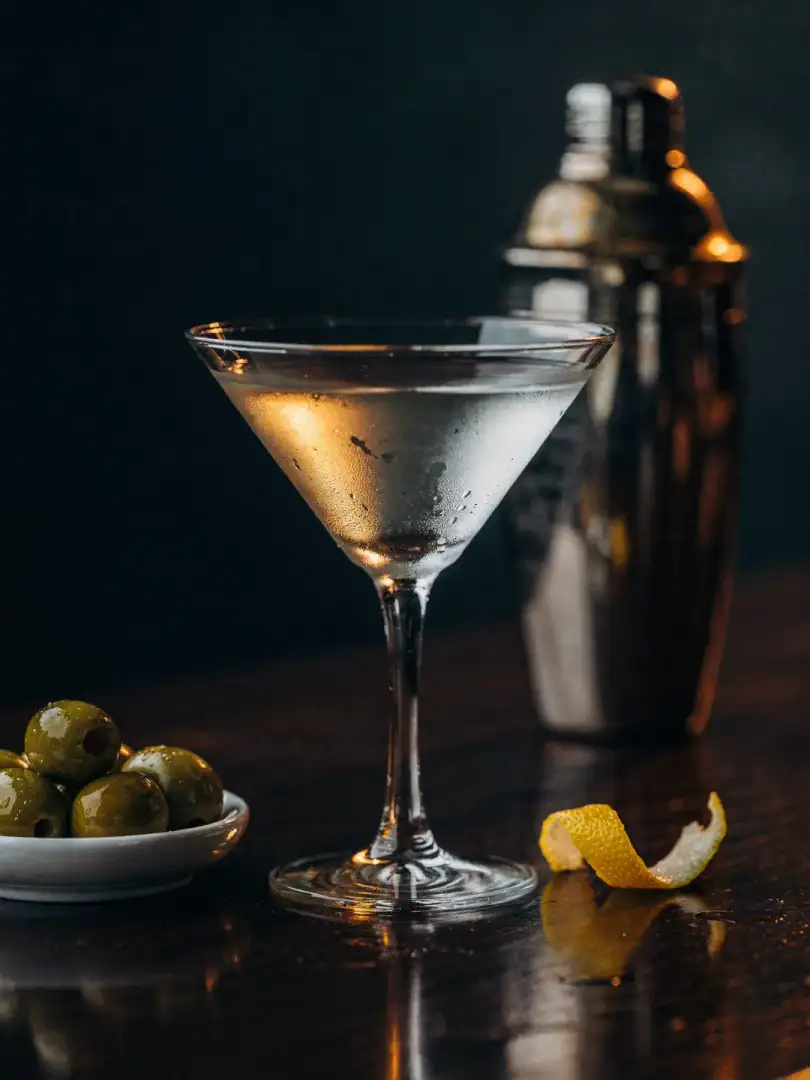
Dry Martini Variations
Martini
No gin cocktail embodies clarity and style quite like the Dry Martini. Just gin, vermouth and a touch of ice, stirred rather than shaken — and yet opinions on the correct ratio and even the correct name still differ to this day.
Where does the Dry Martini come from?
The exact origin of the Martini remains disputed to this day, which is unusual for such a famous cocktail. One common explanation traces it back to the Martinez, a sweeter cocktail made of gin and vermouth that was drunk on the American West Coast in the late 19th century and gradually evolved into a drier, cleaner form over the decades.
Other explanations point to the Italian vermouth brand Martini or to a bartender said to have served the drink at a New York hotel. What is certain is that the name became established in the early 20th century, and the cocktail grew progressively drier throughout the century as the proportion of vermouth relative to gin was gradually reduced.
What makes a Martini dry?
In a Martini, "dry" refers to the vermouth ratio: the less vermouth used relative to the gin, the drier the cocktail is considered. A very dry Martini contains only a minimal amount of vermouth, sometimes barely more than a hint of it, whereas earlier recipes called for significantly more vermouth and tasted rounder and softer as a result.
The Martini is traditionally stirred rather than shaken because stirring chills and lightly dilutes the drink without incorporating air or leaving ice shards in the glass. It's usually served in the classic, tapered Martini glass, garnished with either an olive or a lemon twist, depending on personal preference.
What Martini variations exist?
Numerous variations have emerged from the classic gin Martini. The Vodka Martini replaces gin with vodka and became famous largely through pop culture, while the Dirty Martini is spiked with a splash of olive brine, giving it a salty, slightly cloudy character. The Gibson, meanwhile, is garnished not with an olive but with a pickled pearl onion.
The Vesper combines gin and vodka with a fortified aromatized wine and became famous through a fictional character who insisted on having it prepared in a very specific, precise way. All these variations share the Martini's core idea: a few high-quality ingredients, precisely balanced and served without distracting extras.
Which gin works best in a Martini?
A classic, juniper-forward London Dry gin is considered a safe choice, since it retains enough character even in a very dry Martini and doesn't get lost against the vermouth and cold. Especially with a low vermouth ratio, every nuance of the gin counts double, which is why many bartenders favor particularly clean, precisely distilled gins here.
More floral or citrus-forward gins can steer the Martini in a different direction, coming across more as a standalone variation than a classic Martini. Anyone looking to experiment should start with a small amount of vermouth and gradually increase it until finding the personally preferred ratio. The temperature of the gin also affects the result: a well-chilled gin slows dilution from the ice while stirring and keeps the Martini clear and cold for longer. Some bars therefore keep their gin permanently in the freezer, so they can always serve a particularly cold, minimally diluted Martini. Stirring time itself also affects the outcome: stir too briefly and the Martini ends up under-diluted and almost oily, while stirring too long noticeably waters down the aromas of the gin and vermouth. Experienced bartenders therefore stir with a calm, steady motion over a fixed period rather than guessing the duration anew each time.