Douglas Fir and Sage
Botanicals
When people think of gin, they first think of juniper from the hills of Italy or Macedonia, since little wild juniper grows in usable quantities in California itself. Most Californian distilleries therefore buy in their juniper berries and put their own signature into the remaining botanicals.
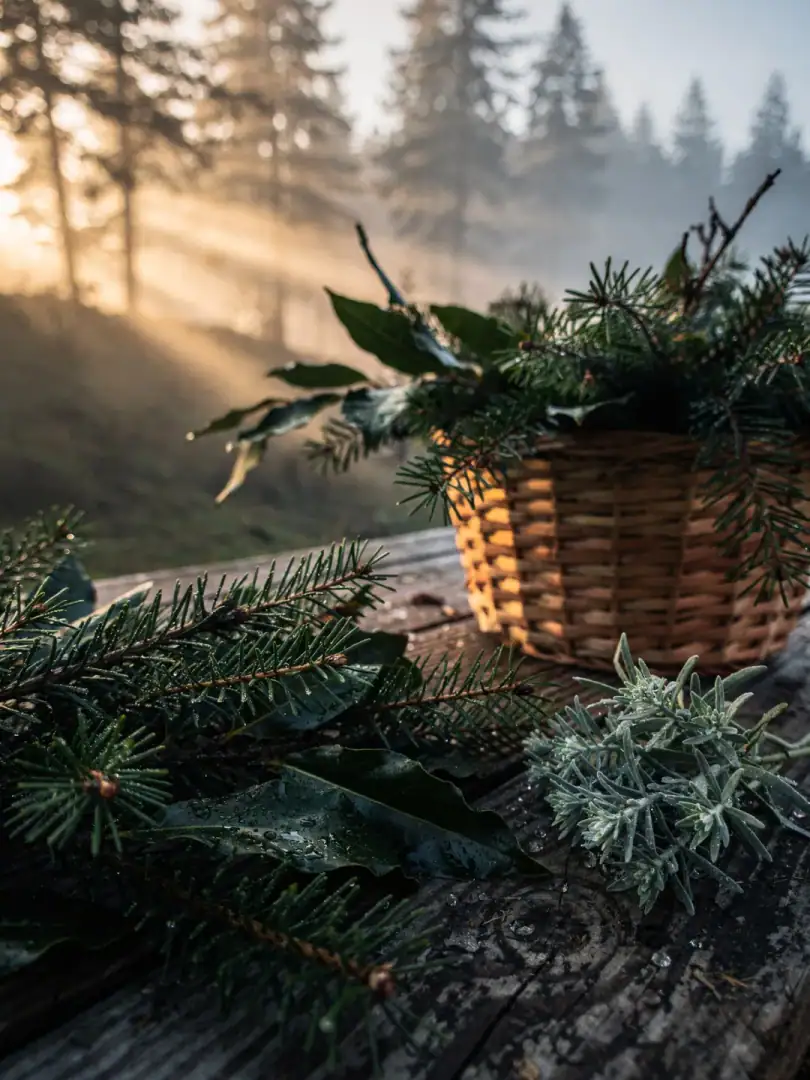
That's exactly where things get distinctive. St. George Spirits puts three plants from its own surroundings at the center of its Terroir Gin: Douglas fir, California bay laurel, and coastal sage. The Douglas fir tips come fresh from the foothills of the Sierra Nevada and lend resinous, woodland notes, almost like a walk among conifers after the rain.
California bay laurel, a relative of Mediterranean bay, grows wild in the forests of Northern California and smells more intense than its European counterpart, with a menthol-like, almost eucalyptus-tinged edge. Coastal sage, in turn, comes from the dry slopes right along the Pacific, earthy and resinous at once, a plant accustomed to fog and salt air.
Botanivore, St. George's second major gin line, takes the opposite approach, favoring abundance over focus: 19 botanicals, from angelica root to cardamom to star anise, plus the unusual addition of lemongrass hops. Dry Rye, the third line, instead builds on a rye spirit as its base, bringing a spicy, bready backbone before the botanicals even come into play.
Together, the three gins show just how differently 'Californian' can be interpreted: once as landscape in a glass, once as a library of botanicals, once as a question about the base spirit itself.
Flat, well-draining sandy soil of the coastal slopes, where coastal sage grows.
The root: The plant forms shallow, widely branching roots that capture the brief nightly fog moisture before it evaporates in the sun.