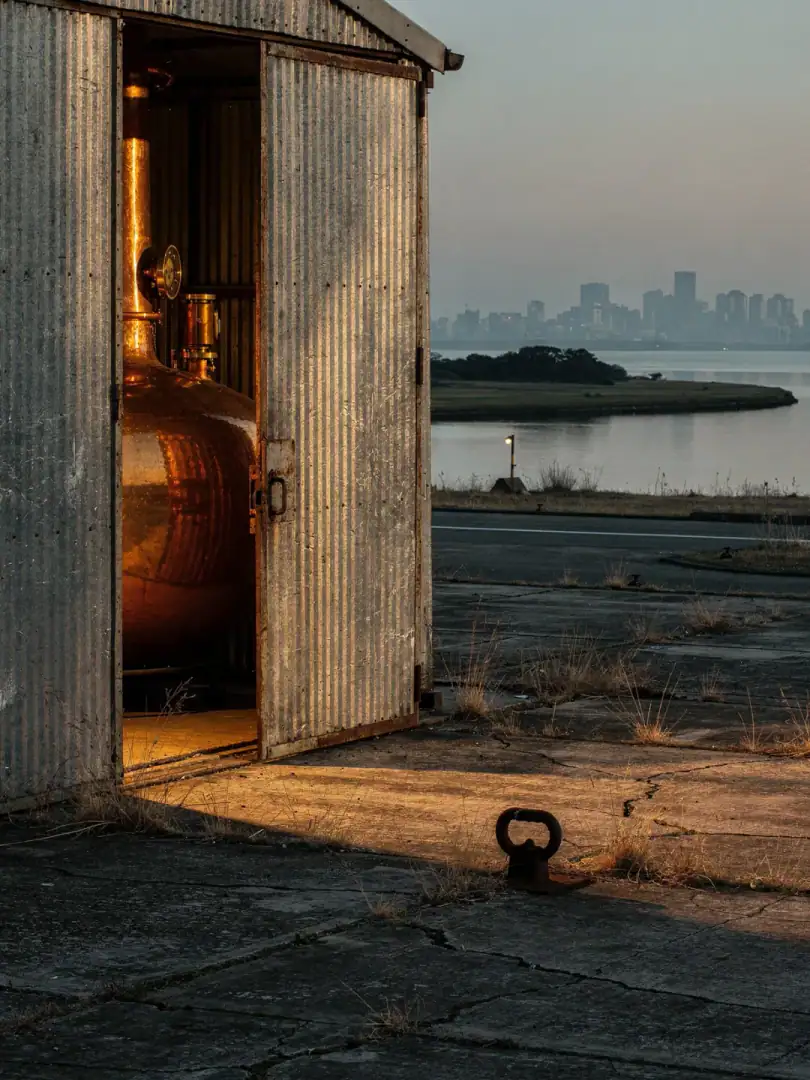
Hangar and Copper
Region & History
Alameda sits on an island in the middle of San Francisco Bay, where the US Navy serviced its aircraft until the 1990s. In one of the old hangars of the decommissioned Naval Air Station, German immigrant Jörg Rupf founded St. George Spirits in 1982, California's first craft distillery after Prohibition. At first he distilled mainly fruit brandies; gin came only later.
Just one bay over, in San Francisco itself, Fritz Maytag took a different path. The man who had previously kickstarted the American craft beer movement with his Anchor Brewing launched Junípero in 1996, named after the Latin word for juniper. It's considered the first craft gin distilled in the US since Prohibition, produced in a copper pot still in the style of a robust London Dry.
While Junípero deliberately stayed true to the British model, St. George, under Lance Winters, who later took over the distillery, went in a different direction: away from the recipe book, toward the landscape right outside the door. The botanicals were meant to taste like where they grow, not like how they're blended in a classic London Dry.
In the 2000s, a term emerged for this stance: New Western Dry Gin, coined for gins that no longer place juniper alone in the foreground but treat it as one ingredient among many. Californian distilleries like St. George quickly became pioneers of this style, even though the name itself originated further north, in Oregon.
Today St. George Spirits still sits in the same hangar, now considerably expanded, distilling whiskey and absinthe alongside gin. Anyone who opens the door smells copper, fennel, and the salty bay beyond, and understands at a glance why an aircraft hangar became a destination for connoisseurs.