Preparation
- Set up the grill for indirect heat: with charcoal, push the embers to the edge; with a gas grill, light only the outer burners. Close the lid.
- Remove the giblets from the chicken and pat it thoroughly dry inside and out. Rub with oil, then season inside and out with salt, pepper and rub.
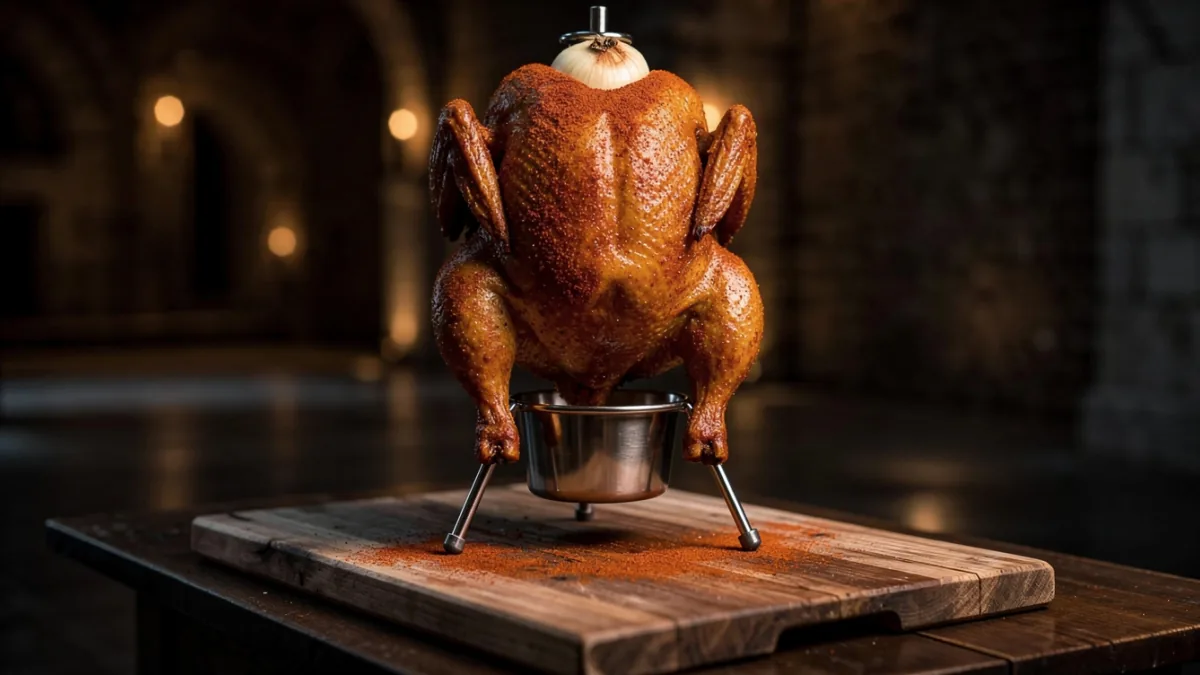
- Pour out half of the beer, add the garlic if you like, and place the can in a stand. Lower the chicken cavity-first over the can and plug the neck opening with the onion half.
- Note: consumer protection agencies advise against using a beer can over heat because of the printing ink and can lining; a chicken roaster with a liquid reservoir is safer and works exactly the same way.
- Stand the chicken upright in the middle of the grate, balanced like a tripod on its legs and the can, and cook over high indirect heat with the lid closed for about 75 minutes, until the skin is golden brown.
- The chicken is done at 74 °C in the breast and 82 °C in the thigh, or when the juices from the thigh run clear. Rest for 10 minutes and carve with poultry shears or a large knife.
Drink with it
Pale lager · excellent match
Märzen or Helles, well chilled
The malt sweetness picks up the roasted, seasoned skin, and the carbonation and light bitterness lift the fat from the palate.
Pils or Helles: What's the Difference?Rosé · excellent match
Full-bodied rosé, e.g. Tavel or Rosado from Navarra, well chilled
Red fruit and body catch the paprika and sweetness of the rub and hold their own against the roasted notes of the skin, while the acidity refreshes after the fat.
Which wine pairs with food? A simple approach to choosingRed wine · good match
Light, fruity red wine, e.g. Spätburgunder (Pinot Noir), lightly chilled
Soft tannins and cherry fruit go well with pale poultry meat and roasted flavours.
White wine · good match
Lightly oaked Chardonnay
A creamy body and subtle oak notes suit the juicy breast meat and the browned skin.