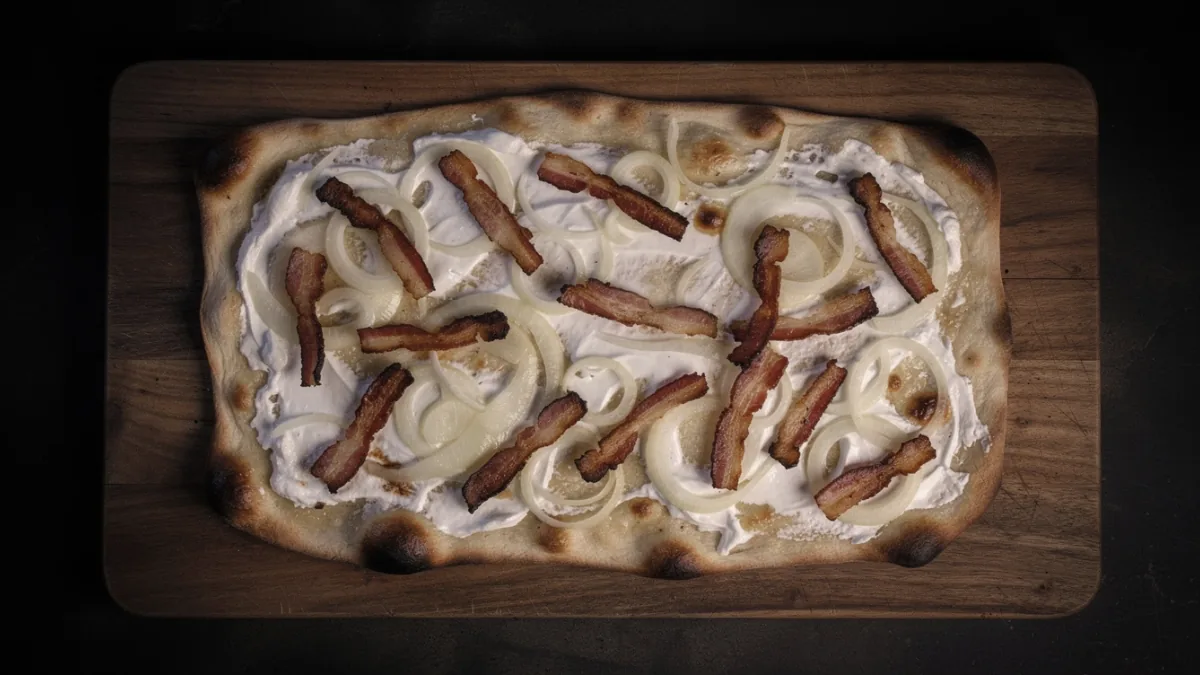
Preparation
- Stir the yeast into a splash of the measured water and leave for 10 minutes.
- Sift the flour into a bowl, add the yeast mixture, remaining water, oil and salt and knead to a smooth dough. Cover and leave to rise in a warm place for 30 minutes.
- Cut the bacon into fine strips, halve the onions and slice them very thinly. Whisk the soured cream and double cream with salt, pepper and a little nutmeg.
- Preheat the oven as hot as it will go, up to 250 °C (conventional; 220 °C fan). Divide the risen dough into four and roll each piece out wafer-thin on baking paper.
- Spread each base with a quarter of the cream mixture and top with onions and bacon strips.
- Bake the flammkuchen individually or two at a time on a baking tray for 10 to 15 minutes, until the edge is golden brown and the base is crisp, and serve hot.
Drink with it
White wine · excellent match
Alsatian Pinot Blanc, Sylvaner or dry Riesling
The fresh acidity cuts through the cream and bacon fat, and the restrained fruit leaves the onions their sweetness.
Which wine pairs with food? A simple approach to choosingSparkling wine · excellent match
Crémant d'Alsace brut
Bubbles and acidity clear the palate after bacon and cream, so the thin base stays light.
Sparkling wine, Champagne, and Prosecco: what's the difference?Pale lager · excellent match
Pils or Helles, freshly poured
A lean body and carbonation cut through cream and bacon, and the malt suits the browned edge.
Pils or Helles: What's the Difference?Wheat beer · good match
Pale Hefeweizen (wheat beer)
The carbonation lifts the cream, and the yeast notes pick up the crisp edge of the dough.
Wheat Beer: Where Do Banana and Clove Come From?Red wine · good match
Alsatian Pinot Noir or Gamay, served cool
Low tannin and red fruit cope well with cream, and the smoke of the bacon finds support in the light red wine.