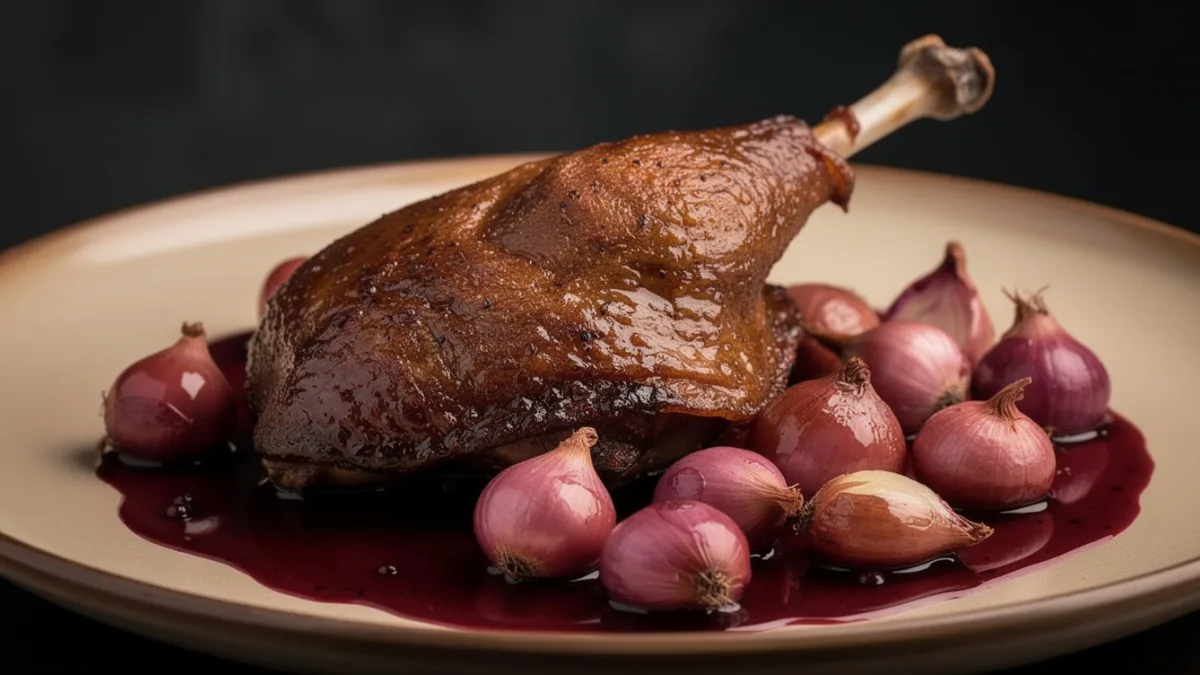
Preparation
- Preheat the oven to 200 °C (top and bottom heat). Rub the duck legs all over with salt and pepper and brown them well on all sides in the hot oil in a roasting pan.
- Deglaze with 100 ml each of red wine and stock, add the bay leaves and thyme, put the lid on and braise the legs in the oven for 90 minutes.
- About 50 minutes before the end of the braising time, fry the shallots in 1 tbsp oil in a frying pan or pot for 2 minutes, sprinkle over the sugar and fry for another minute. Deglaze with the vinegar and let it reduce.
- Add the remaining red wine, the stock and the redcurrant jelly to the shallots and simmer gently for 30 minutes.
- Lift the legs out of the roasting pan and brown them under a hot grill for 5 minutes until crisp. Pour off the cooking juices from the pan, skim off the fat and add the juices to the shallots.
- Season the sauce with salt and pepper, thicken lightly with the cornflour mixture and serve with the duck legs.
Drink with it
Red wine · excellent match
Spätburgunder (Pinot Noir) or red Burgundy
Cherry and redcurrant fruit echo the jelly, the acidity cuts through the duck fat, and the fine tannins respect the tender braised meat.
Which wine pairs with food? A simple approach to choosingDark beer · good match
Dark bock or Munich Dunkel
Caramel malt meets the browned skin and the sweet braised shallots, and the carbonation refreshes the palate after the rich meat.
Which beer goes with food? More than just pils with barbecueSherry-cask whisky · good match
Sherry-cask single malt, neat with a little water
Raisin and nut notes from the sherry cask meet the redcurrant jelly and the roasted flavours of the skin.
What Does the Cask Do to Whisky?Cognac and brandy · good match
VSOP Cognac, neat after the meal
Dried fruit and woody spice continue the reduced red wine sauce; as a digestif after the rich dish.
Cognac and Armagnac: Two Origins for Brandy