Preparation
- Sweat the shallot in the butter until translucent, add the honey and let it caramelise briefly. Deglaze with the wine, add the leek and stock and simmer for about 15 minutes until the leek is soft.
- Add the peas and cook for another 5 minutes so they keep their fresh colour and flavour. Take out 2 tbsp whole peas per bowl and keep them warm.
- Blend the mint leaves with the soured cream until smooth and season with salt and lemon zest.
- Blend the soup; for an especially delicate texture, also pass it through a fine sieve. Return to the pot, stir in the cream, heat through and season with salt, pepper and nutmeg.
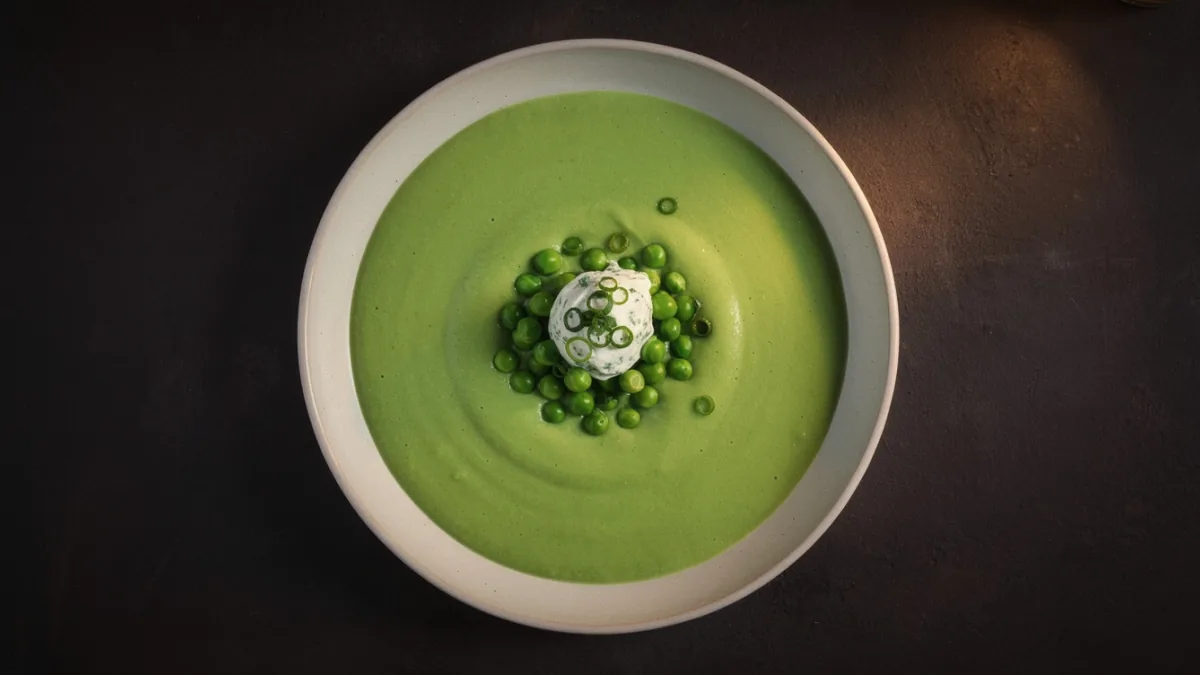
- Put the reserved peas into the bowls, pour in the soup, place a dollop of mint cream in the centre and sprinkle with chives.
Drink with it
White wine · excellent match
Sauvignon Blanc from the Loire or Grüner Veltliner, dry
The green, grassy notes of the wine meet pea and mint, and the acidity keeps cream and soured cream light; there is white wine in the pot anyway.
Which wine pairs with food? A simple approach to choosingSparkling wine · good match
Crémant or Sekt, brut
The fine bubbles loosen the velvety cream soup, and the slender acidity picks up the lemon zest in the mint cream.
Sparkling wine, Champagne, and Prosecco: what's the difference?Floral gin · good match
Floral gin as a gin and tonic with a mint leaf
Mint and the green pea note find a bridge in the botanicals of the gin, and the carbonation of the tonic cuts through the cream.
Gin styles: London Dry, Old Tom, Navy Strength, and moreGinjo sake · good match
Ginjo, well chilled
The fruity, floral freshness of the ginjo mirrors the mint and the sweetness of the peas without overpowering the delicate soup.
Junmai, Ginjo, Daiginjo: What do these mean for sake?
Why it pairs well
Gin and tonic and ginjo are the less usual companions; both share a fresh, green aroma with pea and mint.