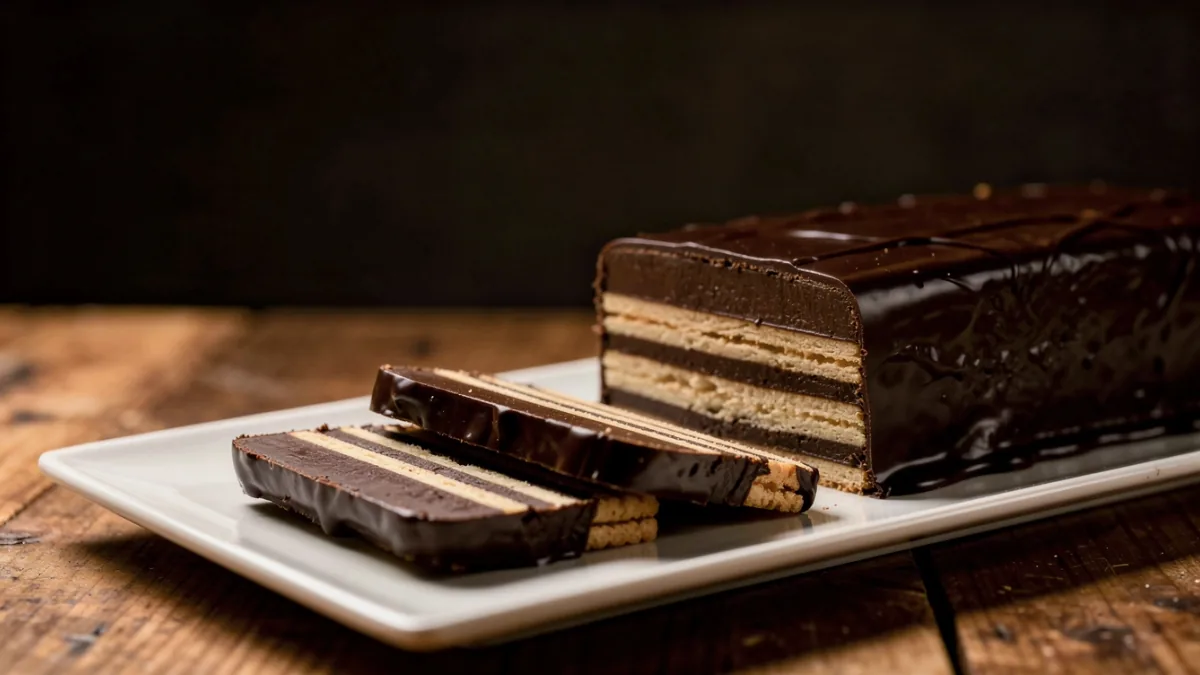
Preparation
- Line a small loaf tin (about 20 cm) with baking paper or cling film.
- Melt the coconut fat in a small pan over low heat. It must not get too hot.
- Whisk the egg, icing sugar, cocoa, salt and vanilla sugar to a smooth mixture.
- Add the liquid coconut fat to the cocoa mixture in small splashes, stirring constantly, until a glossy, smooth cream forms.
- Spread a thin layer of cocoa cream in the tin and lay a layer of butter biscuits on top. Keep layering until the cream is used up; the top layer should be biscuits.
- Cover with film and chill in the fridge for several hours, ideally overnight, until everything is firm.
- Turn the cake out onto a plate, peel off the film and cut into slices.
Drink with it
Herbal liqueur · excellent match
Amaro or Fernet, neat and chilled
The bitter compounds cut through the sugar and coconut fat, and the bitter herbs meet the bitter cocoa.
What is Amaro? Understanding Italian bitter liqueursCognac and brandy · good match
Cognac VSOP, neat at room temperature
Vanilla and dried fruit complement cocoa and butter biscuit, and the warmth contrasts with the cold, firm cake.
Cognac and Armagnac: Two Origins for BrandyFortified wine · good match
Tawny or ruby port, lightly chilled
Nutty and dried-fruit notes suit cocoa and butter biscuit; because the cake is very sweet, only a decidedly sweet port does not taste thin beside it.
Port wine: understanding Ruby, Tawny, and Vintage
Why it pairs well
With chocolate cake you would think of sweet wine or Cognac; a bitter herbal liqueur is the counterpoint that balances this very sweet, rich cake.