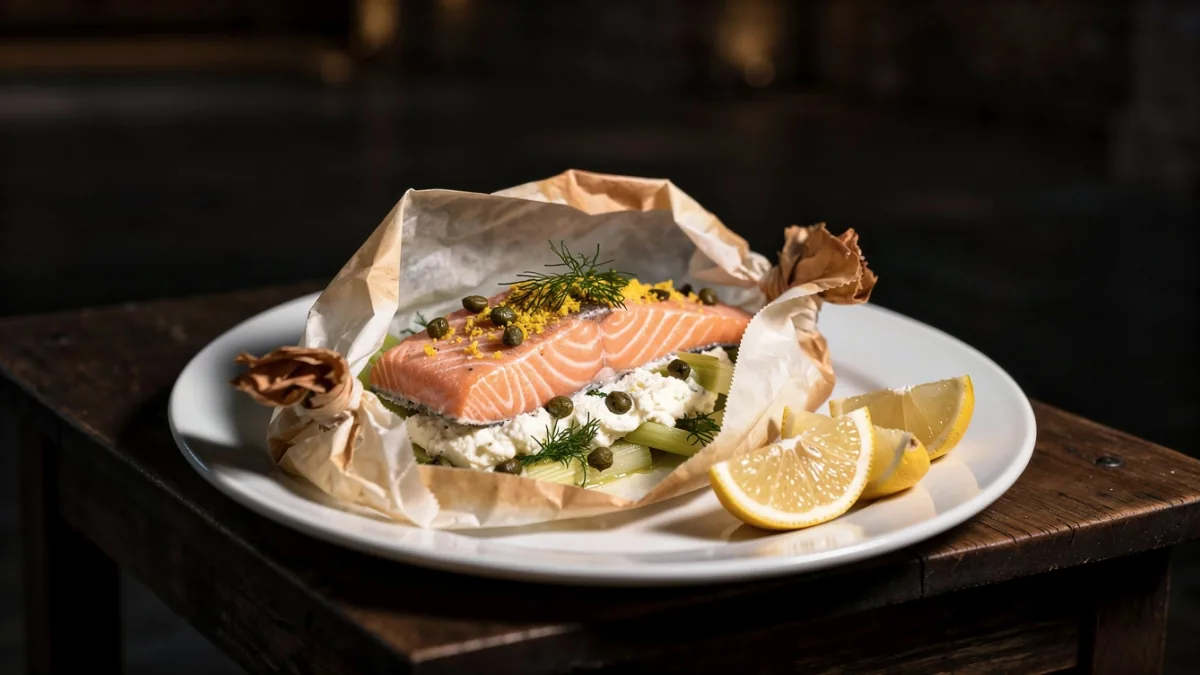
Preparation
- Preheat the oven to 200 °C (conventional) and lay out four large sheets of baking paper. Melt the butter in a pan and briefly sweat the leeks and onion in it.
- Pour in the water, cover and cook for a good 10 minutes until the leeks are almost soft. Take off the lid and let the remaining liquid evaporate; the leeks must not release any more water, otherwise the parcel will leak.
- Stir in the mascarpone and 2 tablespoons of dill and season generously with salt and pepper.
- Divide the leeks among the four sheets of paper and place a salmon fillet on each. Sprinkle with salt, lemon zest, a little lemon juice, capers and the remaining dill.
- Bring the paper together over the fish and fold the edges over several times, the ends too, so that the parcel is sealed. Place on a baking tray and bake for 12 to 15 minutes, depending on how well done you like the salmon.
- Open the parcels carefully (steam!) and serve with lemon wedges.
Drink with it
White wine · excellent match
Pinot Blanc (Weißburgunder) or Chablis
Soft acidity and round fruit carry the richness of the salmon and the mascarpone, and the mineral freshness suits the capers and lemon zest.
Which wine pairs with food? A simple approach to choosingWhite wine · good match
Sancerre or Pouilly-Fumé (Sauvignon Blanc)
Grassy notes pick up the leek and dill, and the taut acidity keeps the creamy filling light.
Sparkling wine · good match
Crémant brut
Bubbles and acidity loosen the creamy leeks, and the capers can take the sharp freshness.
Sparkling wine, Champagne, and Prosecco: what's the difference?Ginjo sake · good match
Ginjo sake, well chilled
The fine fruit of the ginjo leaves the steamed salmon in the foreground and gets along well with the mild sweetness of the leeks.
Junmai, Ginjo, Daiginjo: What do these mean for sake?