Preparation
- Whisk the olive oil, soy sauce, salt and pepper into a marinade. Pat the salmon fillets dry, turn them in the marinade and leave, covered, in the fridge for about 2 hours.
- Take the salmon out of the fridge about 30 minutes before frying so it comes to room temperature. Preheat the oven to 100 °C conventional (top and bottom heat). Boil the potatoes in their skins until tender, let them steam dry briefly and peel them.
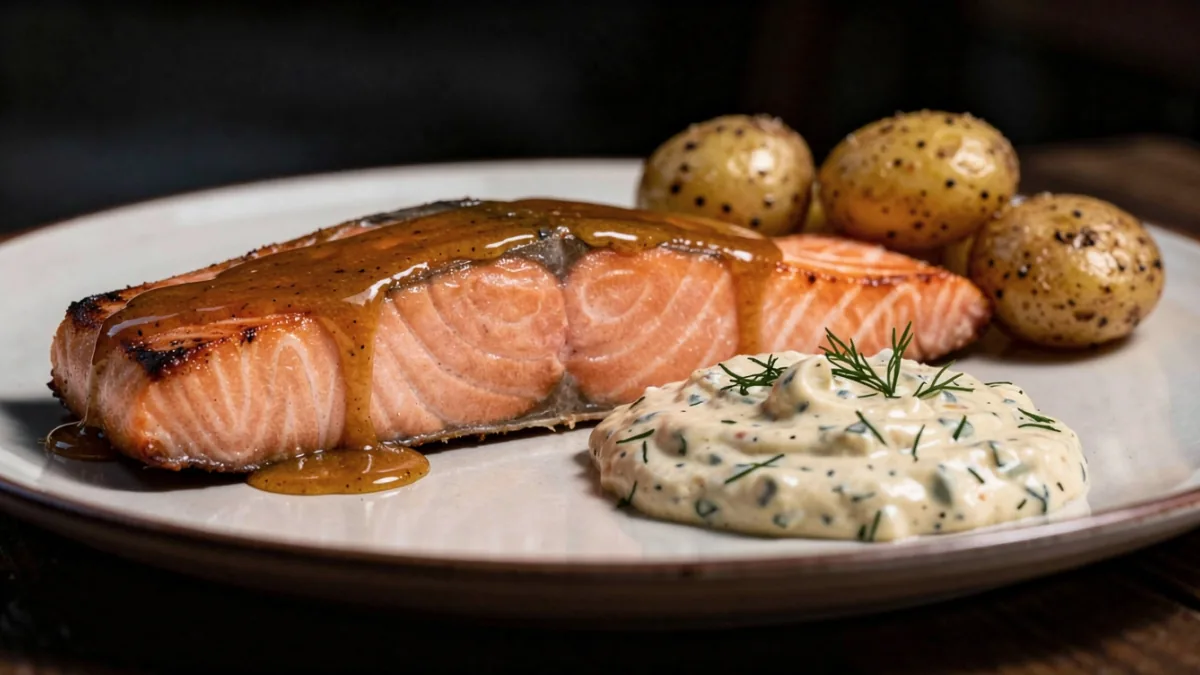
- For the glaze, mix the honey and Dijon mustard with about 1 tbsp of the remaining marinade.
- Lift the fillets out of the marinade and sear briefly on both sides in clarified butter, then finish cooking on a tray in the oven for 5 to 6 minutes. At the same time, fry the peeled potatoes gently in clarified butter in a second pan, season with salt and pepper.
- For the sauce, warm the crème fraîche slowly, stir in the mustard and honey, season with salt and pepper and fold in the dill.
- Take the salmon out of the oven, brush thickly with the glaze and fry briefly in the pan again until the glaze caramelises lightly. Serve with the potatoes and sauce.
Drink with it
White wine · excellent match
Off-dry Riesling (feinherb) or Grauburgunder (Pinot Gris)
A little residual sugar picks up the honey in the glaze, and the acidity cuts the salmon fat and crème fraîche.
Which wine pairs with food? A simple approach to choosingRed wine · excellent match
Light Spätburgunder (Pinot Noir), lightly chilled
Little tannin and red fruit suit the rich salmon, and the roasted note of the caramelised glaze ties in with the wine.
Junmai sake · good match
Junmai, lightly chilled
The sweet and salty glaze with soy sauce is reminiscent of teriyaki; the junmai adds rice sweetness and umami.
Junmai, Ginjo, Daiginjo: What do these mean for sake?Pale lager · good match
Helles or Pils, well chilled
Carbonation and light bitterness clear the salmon fat and crème fraîche without overpowering the glaze.
Pils or Helles: What's the Difference?