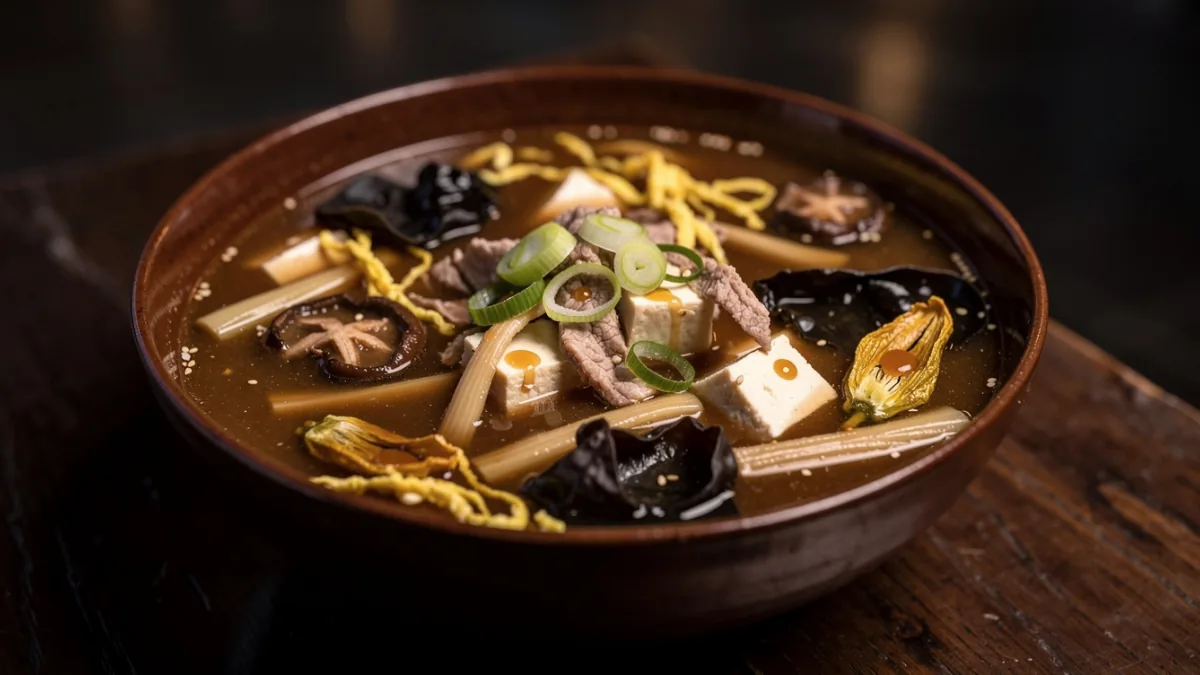
Preparation
- Rinse the shiitake, wood ear mushrooms and lily buds separately and soak each in a bowl with about 475 ml warm water for 30 to 60 minutes until soft. Cut the mushrooms into strips; cut the hard ends off the lily buds and halve the buds lengthways; remove any hard spots from the wood ears. Keep the lily bud soaking water.
- Mix the meat with the rice wine, salt and cornflour and leave for 10 to 15 minutes. In a small bowl, stir the vinegar and white pepper until smooth.
- Heat the stock, lily bud soaking water, ginger and the white parts of the spring onions in a pot. Add the mushrooms, lily buds, tofu and bamboo shoots, bring to the boil, stir in the soy sauce and reduce the heat to medium-low.
- Mix the cornflour with the cold water and slowly stir it into the soup until it thickens slightly. Then stir in the marinated meat, stirring several times so the strips do not stick together.
- Pour the beaten eggs in a thin stream along a chopstick or fork into the soup so that fine threads form. Leave to set for 20 seconds and then stir gently.
- Turn off the heat, stir in the vinegar and pepper mixture and season with salt. Sprinkle with the green spring onions, drizzle with sesame oil, stir once more and serve hot.
Drink with it
Pale lager · excellent match
Light lager or Pils, ice cold
The cold and carbonation put out the burn of the white pepper, and the light bitterness holds its own against the thickened, sour soup.
Pils or Helles: What's the Difference?White wine · excellent match
Riesling Kabinett, off-dry (feinherb)
Residual sweetness absorbs the pepper heat, its own acidity stands up next to the black vinegar, and the low alcohol hardly fans the burn.
Which wine pairs with food? A simple approach to choosingJunmai sake · good match
Junmai sake, well chilled
Its rice note and umami mirror the mushrooms and sesame, and the soft acidity suits the vinegar note; chilled rather than warm, so the pepper does not burn more.
Junmai, Ginjo, Daiginjo: What do these mean for sake?