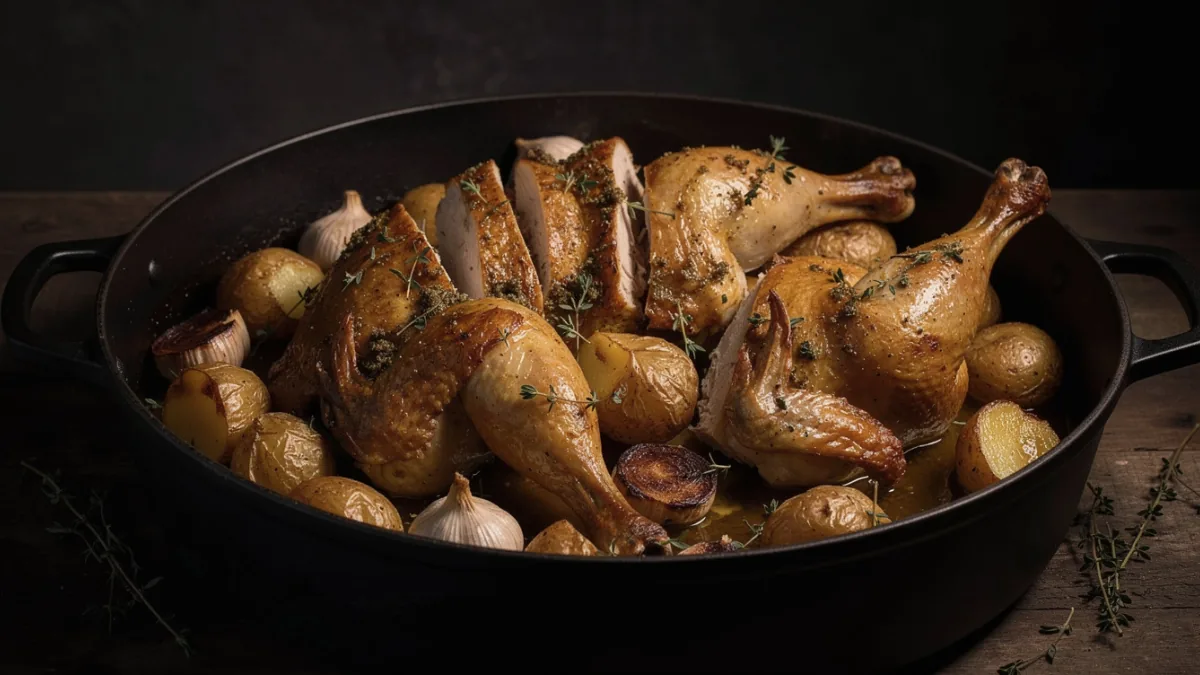
Preparation
- Take the chicken out of the fridge in good time so it comes to room temperature. Preheat the oven to 210 °C (conventional; 190 °C fan) and heat a roasting tin or cast-iron pot (28 cm, without lid) in it.
- Mix the soft butter with the herbes de Provence, salt and grated garlic. Pat the chicken thoroughly dry inside and out.
- Using a spoon, gently loosen the skin from the breast and thighs, starting from the tail end. Spread two thirds of the herb butter on the breast under the skin, spread the rest over the thighs and smooth the skin back down from the outside.
- Season the cavity with a quarter teaspoon of salt, the herbes de Provence and thyme sprigs, tie the legs together, rub the chicken with olive oil, season the outside with the remaining salt and tuck the wings under.
- Mix the potatoes, whole garlic cloves, salt, pepper and olive oil in a bowl. Take the hot pot out of the oven, add the potatoes and lay the chicken on top. Cover loosely with foil and roast for 30 minutes.
- Remove the foil, baste the chicken with the pan juices and roast uncovered for another 40 minutes, basting twice more, until the core temperature at the thigh reaches 72 °C.
- Rest the chicken for 15 minutes, baste again with the pan juices, carve and serve with the potatoes, the pan juices and fresh thyme.
Drink with it
White wine · excellent match
Burgundy Chardonnay or Weissburgunder (Pinot Blanc), cool
Soft fruit and moderate oak suit the butter under the skin, and the acidity keeps the dish fresh.
Which wine pairs with food? A simple approach to choosingRed wine · excellent match
Burgundy Pinot Noir, lightly chilled
Roast chicken and red Burgundy are a French classic: fine red fruit and little tannin accompany the tender meat, and the acidity stands up to butter and skin.
Rosé · good match
Dry rosé from Provence
Herbes de Provence in the dish and garrigue in the glass; fresh acidity and red fruit go with the crisp skin.
London dry gin · good match
London Dry gin as a gin and tonic with a lemon twist and thyme
Thyme and citrus oil share aromas with the gin, and dryness and carbonation cut the chicken fat.
London Dry Gin: does it have to come from London?