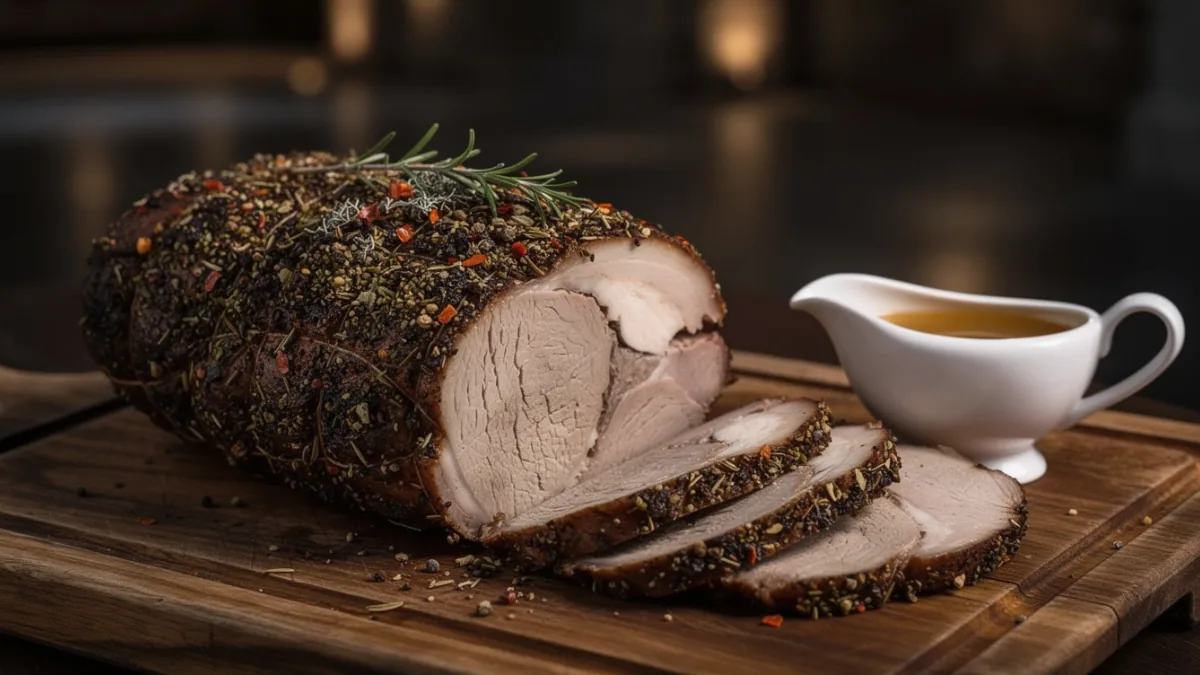
Preparation
- Toast the fennel seeds in a dry frying pan over medium-high heat for about 4 minutes, until fragrant and darker. Leave to cool and coarsely crush in a mortar with the salt, peppercorns and chilli flakes.
- Finely chop the garlic, rosemary and thyme, mix with the lemon zest, rub all over the meat and then press the spice mix on firmly.
- Cover the roast loosely in a dish and chill for 12 hours.
- Preheat the oven to 230 °C, brush a tray with olive oil, place the meat on it fat side up, drizzle with the olive oil and roast for 30 minutes.
- Lower the temperature to 150 °C and keep roasting until the meat is very tender and a meat thermometer in the thickest part reads 88 °C; for this smaller joint about 2 to 2.5 hours, but the core temperature is what counts.
- Put the roast on a board and rest for 15 to 30 minutes. Pour the juices from the tray into a jug and skim off the fat.
- Place the tray across two hobs, pour in the white wine and stock, bring to the boil and, stirring to loosen the browned bits, reduce by a good half over about 4 minutes. Stir in the skimmed juices; the sauce stays thin.
- Slice the roast thinly across the grain and serve with the sauce.
Drink with it
White wine · excellent match
Verdicchio dei Castelli di Jesi or Frascati, well chilled
In central Italy the usual glass with porchetta: acidity and a light bitter almond note cut the pork fat, and the herbal spice meets fennel and rosemary.
Which wine pairs with food? A simple approach to choosingRed wine · excellent match
Young Sangiovese or Montepulciano d'Abruzzo
Cherry fruit and acidity keep the fatty meat fresh, and moderate tannins stand up to the roasted crust and garlic.
Pale lager · good match
Helles or pilsner, ice cold
Carbonation and fine bitterness cut through the pork fat and let the spices come through clearly.
Pils or Helles: What's the Difference?London dry gin · good match
London Dry gin as a gin and tonic over plenty of ice, with a lemon twist
Fennel seed, rosemary and citrus peel are echoed in the gin's botanicals, and carbonation and tonic break up the fat.
London Dry Gin: does it have to come from London?