Preparation
- Heat the lard in a casserole and brown the meat well; it is fine for it to get nicely dark.
- Dust the meat with the flour. Add the onions, garlic, salt, pepper, caraway, allspice, paprika and tomato purée and stir. The flour makes the mixture pasty at first, but it loosens as it cooks.
- Once the flour is light brown, add the stock, stir in the yoghurt if the meat is very lean, and braise the goulash for 20 to 30 minutes.
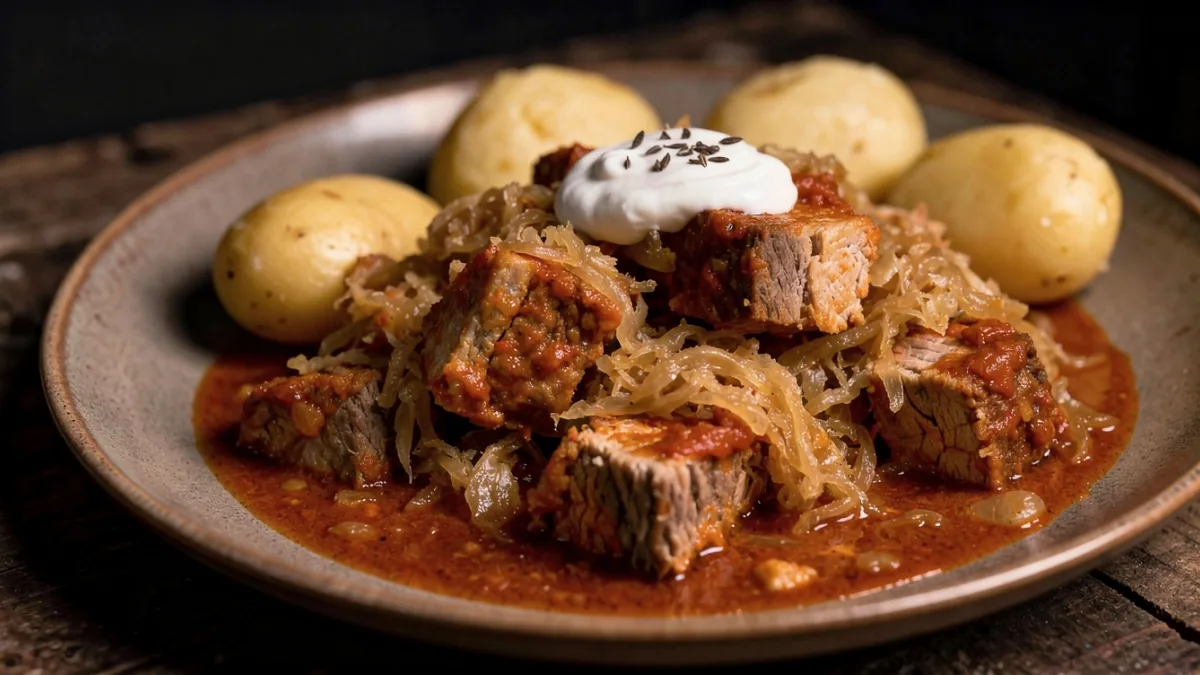
- Stir in the sauerkraut well and braise for about 30 minutes more, until the meat is tender.
- If the sauce is too thin, stir in the grated raw potato and bring briefly to the boil. Season with salt.
- Serve on plates with a teaspoon of soured cream each. Boiled potatoes or white bread go well with it. It tastes even better the next day.
Drink with it
Pale lager · excellent match
Märzen or Helles, cool
Soft malt absorbs the acidity of the sauerkraut and the hot paprika, and the carbonation cuts the lard and soured cream.
Pils or Helles: What's the Difference?White wine · excellent match
Riesling Kabinett feinherb or Grüner Veltliner
Acidity against acidity: the wine keeps pace with the cabbage, a touch of residual sweetness cushions the paprika, and the caraway finds an echo in the Veltliner's pepperiness.
Which wine pairs with food? A simple approach to choosingRed wine · good match
Blaufränkisch (Kékfrankos), young and with little oak
Cherry fruit and peppery spice suit the paprika; the tannin is mild enough for the cabbage.
Dark beer · good match
Dark lager or Schwarzbier
Roasted malt picks up the well-browned pieces of meat, and the malt sweetness rounds off the cabbage.
Which beer goes with food? More than just pils with barbecue