Tropics in the Barrel
Cask & Climate
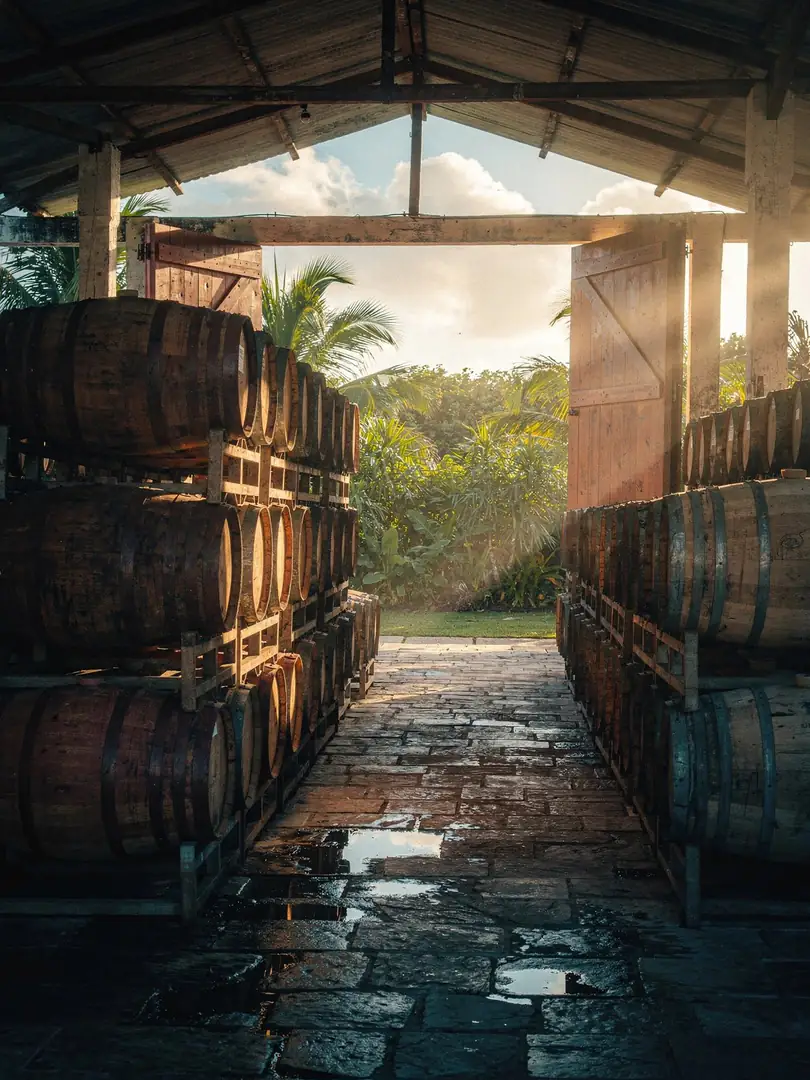
How does rum mature in Barbados? In oak casks that previously held bourbon or Madeira, and in warehouses on the island. This on-site maturation is exactly what the draft protected designation of origin requires. It's no minor detail, since the climate shapes the rum at least as much as the cask itself.
In the tropics, far more evaporates than in Scotland, often around eight percent a year. Part of the rum escapes into the air as the "Angel's Share," while the rest matures faster and more densely. An often-cited rule of thumb says one tropical year equals three years in Europe. Chemically, that's not exactly accurate.
Foursquare's Exceptional Cask Selection series plays with casks. Bottlings are first matured in bourbon casks and then finished in casks that previously held Port, Zinfandel, Madeira, Sherry or Cognac. The same distillate thus takes on different berry notes and spices from bottling to bottling.
What's allowed on the label? Without a protected designation of origin, Barbados has no age rule of its own. In the EU, the rule is: an age statement may only be given if it refers to the youngest rum in the blend and the maturation took place under tax supervision. Certain Foursquare bottles therefore carry a vintage and age statement, such as a twelve-year-old rum from 2005.
Foursquare claims to add nothing, neither sugar, color nor flavoring. This is the house's own statement. The EU permits up to 20 grams of sugar per liter and the use of caramel coloring for color adjustment, and Richard Seale advocates leaving both out.