Stored Cool
Cask & Climate
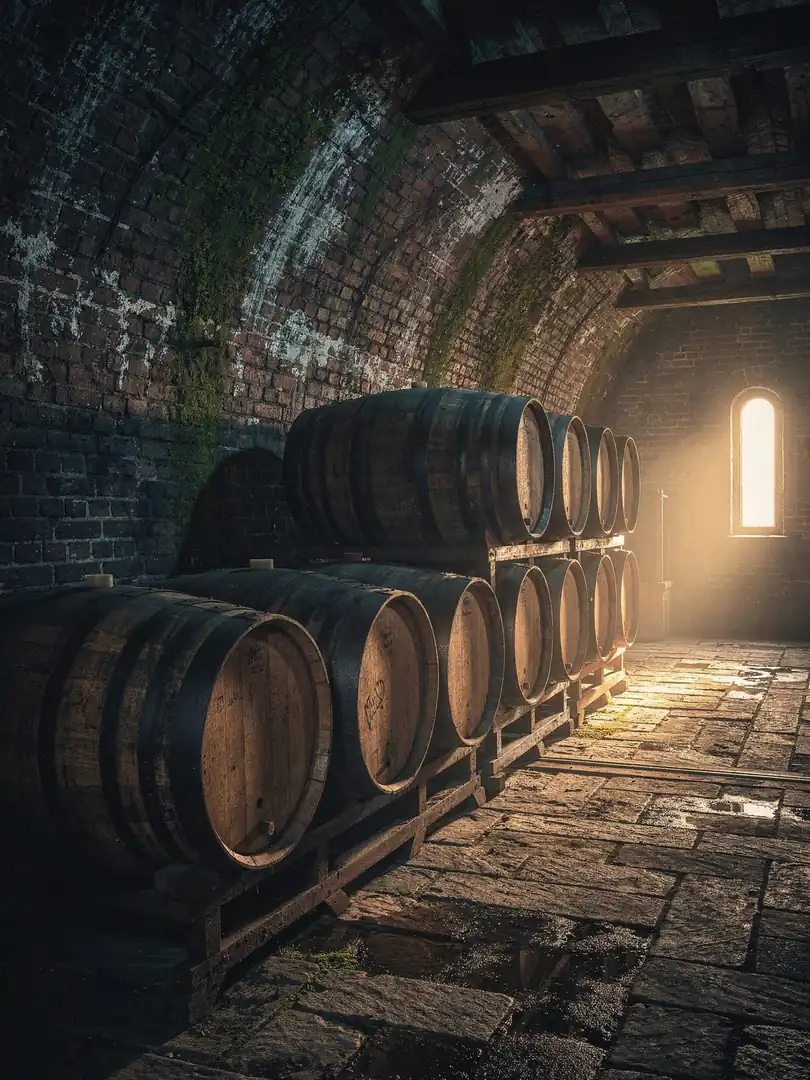
On the Baltic coast it is cool and damp, and this changes how a cask ages. In the tropics, around eight percent of the contents can evaporate each year, compared with roughly two percent in Scotland. In a cool warehouse, less is lost and maturation proceeds more gently. The oft-repeated rule of thumb that one tropical year counts as three in Europe is just marketing and doesn't hold up chemically.
The rum arrived in casks from the West Indies and was stored in the warehouses and cellars of the merchants' courtyards. The Johannsen house still sits today in a warehouse on Marienstraße, whose buildings are more than 300 years old. There, one can imagine how the houses once set up, checked and decanted their casks.
How long a blend is aged is up to each house. For Rum-Verschnitt, the law sets no minimum ageing period, only the strength of 37.5 percent and the rum share of five percent of the alcohol. Many blends therefore carry no age statement at all.
Anyone wanting a number on the label must follow a rule. Within the EU, an age may only be stated if it refers to the youngest component and the ageing took place under tax supervision in a member state. A blend containing one young cask, therefore, cannot boast the age of its oldest casks.
Color, too, reveals little. A brown blend can be young, since caramel coloring adjusts the hue, while a pale rum may have spent years in the cask. Anyone wanting to know how long a rum has actually matured should look for the age statement, not the color.