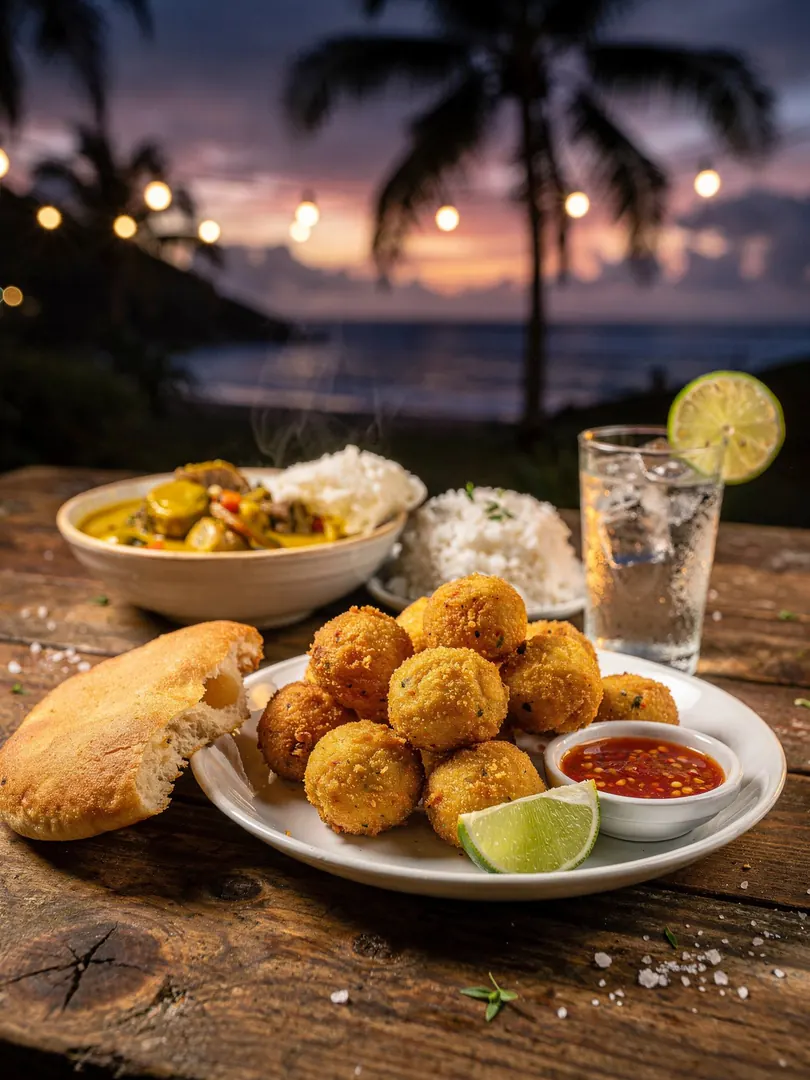
Bokit, Accras, Colombo
Food & Drinking Culture
In Pointe-à-Pitre, the bokit is part of everyday life: a fried flatbread, split open and filled with salt fish, chicken, or cheese. It's greasy, salty, and filling. A rum with a clear, dry profile cuts through the richness. A Blanc, smelling of cane and pepper, works well here, refreshing the palate again.
Accras de morue are small fritters made with salt cod and chili. Salt cod originally came from North Atlantic trade and has been part of Caribbean cuisine for centuries. They're eaten as a starter, often served alongside a Ti' Punch or another lime-based drink. The lime's acidity balances the fried food.
Colombo, a braised dish made with a spice blend similar to a mild curry, reflects India's influence: the mix is considered a legacy of the indentured laborers. Féroce d'avocat is a purée of avocado, cassava flour, salt fish, and hot chili. Both dishes call for a rum that can stand up to spice and creaminess — a Rhum vieux, for example.
The island's drinks include, alongside Ti' Punch, the Planteur, a mix of rum and fruit juices, as well as Punch coco. Rhum arrangé is also popular: fruits, spices, and sugar steep in a bottle of rum, turning into a homemade drink. Because it's flavored, it legally cannot be called rum and is instead classified as a spirit.
The island's festivals center on music and food. Carnival runs from January through Ash Wednesday. In August, during the Fête des Cuisinières, cooks parade through Pointe-à-Pitre in costume, carrying their dishes to be blessed. Gwoka, Guadeloupe's drumming music, has been on the UNESCO Intangible Cultural Heritage list since 2014.