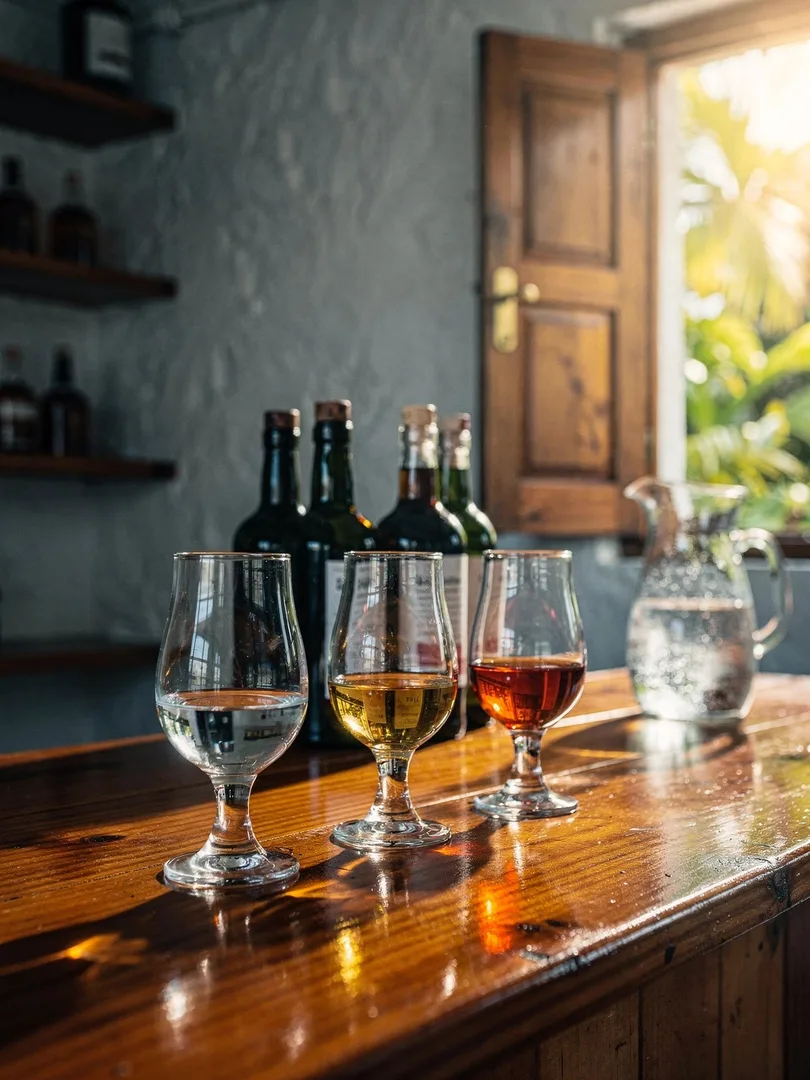
Glass, nose, water
Tasting
A white Rhum agricole in a nosing glass first smells of freshly cut sugarcane. Then come green grass, citrus peel, and a hint of white pepper. Damoiseau's Blanc from Le Moule is offered at three strengths, 40, 50, and 55 percent alcohol, as stated by the house.
The glass is no accident. A tulip glass or a nosing glass with a narrow rim concentrates the aromas and softens the alcohol's bite. A wide tumbler is better suited to mixed drinks. The glass should be clean and odor-free, since traces of dish soap can ruin any nose.
As for temperature: room temperature, around eighteen to twenty degrees Celsius, is a good starting point. Cold dulls the aroma, while warmth makes the alcohol sharp. Tasting the rum neat first, then adding a few drops of water, reveals how the aromas open up. At 55 percent, this effect is especially pronounced.
A Rhum vieux like Damoiseau's VSOP at 42 percent behaves differently. It smells of vanilla, toasted wood, orange peel, and dried fruit; on the palate it's softer, with a faint green note in the background hinting at its cane-juice origins. It barely needs water, which tends to strip away body instead.
A fixed order helps when tasting: first color, then the nose in the glass, then a small sip held briefly in the mouth. Then ask what remains — how long the finish lasts and whether it ends dry, sweet, or peppery. More than two or three samples in a row tend to blur the impression. A feel for the unaged style develops through comparison.